An Interview with Peter Man
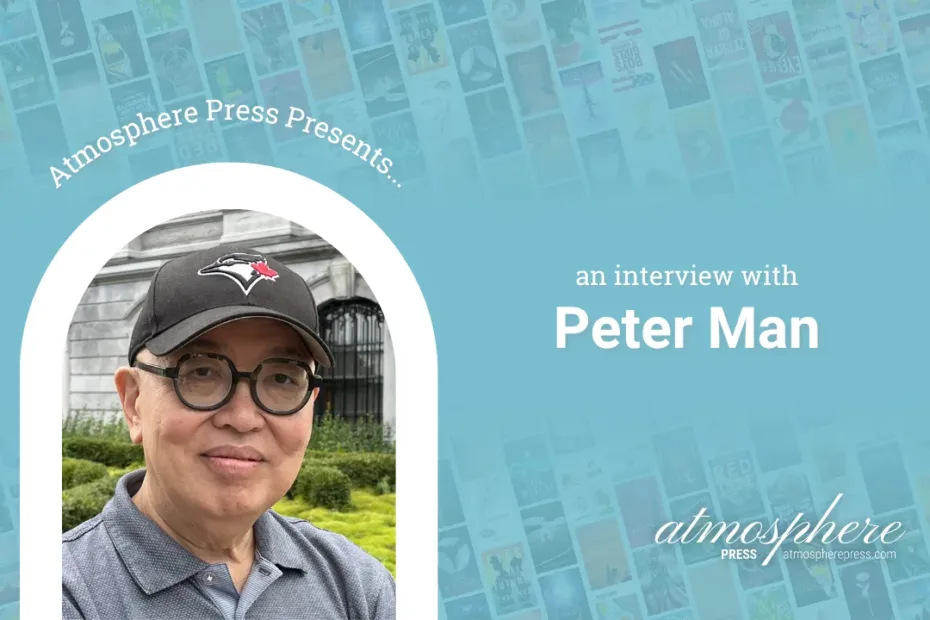
Born in Hong Kong and a true-blue son of La Salle College, an English Catholic school for boys, the author immigrated to Canada in his youth and established Canada’s first national Chinese-language television station. Before eventually settling in Toronto, he lived and worked in China for two decades, witnessing the country’s meteoric rise.
Who/what made you want to write? Was there a particular person, or particular writers/works/art forms that influenced you?
My father was an actor, a Peking Opera musician and singer, and a novelist. His first book was a spy novel about the Sino-Japanese War, in which he participated as a communist stationed in Yan’an, the Communist Party’s headquarters. Refusing to take part in the Chinese Civil War, he deserted his post and ran off to Hong Kong, where I was born. That novel, titled The Sino-Japanese Spy War, was a scorching bestseller in Hong Kong and Southeast Asia and was later made into a movie. He later wrote another historical novel based on his wartime experience. I may have the writing bug, either inherited or infected.
What other professions have you worked in? What’s something about you that your readers wouldn’t know?
I started out working in television production in Hong Kong. My first job in Toronto was as a news crew director, shooting stories around town. After receiving permanent resident status and landing in Toronto, I applied for a job at a newly launched TV station, but they had already hired everyone. I was half a year too late. Here is an interesting story of how the news director discovered me and insisted that the TV station hire me. As the saying goes, when it rains, it pours. On the same day he offered me the job, I also got an offer from a film in pre-production. Most people would not know that after I decided to take the TV job, the station wanted to experiment with live news in Chinese, and I became the Chinese news anchor for several months. Later on, I helped someone apply for a TV licence and built the station from scratch. When the station went into receivership, the courts appointed me to be its receiver manager. Later, I received an offer to help China digitize its television stations and develop signal coding technologies. During the sojourn, I had side gigs helping a German brand develop retail in China and importing wines from France, most of which ended in my veins. I have many amazing stories my readers would not know about. For example, I once almost died for love. I’m living on gifted time. Every second is a bonus.
Tell us the story of your book’s title. Was it easy to find, or did it take forever?
Unconquered. It did go through multiple iterations. It reflects a main theme. It’s easy to remember. It’s a bit of an unusual word. As a first-time writer, it takes time to learn what works. Over a year or two, I decided to make it simple and unusual. Since it’s the first book in a trilogy, the sequels’ titles will be similar, using a single unusual word.
What part of publishing your book made it feel real for the first time?
Writing may be easy or natural to some, but for me, it’s very difficult. I do not want to write an average book that pleases everyone. I want to write something completely original and memorable. Maybe readers centuries later discover it in an archive and still find it interesting. It feels real when I submit it for a BookLife review and it receives an Editor’s Pick designation. A professional reviewer likes it. I now feel confident at least some readers will enjoy reading Unconquered.
If your book had a soundtrack, what are some songs that would be on it?
Unconquered and its sequels are uniquely linked with music throughout their chapters. Many scenes specify the background music, such as a girl’s happiness serenaded by two nightingales singing Delibes’s “Flower Duet.” Sometimes, song lyrics are alluded to. The second book, Bellatrix, for example, ended with a few lines from Genesis’s “Undertow,” for a reason, of course. Unconquered has many tracks. I’ll provide a short list: “The Anvil Chorus: from “Il Trovatore” by Verdi; Bach’s “Air on the G String”; “Der Rosenkavalier”; Schubert’s “Gretchen am Spinnrade” and “Heidenroslein”; Carl Orff’s “O Fortuna”; Delibes’s “Flower Duet”; Wagner’s “Ride of the Valkyries”; “Intermezzo” from Pietro Mascagni’s “Cavalleria rusticana”; “Morning Mood” from “Peer Gynt Suite;” Rimsky-Korsakov’s “Scheherazade”; Harmonium’s “Histoire sans Paroles” from “Les Cinq Saisons”; Sergei Prokofiev’s “Toccata”; Beethoven’s “Hammerklavier” sonata; Burt Bacharach’s “Alfie”; Adriano Celentano’s “Prisencolinensinainciusol”; Richard Strauss’s “Also Sprach Zarathustra”; Marilyn Monroe’s version of “Diamonds Are a Girl’s Best Friend”; and more. The allusions are numerous and sometimes cryptic. So, we won’t get into them.
What’s one thing you hope sticks with readers after they finish your book?
They discovered a world of things they had never even heard of. They’re amazed and want to learn more.
What was the most rewarding/meaningful part of publishing your book?
Seeing my books on Indigo shelves (Canada’s largest bookstore chain) and noticing people browsing and buying them.
What creative projects are you currently working on?
I’m finishing the last book of the trilogy (titled Augenblick: The Blink of an Eye), with a future project already in rough draft, waiting for me to tackle it. It will be a high-fantasy, historical mystery, superhero, adventure novel based on my experience growing up in Hong Kong. It relates to my school, La Salle College; the Irish brothers who taught me; the alumni, including Bruce Lee, the tragic Kung Fu superstar; St. John Baptist de La Salle, the person who started the schools; the Holy Grail; James Stuart, the Pretender (son of James II of England); James Bruce (from the Scottish royal family, an adventurer who discovered the Book of Enoch from Ethiopia); Duke of Berwick (bastard son of James II); and the times in Hong Kong (spillover riots from the Cultural Revolution, etc.).
Are you a writer, too? Submit your manuscript to Atmosphere Press.
Atmosphere Press is a selective hybrid publisher founded in 2015 on the principles of Honesty, Transparency, Professionalism, Kindness, and Making Your Book Awesome. Our books have won dozens of awards and sold tens of thousands of copies. If you’re interested in learning more, or seeking publication for your own work, please explore the links below.