An Interview with J David Lewis
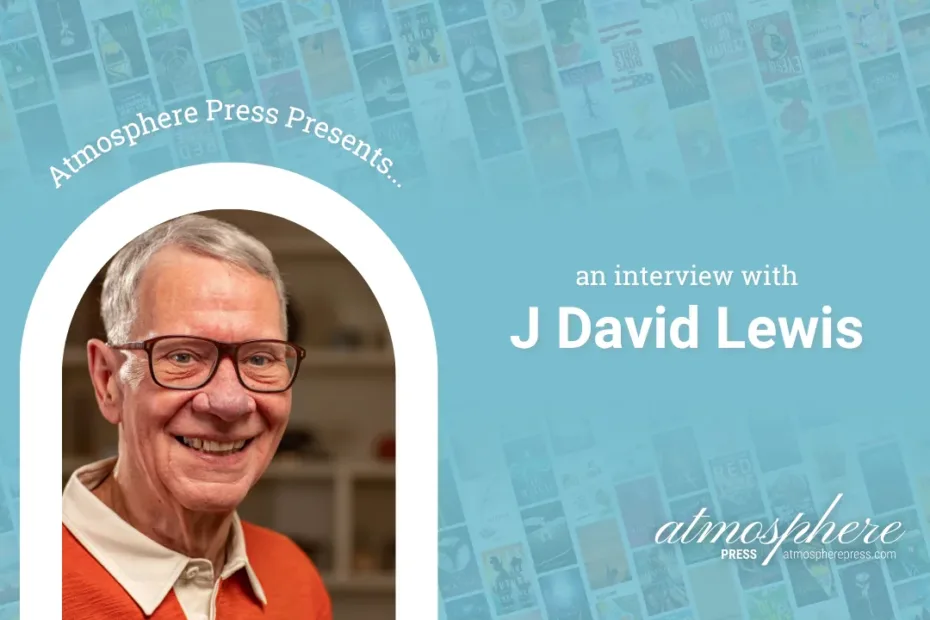
I’ve often described himself as the product from a long line of storytellers. Aunts born in the 1890s could quote long passages of classical literature, poetry, and the Bible from memory. Dad was constantly telling jokes to illustrate points he wanted to make. Some are hard to clean up. My friends, colleagues, and former financial planning clients talk about stories I used the same way to illustrate advice and make it memorable.
Indeed, the expression that became the cornerstone of my firm’s marketing, “There is more to money than money,” was conceived in a staff meeting when I was telling a story to help the team prepare for a client meeting about the complexity of a decision the client needed to make. The financial newsletters I wrote then almost always included stories from economic history to give current events context.
When I talk about my photography, I am more likely to describe the emotions I felt when the visions for images entered my mind than the technical and equipment decisions used to share those feelings. More at www.jdavidlewis.com/about/.
Tell us the story of your book’s title. Was it easy to find, or did it take forever?
As I approached my retirement with confidence that I was finally secure, in light of early career setbacks, I began using the mantra “I don’t know how I got here.” That was at least six years before I began writing A New True to Me. Roughly two years after the mantra became part of conversations, my fifteen-year-old granddaughter asked, “How did you start a business?” My answer was suitable for her but still didn’t address the question in my mantra. Later, I used that mantra with a brother-in-law a few minutes before another mantra, “All I ever wanted to do was help people.” He said, “That’s it. That’s how you got here,” which helped but still didn’t fully address the unanswered mantra.
A couple of years later still, I wrote the first vignettes that became my book. “How I Got Here” began to seem like a title for my collection of stories because they seemed to be leading me to a better understanding of my life. Then the word “foundation” appeared regularly in the stories. For example, paragraphs about early coworkers ended with, “This is an important brick in my foundation.” The potential title expanded to “The Foundation for How I Got Here.”
Because I had doubts about the truth of some memories on the first day of drafting, I added a footer to all my editorial pages: “I made up a few things. There’s some I forgot. It’s all true to me.” When I discovered how grossly I misremembered some of my most repeated stories, the heart of my narrative appeared. True is always TRUE, while TRUE TO ME is only what I believe to be true at a point in time. As long as any of us can take in new information, there is opportunity to find a more accurate truth—A NEW TRUE TO ME. True to me, or anyone, has a timestamp, whether we choose to recognize it or not.
At that point, the title became A New True to Me: The Foundation for How I Got Here, which was never reconsidered, despite editors and publishers questioning it. An advisor suggested that my title required too much work for potential readers to envision the book’s nature. Rather than change the title, I explained it with my back cover quote. If I had sold the book to a traditional publisher, the title probably would have changed to something less consistent with the pages in the book, for the purpose of making more money—for them.
How did it feel when you first saw your book cover? Or when you first held your book in your hands?
The book cover came to me with another, for a few decisions. I immediately gravitated to the one eventually chosen. People around me gravitated to the other cover, including my social media audience. I ran a more sophisticated PickFu.com poll, which split almost fifty-fifty. However, comments by those who preferred my favored cover demonstrated more accurate expectations for the experience I expected readers to have. Those who chose the other potential cover would likely be disappointed because the cover misled them. Like the title, the cover should be consistent with the pages.
I had moderate lingering concerns that the cover may be too somber and dark for me. Reassurance by Ronaldo Alves helped me trust the process. When I received the proof copy, it confirmed that the cover was consistent with, and appropriately mysterious for, the story inside.
Who/what made you want to write? Was there a particular person, or particular writers/works/art forms that influenced you?
I’ve considered myself an artist, starting with studying photography as an art form in the early 1970s. And I’ve always written, despite my atrocious performance in a college freshman English composition course described in the book. It took work to develop writing skills.
Most of my practice was business communication. In my firm’s marketing, I wrote letters, then printed newsletters, which became a blog. Writing helps me understand complex issues. Advice to clients was often supported by logic that writing requires. I apparently started writing this book as an exercise to find the truth for how I got here in life. A lot of that truth was found, maybe not all, which is why I can still ask the question, “Where is here?”
What other professions have you worked in? What’s something about you that your readers wouldn’t know?
I was guided into banking by my heritage. The community around me assumed I would be a banker in the bank my grandfather helped found. By the time I worked there in the 1970s, it had ethical flaws I ignored far too long and couldn’t correct when I recognized them, followed by my being unemployed for a few years. When I finally found a banking job, it turned out to be more than unethical. Criminal is the better term. The leaders went to prison. I gravitated to financial planning and discovered that virtually all the early practitioners operated with unethical practices as well. When I discovered a small professional association that demanded fiduciary standards, I started my own financial planning firm based on those principles and managed to improve the lives of clients for thirty-five years, which was its greatest reward.
What was the most rewarding/meaningful part of publishing your book?
Reading late drafts, with knowledge that beta readers described their reactions with words that reflected the messages I wanted readers to hear. A freelance editor told me that I had a story with interesting depth that needed much more editorial development before publication. He was right about the amount of work and seemed to doubt that I wanted to do it. Many people doubted whether I would swim against the then current of financial planners who were paid by commissions. I couldn’t stop myself either time. Even after I thought I resolved issues that editor identified, the manuscript still misled the Atmosphere editor on important messages. She provided clues I needed to mitigate risks of misleading other readers. That was a critically important element.
If your book had a soundtrack, what are some songs that would be on it?
Jimmy Buffett’s “A Semi-True Story”—Since the time I comprehended its meaning, I have considered personal stories as true to the teller, while facts, if discovered, might warrant modifications. The book itself refers to other songs:
“Kodachrome” by Paul Simon
“Watching the Wheels” by John Lennon
“Stranded on a Sandbar” by Jimmy Buffett
“My Little Town” by Simon and Garfunkel
“The Sound of Silence” by Simon and Garfunkel
What is one thing you hope readers take away from reading your book? How do you envision your perfect reader?
The feedback from readers that I consider most rewarding so far is expressions that my experiences remind readers of their own experiences, attitudes, confrontations, solutions, etc. When I hear these compliments, I can feel that my writing touches universal truths. The editorial review from Literary Titan recognized my messages of personal responsibility and compassion for those who face the consequences of their transgressions. I hope readers look for ways they can mitigate errors—their own and those of past generations.
What creative projects are you currently working on?
I have a large archive of photography accumulated since the purchase of my first professional camera in 1970. Images since 2004 are digital and easily accessed. And I continue capturing images, although marketing A New True to Me limits time I can devote to them. My second Substack publication, “Every Photograph Has Two Stories” (https://jdavidlewis.com/every-photograph-has-two-stories), is envisioned as a place where I can tell the short stories that describe my emotions surrounding selected images.
How was working with Atmosphere Press? What would you tell other writers who want to publish?
In a word, it was very good. For me and my book, it is important that I had several good beta readers and an excellent freelance editor before I approached Atmosphere. Finding that editor was a six-month process, based on criteria I envisioned before I started the search. So, I spent considerable money before meeting Atmosphere, where the next developmental editing was a critically important step.
As described earlier, cover design was an exceptional experience.
Proofreading was tedious, but effective. Within pages after I began reading the proofread manuscript, I remembered an early administrative assistant who proofread complex financial advice to clients. I knew the writing was dramatically better when she worked her magic but couldn’t point to changes she made.
The essence was still there. I did find several errors in my manuscript that should have been caught. When I raised the issue, Atmosphere graciously put it through another round of proofreading without asking for additional compensation. I was very satisfied with the experience.
Interior design went well. Revisions were made quickly and met my expectations. One revision was discovered on a Friday after I believed it was too late in the process to make such changes. It was implemented on Saturday evening, which was a huge surprise and relief. I understand that one shouldn’t expect weekend work, but someone was conscientious enough to take a look that Saturday and calm my concern.
Marketing and publicity assistance has been exceptionally responsive and useful. It is clear that much of the marketing work is for me to do, as it should be. Atmosphere’s tools guide me in learning new skills. The same is true for the people helping me navigate Amazon and other retailers. This interview questionnaire is particularly useful on two levels. Of course, the obvious value is in publicity. It will be available for potential readers and public data that builds my internet presence. This interview writing exercise has also expanded the language I can comfortably use when I talk about my book—with friends and, hopefully, in podcast interviews or other public venues. I’ve thought through relevant questions now and have words for answers.
Are you a writer, too? Submit your manuscript to Atmosphere Press.
Atmosphere Press is a selective hybrid publisher founded in 2015 on the principles of Honesty, Transparency, Professionalism, Kindness, and Making Your Book Awesome. Our books have won dozens of awards and sold tens of thousands of copies. If you’re interested in learning more, or seeking publication for your own work, please explore the links below.