An Interview with Peter Okonkwo
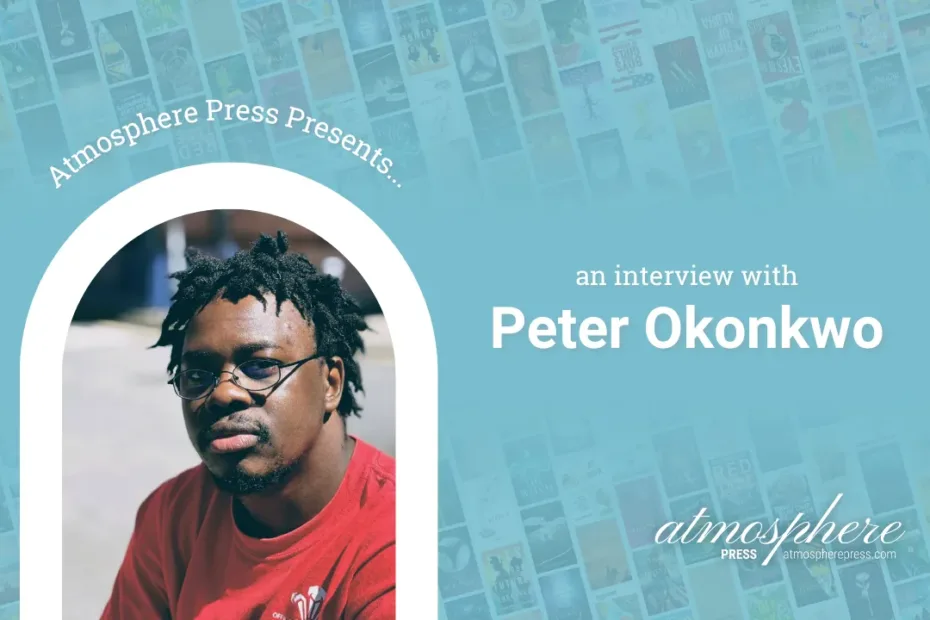
Peter Okonkwo is a Nigerian writer, poet, critic, playwright, storyteller based in Leeds, England. He is the author of seven poetry collections. His works have appeared on the Australian Plumwood Mountain Journal, Ikike Arts, The Lagos Review, Writers Space Africa, Sevhage, CỌ́N-SCÌÒ, The Journal of African Literature, Poetry Catalog, and Adelaide Literary Magazine. His literature works was endorsed by Art Council England in 2024. His recent poetry collection, Kwame Come Home, was debuted as part of the BSWN Artist Showcase in Bristol (2025) and also won Best Poetry Anthology for the Aberdeen’s Bookause Prize. Peter is the creative director at PEL, where he has interviewed over 1000 new, emerging, and prominent writers.
What inspired you to start writing this book?
The story of Kwame was inspired by the number of stories about disappearance and loss in families that are sadly connected to migration.
When Vanessa first started lamenting the loss of her child, she had no idea whether he was alive or dead. She didn’t know, and she had to do everything in her power to bring him back. As the poor mother that she was, she had to perform sacrifices, bathe in rivers, and give money to some spiritualists, prophets, and the people she had to consult, even in her dire state of poverty or impoverishment. Yet, all her cries and tears went unanswered.
On the other hand, Kwame and Jide, his friend, are just there trying to pursue greener pastures, and they’re doing it quite wrongly.
So, the story of Kwame was inspired by the number of mothers out there who pass through that agonising situation of not knowing where their sons are.
I just had to put that agony together in the form of narrative poetry to explore the sadness and the horror associated with stories of this nature.
Tell us the story of your book’s current title. Was it easy to find, or did it take forever?
I have always known I was going to write Kwame Come Home. Actually, the book was first written and published in scattered poems back in Fate in the Dungeon of Doom (2021). Then, those who read it always asked me, “Peter, what happened to Kwame? Did he ever come home?”
While I was accepted into the Black South West Network’s Culture-Based Collective Incubator Programme in Bristol last year, in 2025, we were meant to produce a commissioned piece of artwork to mark our acceptance into the programme, and one of the themes given included migration.
Initially, I already had the story of Kwame from many years ago, back in 2021. I just thought to myself, “I can actually use this medium to answer the questions my readers have always asked me about whether Kwame ever comes home.” Then, I thought I was just going to develop it, and I incorporated the sadness of a mother longing for her son to come back home, interwoven with a story of migration and the dire situation of people having to leave their country, their land, in search of greener pastures.
So, I have always known that there was going to be Kwame Come Home. Back in those years, when I published other titles like Whose Fault?, Kismet or Impediment, A Cry for Mercy, How the Demons Leave, and I Saw the Light, I always knew that I needed to write a book called Kwame Come Home. I’m glad I eventually did. The title had always been stuck in my head before now.
What books are you reading (for research or comfort) as you continue the writing process?
Sadly enough, I’m not reading any books for research or comfort as I continue the writing process. It’s just vivid. It is very obvious that the story of Kwame is like the story of millions of people out there.
In our current world, there is a vast number of people migrating, trying to cross the Mediterranean through the Sahara Desert, and they are doing it wrongly. So, there is news on the BBC. There is news on the internet and commentaries online. There are also books written about it. But I did not really read any books for research purposes.
All I did was put together the story I already had. Even though I did some research and already had an angle or a direction that the story should keep going in, it always surprised me how the voice in my head would tell me to go another way, to explore another theme, and to touch on certain things that I’m not happy with that are currently going on in our world concerning migration, how people have been treated, discrimination, the horror of crossing, and how people take advantage of those in these dire situations.
I also wanted to explore the horror, the shame, and the humiliation that these migrants experience, as well as the assault, the harassment, and the things they have been prone and liable to because they are very vulnerable.
Yeah, so these are the things I wanted to bring out and discuss through literature in a way that could spark some sudden conversation.
What other professions have you worked in? What’s something about you that your readers wouldn’t know?
Aside from literature, I’ve worked in the education profession, which I think has a very good connection with literature. I’ve worked in education, the health sector, and the pharmaceutical sector, many years ago. I currently work in the social service sector.
Yeah, so I’ve always been a jack of all trades, really.
I don’t think there’s anything about me that my readers wouldn’t know, as all my information is on Google.
Who/what made you want to write? Was there a particular person, or particular writers/works/art forms that influenced you?
There is no particular person, writer, or work that influenced me. I want to write because I have a story in my head, and it needs to be told. I want to write because there is something dire in my heart that I want to pass down, not just for the sake of writing, but for the sake of posterity and preserving history.
You know, I think that’s one of the beauties of literature: the fact that our work can stay forever, for many, many years, decades, and centuries.
So, I write because I have a story that needs to be told, and I think that’s just my inspiration for writing, really. I’ve got an amazing story that needs to be heard. There is no particular person, situation, or circumstance that inspires me. But the push in my head is that this story needs to be told, and that’s exactly what inspires me to write.
Where is your favorite place to write?
I don’t have a favourite place to write. All right, anytime, anywhere, whenever the voice speaks in my head. I am always with my phone, and I jot it down.
You know, writing is a spontaneous thing. You don’t need to plan it because you can’t plan it. Well, other people can plan it, but I cannot plan my writing because the words just come to me at any time, and I just have to pen them down.
At a certain point, I can just get inspiration about how the story of Kwame Come Home needs to progress further, and I just pen it down. So, it’s a spontaneous thing for me. I don’t have a particular favourite place where I write. Yeah, I just write whenever the words come to my head.
What’s one thing you hope sticks with readers after they finish your book?
I would like them to understand Vanessa’s pain, her agony, and her tears after all these years of looking for her son. I would like them to empathise with her. I would like them to anticipate the story further, asking questions about whether Kwame comes home or not.
I would like them to be calm and see the reason why the story needs to be told. I would also like them to have another perception of how migrants are being perceived. Yeah, I mean, there are a lot of questions that my book opens conversations about. But one thing that I hope sticks with readers after they finish reading the book is that they find pleasure in what they’ve just read. I hope they can empathise with the sorrow of Vanessa’s long years of searching and look forward to what Kwame’s outcome is going to be.
Are you a writer, too? Submit your manuscript to Atmosphere Press.

Atmosphere Press is a selective hybrid publisher founded in 2015 on the principles of Honesty, Transparency, Professionalism, Kindness, and Making Your Book Awesome. Our books have won dozens of awards and sold tens of thousands of copies. If you’re interested in learning more, or seeking publication for your own work, please explore the links below.