An Interview with Afshine Emrani
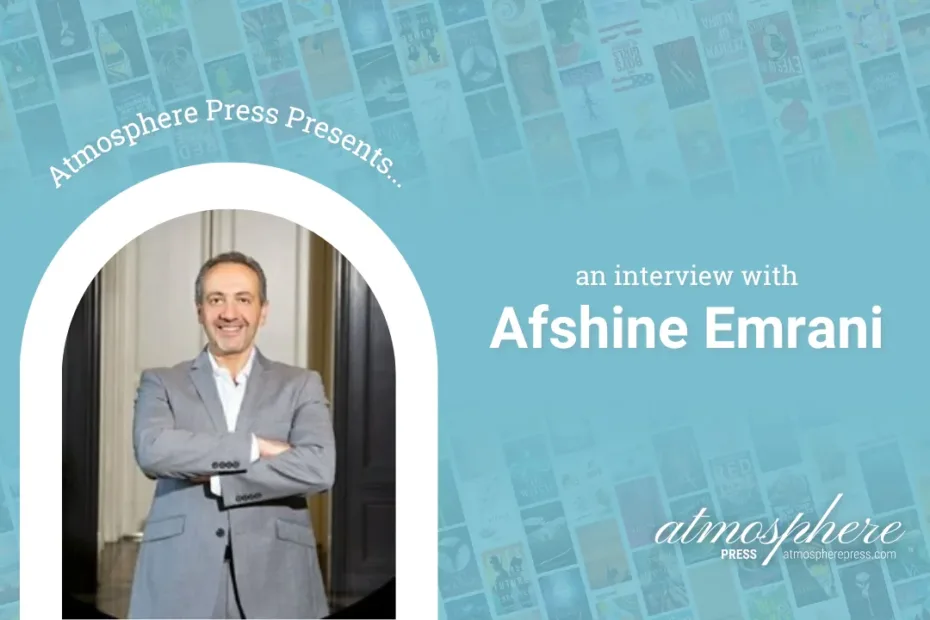
Afshine Emrani, MD, FACC, is a board-certified cardiologist and Assistant Clinical Professor at the UCLA David Geffen School of Medicine. He founded Los Angeles Heart Specialists in 1999 and has cared for patients for nearly thirty years, earning recognition as a Castle Connolly Nationwide Top Doctor since 2008 and an LA Magazine Super Doctor since 2010. He sees patients in English, Farsi, and Spanish.
Alongside medicine, he writes at the meeting point of the heart as an organ and the heart as the seat of the soul. He is the author of Beyond the White Coat; A Woman’s Heart: Sex Matters!, which was recognized by First Lady Laura Bush; and Where You Will Not Look, a wisdom parable set in 1198 Crusader Acre. He shares essays on medicine, longevity, and meaning in his Substack newsletter at afshine.substack.com. He lives and practices in Los Angeles.
Who/what made you want to write? Was there a particular person, or particular writers/works/art forms that influenced you?
My patients made me want to write. For nearly thirty years, I have sat across from people on the worst day of their lives, and what they say in those moments is rarely about cholesterol. They talk about the son they stopped calling, the work they never started, the person they were before life got loud. I began writing to hold on to what they taught me.
I am also, by nature, an introvert. Not antisocial, just someone who has to think deeply to understand anything, and writing is how I think. Once I understand something, I have an almost physical need to share it.
As for influences: I was raised between cultures and languages, and I have always loved the wisdom traditions that speak in stories rather than lectures. Rumi, the Chassidic masters, the old parables that fit an entire life into a single image. Paulo Coelho showed me a modern reader still hungers for that kind of book. Where You Will Not Look is, in a sense, my quiet argument with The Alchemist.
What other professions have you worked in? What’s something about you that your readers wouldn’t know?
My day job is cardiology. I founded Los Angeles Heart Specialists in 1999, I teach at UCLA’s David Geffen School of Medicine, and over my career I have worked in roughly fifteen hospitals and emergency departments. I see patients in English, Farsi, and Spanish.
What readers probably wouldn’t guess: I also run a gallery of Meiji-era Japanese art, Flying Cranes Antiques. I have spent years studying Satsuma ceramics and the craftsmen who painted thousands of figures onto a single vase with a brush of a few hairs. That patience, the willingness to spend a lifetime on details almost no one will notice, is exactly what I try to bring to a sentence.
Tell us the story of your book’s title. Was it easy to find, or did it take forever?
The book began life under a different title, The Soul’s Code. It was accurate, but it sounded like a self-help book, and this is not a book that tells you what to do.
The story follows Daniel, a clerk in 1198 Acre whose life has narrowed into routine, who sets out to find a legendary Tree of Wisdom. It is a classic quest, but with a reversal: what he is searching for was never on the mountain. It was in the places he refused to look, in his mother’s kitchen, in the woman he left, in his own unopened grief.
Once I understood that, the title wrote itself. Where You Will Not Look is both the answer to Daniel’s question and a gentle challenge to the reader. Most of us are not lost. We are just looking everywhere except the one place that frightens us. When the title search came back clear, I knew it was the one.
What part of publishing your book made it feel real for the first time?
I revised this book through dozens of drafts, so for a long time it lived only as a file on my computer, something I could always change. It felt real the day I let go of the right to change it. Seeing it go live on Amazon, with a cover and a page and a button that said “Buy,” was strange and wonderful. The book no longer belonged only to me.
The second moment was hearing that two book clubs had chosen it for discussion. A room full of strangers arguing about Daniel and his mother, people I will never meet carrying my characters around in their heads. That is when I felt like an author and not just a doctor who writes.
If your book had a soundtrack, what are some songs that would be on it?
The book is set in the medieval Levant, so the soundtrack leans toward the oud, the ney, and silence.
Anouar Brahem, “Le Pas du Chat Noir” for the long roads Daniel walks.
Arvo Pärt, “Spiegel im Spiegel” for the scenes with his mother, Mariam.
Leonard Cohen, “Anthem” for the ending, because the cracks are where the light gets in.
A Persian setar improvisation, the music I grew up with, for the nights in the desert.
Silence, honestly. Some of the most important moments in the book happen when nobody says anything.
What’s one thing you hope sticks with readers after they finish your book?
That the thing you are searching for is probably closer than you think, and that you have been avoiding it on purpose.
As a cardiologist, I have watched people wait for a crisis before they finally call their brother, change their life, or forgive themselves. I hope readers don’t need the crisis. I hope they close the book, sit quietly for a minute, and then go and look in the one place they have been refusing to look. That is where the wisdom was the whole time.
What was the most rewarding/meaningful part of publishing your book?
The messages from readers. People write to tell me which line stopped them, or that they called their mother after finishing it. In medicine, I can help one patient at a time, in one room. A book walks into rooms I will never enter and keeps working long after I have gone home. That is a different kind of healing, and it has been deeply meaningful to me.
What creative projects are you currently working on?
I am finishing Longevity Unmasked, a book that answers over 400 of the most common questions about living longer and grades each answer by the strength of the evidence behind it, with a companion site at longevityunmasked.com. I am also writing a new 2027 edition of my book on heart disease in women, the number one killer of women and still badly underrecognized. On the literary side, I am working on The Golden Cracks, an illustrated fable for all ages about a lantern whose broken places let the light out, and a Jerusalem novel that has been asking to be written for years. And every week I write essays on medicine, longevity and meaning on my Substack, afshine.substack.com.
Are you a writer, too? Submit your manuscript to Atmosphere Press.
Atmosphere Press is a selective hybrid publisher founded in 2015 on the principles of Honesty, Transparency, Professionalism, Kindness, and Making Your Book Awesome. Our books have won dozens of awards and sold tens of thousands of copies. If you’re interested in learning more, or seeking publication for your own work, please explore the links below.