An Interview with Kimberly Heiman
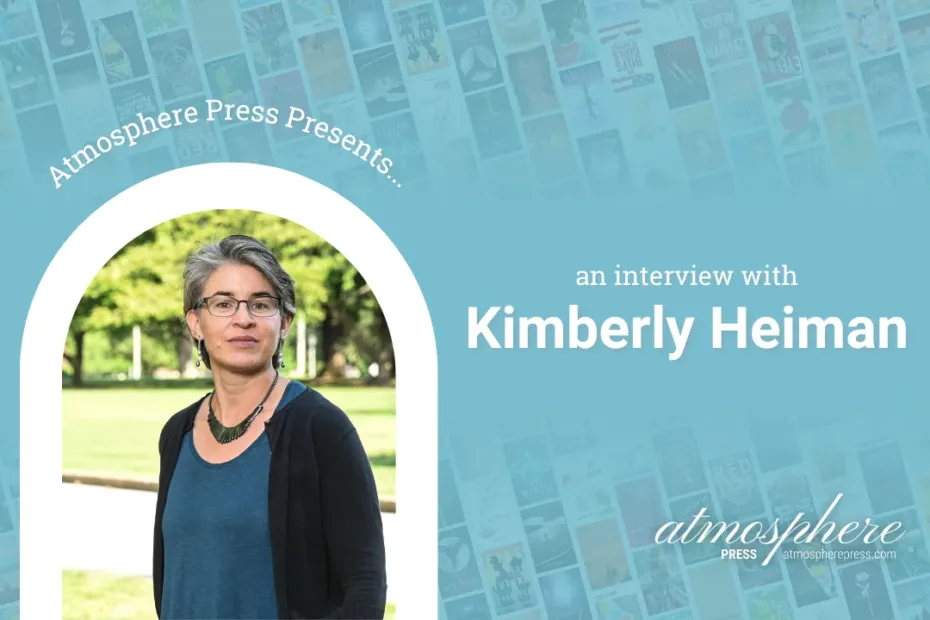
Kimberly W. Heiman is a biology professor at Muhlenberg College in Allentown, Pennsylvania. She took up creative writing as a pandemic coping strategy, earning an MFA from Wilkes University. Her first book, The Scientist and the Story, a personal storytelling craft book for STEM professionals, is forthcoming from the University of California Press. Her shorter work has been published in Flash Fiction Magazine and the IHRAM Press literary magazine, CrayfishMag, and Oddball Magazine. Her work has been nominated for the Best American Short Stories and Best of the Net Anthologies. When not writing or teaching, she is searching beaches for horseshoe crabs.
What inspired you to start writing this book?
I started writing creatively during the pandemic. Like many others, I was angry, and I needed an outlet for my frustrations. After writing a 120k science fiction novel that was cartoonish in plot and filled with paper-thin characters, I realized that I should go learn more about how to do this writing thing. I enrolled in an MFA program and surprised myself by focusing on nonfiction. I wrote personal essays about being a marine biologist, braiding together my love for slimy invertebrates with memoir-style exploration of self. Many of my non-scientist friends expressed a desire to have me as their science professor. This got me thinking: could I teach other scientists how to marry storytelling techniques from creative writing with their science communication and outreach efforts? As a stereotypical lot, scientists are notoriously hard to understand, and we can often come off as lecture-y and judgy. This book teaches personal storytelling through creative writing to STEM professionals as a way to humanize us and help us connect, on an emotional level, with our audiences.
Tell us the story of your book’s current title. Was it easy to find, or did it take forever?
The Scientist and the Story is a play on Vivian Gornick’s famous creative writing craft book: The Situation and the Story. Gornick is an essayist and a memoirist whose book teaches the centrality of self-reflection and self-exploration in memoir. My book is taking the science communication standard of describing science in words people can understand and shifting its focus to making the scientist the center of the story, not the science. I’m suggesting that the people doing the science, not the science itself, are the most engaging part of the story. Hence the title, The Scientist and the Story.
Describe your dream book cover.
The cover design for this book is hard. I don’t want artifacts of science on the cover. No beakers or microscopes, please. I want to center the people doing the science, not the science itself. This book is about personal storytelling. My publisher has suggested a more text-forward cover, maybe with some bold colors and geometric designs. If you look at many creative writing craft books, you’ll see this is a common cover style. I’m excited to see what The University of California Press comes up with.
If your book had a soundtrack, what are some songs that would be on it?
Hmmm, I haven’t thought of this. I write next to an aquarium, and so the bubbling sound of water and the groan of the water pump are my soundtrack. But we could go full-on goofy and play all the kitsch science-themed songs like “She Blinded Me with Science” by Thomas Dolby, “Weird Science” by Oingo Boingo, and They Might Be Giants’ iconic “Why Does the Sun Shine” followed by “Why Does the Sun Really Shine.”
What books are you reading (for research or comfort) as you continue the writing process?
This book has nearly 200 references cited. Its audience is scientists, and to convince scientists of your theory, you need to back your ideas up with references. I’m reading a lot of books written by scientist-authors that are engaging in their discussion of science, lyrical in their prose, and personal in their storytelling. Some of my favorites are Braiding Sweetgrass by Robin Wall Kimmerer, Lab Girl by Hope Jahren, and The Disordered Cosmos by Chanda Prescod-Weinstein.
What other professions have you worked in? What’s something about you that your readers wouldn’t know?
I am a card-carrying biologist with a PhD. in marine biology, and I am a professor at Muhlenberg College. My favorite animal is the horseshoe crab, and I drag my family to Delaware Bay nearly every June so we can camp and watch the horseshoe crabs breed. I’ve also worked for COMPASS, a science outreach collaboration created by Jane Lubchenco, the former head of NOAA.
Who/what made you want to write? Was there a particular person, or particular writers/works/art forms that influenced you?
I saw a societal problem: the rise of misinformation and the demonization of scientists and scientific research, and I wondered if teaching scientists how to not sound so lecture-y when they talk to non-scientists would help. Stories are a powerful means of connecting the author and the audience. Stephen King, in his book On Writing, called it a telepathic connection between him and his readers. Scientists need to be better storytellers, so I wrote a book that would help them develop those skills.
Where is your favorite place to write?
I have a lovely writing desk in a small home office. It is wedged up against large windows, letting me glance outside as I’m thinking. I find I do my best writing to a view. Someday I hope to have a writing desk with an ocean view; for now, the large pine trees in my front yard are doing the job.
What advice would you give your past self at the start of your writing journey?
Do it. Just start. Let that shitty first draft fly out of you and onto the page. You can fix it later. The most important thing is to start.
What’s one thing you hope sticks with readers after they finish your book?
Everyone has a story to tell, and if you tell it well, people want to hear it.
Also, specifically for scientists: people care about people. Be willing to share your personal journey, your vulnerabilities, your failures, and emotions with others. We all have these experiences and will lean closer to hear what you have to say because we connect with your humanity.
Are you a writer, too? Submit your manuscript to Atmosphere Press.
Atmosphere Press is a selective hybrid publisher founded in 2015 on the principles of Honesty, Transparency, Professionalism, Kindness, and Making Your Book Awesome. Our books have won dozens of awards and sold tens of thousands of copies. If you’re interested in learning more, or seeking publication for your own work, please explore the links below.