An Interview with Alan Cohen
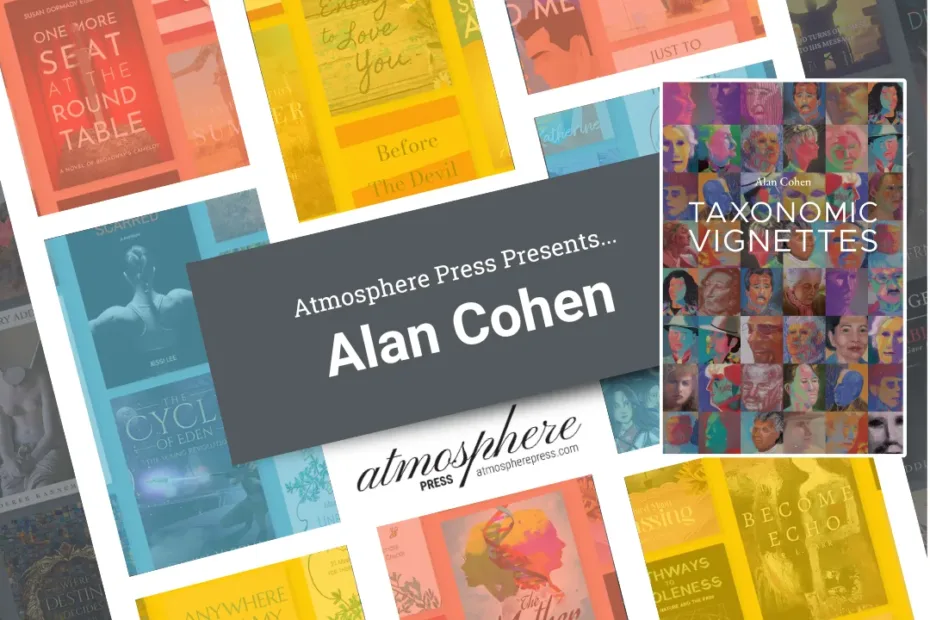
Alan Cohen retired after a rewarding career in medicine and turned his attention to writing and publication. His poetry has appeared in nearly one hundred venues; he has had letters to the editor in Poetry magazine and The New Yorker (a new one was just published December 8, 2025); and he has published medical articles and essays concerning current affairs. Easy in Harness: A Productive Approach to Hiring a Good Manager was published in 2023, Taxonomic Vignettes, a book of poetry, in 2024, and Inferno, a novel, in November of 2025. Each has had highly positive feedback from reviewers and readers. And he has now completed Hijacked, a new nonfiction work about how to revive equality, democracy, and freedom.
Tell us the story of your book’s title. Was it easy to find, or did it take forever?
I have by now chosen titles for many articles, books, and on one occasion even for a widely used computer report. It never gets easier. In general, I begin with an acting title just so I can distinguish its computer file from neighboring files. At some point in the writing, I usually think of a better title and begin a list. From experience, I recognize that the first titles are unlikely to be the best; that is, I try to avoid what I call premature closure. My lists tend grow to twenty or more options. I don’t think I have ever found the final title while I was still writing, but the titles I have listed help to generate others.
When it is time to finalize, I generally focus on the issue on and off all day, often for many days. The title I am still most pleased with is The Beast in a Cage of Words; that one, for a book of poems about nuclear weapons, took me months to find.
For Easy in Harness, I had fifty-eight titles on my list. So that you can envision the process, here are a few of them:
Secret Ingredient
An Escalator to Prosperity
Rocketing to Prosperity
Escaping Occupational Gravity
Escaping Managerial Gravity
A New Door Opens
New Worlds to Gain
Opening the Door to…
A New Lease on Life
Suspending Natural Law
Transcending Natural Law
Something Extra
The Magic of Empowerment
Foundation and Empire
From Empowerment to Empire
Empowering Empire
Open Season
An Economic Thirst
Giving Myself to Work
We Can’t Wait to Get to Work
The Thrill of Work
Eager to Get to Work
In Love with Work
Having a Crush on Work
Dedicated to Work
Saving Myself for Work
Taking a Chance on Work
Work Grows Wings
For Hijacked, I started with Apportionment of Equality, just to have a name for the file. Then I changed it to The Impact of Inequality and What Can Be Done about It and then to The Impact of Corporations on Equality and What Can Be Done. I often focus my thinking on a particular issue during showers and found the present title during one such concentrated effort. It is the best I have found so far but I’m open to a change if I can shorten without diffusing it.
How did it feel when you first saw your book cover? Or when you first held your book in your hands?
Many years ago, a friend had written a book of poetry and wanted to use as a cover a painting by my wife Anita. Her publisher said that the cover was at their discretion, and they did not even want to see the artwork she proposed. I, on the other hand, have had the good fortune with Atmosphere Press to have the opportunity to propose images for the expert designers to use. For Easy in Harness, we sent five of my wife’s paintings and, as I said at the time, we would have liked to choose all five of the covers they developed. Of course we chose the one we thought the best.
When the sample book arrived, I sat it on my desk and looked at it twenty times a day and smiled every time. It was the beauty of the cover which I found cheering, and I was pleased that others would have the opportunity to be cheered by her work as well. It made my day for many days; still does.
As much as I liked that first book cover, I like the second more. That one involved twenty or thirty portraits to represent the many word portraits presented in the poems. The Atmosphere team working with Ronaldo created a wonderful cover and worked with us to adjust the layout to satisfy even minor changes we requested.
I can’t say exactly why, but my favorite cover is the one for Inferno, and I much prefer the hardcover to the softcover. I keep the hardcover on my desk and every so often open to pages at random and read a paragraph or two. My wife and I are working now on what art to send for Hijacked and are really looking forward to seeing what the Atmosphere team will come up with this time. It’s the most exciting part of the entire publication process.
Who/what made you want to write? Was there a particular person, or particular writers/works/art forms that influenced you?
I started writing poetry when I was seven years old. I suspect that may have had something to do with the Arbuthnot Anthology, from which my parents read to me early on, but that is only speculation. It feels inside me as if I simply had the urge to write and have gone on doing so. Since then, writing has seemed to be second nature. By the time I was eleven, I was reading and modeling my writing on Charles Dickens, which unfortunately made me long-winded and pedantic in prose. For a while I memorized poetry I particularly liked – I didn’t look up or come across Easy in Harness; I remembered it. I read all extant poems by people whose poems I particularly liked: John Keats, W.B. Yeats, Wallace Stevens. Early on I wrote with rhyme and rhythm. Then I found my way into Robert Lowell, Sylvia Plath, and Elizabeth Bishop; and later I discovered Dave Smith, A.R. Ammons, and Jorie Graham. I also read widely in fiction and nonfiction books, The New Yorker for some thirty years cover to cover, but I can’t say that my nonfiction was influenced by anyone specific since Dickens.
I wrote Easy in Harness because I saw so much suffering in the workplace and hoped to diminish that suffering. Before I had been a manager, my ideas were just concepts but once I had had the opportunity to watch them succeed, I felt strongly that it was a responsibility to share them with others.
As to Hijacked, I began due to poll results. When I discovered that a majority of Americans felt positive about large corporations and that more than eighty percent of us said we would vote for a Silicon Valley CEO for president, I decided I had to explain why these were likely a result of too little information about the impact of corporations on our country and on the world. I enjoy writing poetry and fiction more, but whenever there is a possibility of improving lives by research and vivid writing, I feel bound to lend my what skill I have to such an effort.
What other professions have you worked in? What’s something about you that your readers wouldn’t know?
I was in medicine full time from age twenty-two when I started medical school to age sixty-two when I retired. From the time I started elementary school until I retired, my longest break was three months, mostly summer vacations from school – and during those I went to summer camp, became a camp counselor, did manual labor, was an ice cream man (was, that is, in some sort of organized activity) which filled most of that time. I spent six months of my fourth year of medical school in Liverpool, Edinburgh, and London, did my internship in Boston and my residency in Hawaii, and used time off to explore. One six-week honeymoon trip to France and Switzerland was the longest freewheeling interval; we would decide in the morning it was time to move on, call for a reservation in the next town of interest, from Avignon – for example, to Arles – and hop in our leased car and go. But we were far more organized otherwise, and many planned vacations were cancelled by job changes.
In an interview like this it is not really possible to summarize a life in medicine, but I’ll mention some highlights. I took care of thousands of patients. I represented seventy physicians with administration in Chicopee, Massachusetts, where I saw an average of twenty patients a day and was on call for 70,000 three or four times a month. I taught students and residents at Yale. I managed resident training in Champaign and Danville, Illinois. Easy in Harness began with my management of primary care at the Fresno VA. Each of these activities took place in a separate and unique world, with its own rules, character, and impact. I had colleagues, mentors, mentees, responsibilities, things to learn and things to teach in each. And perhaps that’s a good place to stop.
What was the most rewarding/meaningful part of publishing your book?
Based on my previous answers, I don’t suppose it will surprise you if I say that having people read my book, like it, and take it to heart is the most rewarding part of publishing. That is why I wrote it – to have it read and applied. In the case of Hijacked, I hope it will be read widely and help us to address the present failure of our politics to reflect the founding fathers’ goal of a government of, by, and for the people. I believe I have presented a practical program for getting our country back on track.
What creative projects are you currently working on?
I have a database I have been working on with my brother for decades. It includes ratings, short reviews, release, copyright, country (s) of origin, genres, length, availability, color, black and white or both, time and place of filming and story, personnel involved, actor billing, etc. It was an ‘internet movie database’ before the internet, but with only two critics and lots of information, particularly genres, that the database doesn’t have – and it is for the most part independently sourced. We now have more than 12,000 movies represented. My wife and I have seen more than 11,300 ourselves.
I am also planning to gather the annual holiday letters my wife and I have been sending for more than forty years into a book. Each is written in a somewhat new or different style or from a different point of view and they reflect our lives and some of the history of our era.
Are you a writer, too? Submit your manuscript to Atmosphere Press.
Atmosphere Press is a selective hybrid publisher founded in 2015 on the principles of Honesty, Transparency, Professionalism, Kindness, and Making Your Book Awesome. Our books have won dozens of awards and sold tens of thousands of copies. If you’re interested in learning more, or seeking publication for your own work, please explore the links below.