An Interview with Tom Farley
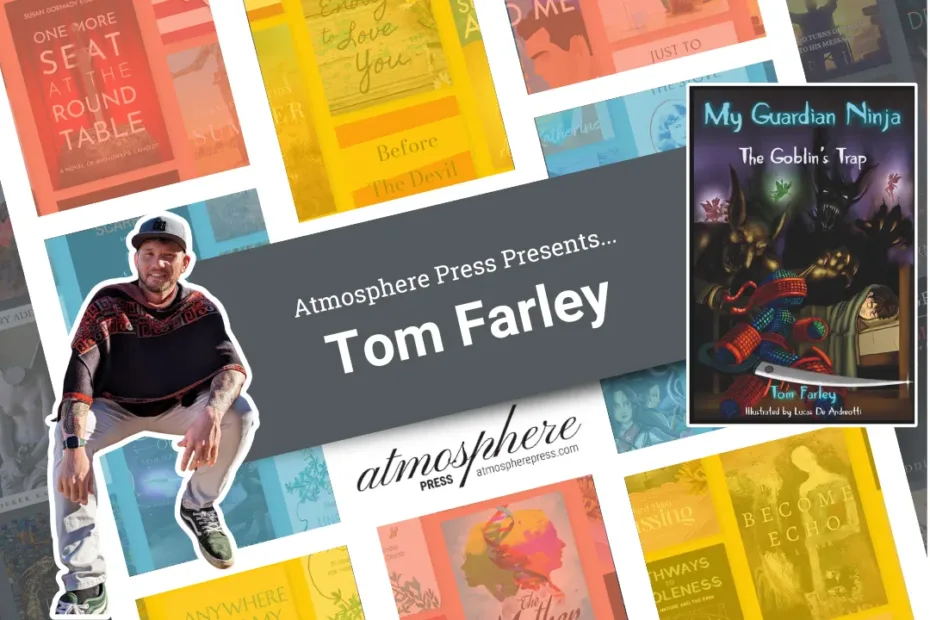
Tom Farley is a Salt Lake City, Utah-based author with a lifelong passion for storytelling. He studied film production in college with an emphasis on screenwriting and directing, though his creative journey began much earlier through writing lyrics and poetry for a local band.
When he’s not writing or working, Tom enjoys spending time with his two young boys and socializing with friends. He is a kickball team captain and league referee, an avid hiker and backpacker in Utah’s High Uintas, and a devoted horror movie enthusiast. He also loves traveling and drawing inspiration from new places and experiences.
What inspired you to start writing this book?
The idea for this book began when my oldest son was born. I wanted to create something that would help him feel safe at night and not be afraid of the dark. That led to the concept of a hidden world where the spirits of legendary warriors from across civilizations inhabit crochet ninja dolls, standing guard over children while they sleep.
Their mother loved the idea so much that she crocheted the very first ninja dolls for our kids to cuddle at bedtime. Over time, the stories grew beyond simple nighttime tales – the mythology expanded, the characters deepened, and the world became a meaningful and imaginative part of our family life. Eventually, it felt too special to keep to ourselves.
Drawing on what I learned about storytelling in college, I set out to transform those short bedtime stories into a fully realized novel. What began as a way to comfort my child evolved into the book it is today.
Tell us the story of your book’s current title. Was it easy to find, or did it take forever?
The series title actually started out as a placeholder, and I never intended to keep it. I liked My Guardian Ninja, but when I first came up with it, it felt a bit long, and I was aware of how many franchises already use the word ‘guardian.’ I assumed I’d just replace it later.
As the book developed, though, nothing else ever felt quite right. The title fit the tone, the audience, and the heart of the story better than anything I tried to swap it out for. When I finally landed on the subtitle for the first book, The Goblin’s Trap, everything clicked. Suddenly, the full title had a rhythm to it; it felt cohesive, memorable, and, more importantly, like a brand.
At that point, I stopped fighting it and embraced it.
Describe your dream book cover.
Honestly, the cover I have now is better than anything I originally imagined. It shows both the villains and the protagonists, immediately communicating the stakes of the story. The scene is dark and creepy, almost overwhelming, with a single stuffed ninja facing forces that seem far beyond him.
No hesitation, no fear, and poised to strike, he grips his handcrafted sword made from a scissor blade, prepared to destroy anything that threatens the child. The image perfectly captures what the book is about: a warrior standing as the last line of defense against a child’s darkest, most visceral fears. I truly cannot imagine a better cover.
What other professions have you worked in? What’s something about you that your readers wouldn’t know?
Before becoming an author, I studied film production with a focus on screenwriting and directing, and I’ve worked in a variety of creative and technical roles over the years. Writing lyrics and performing in a local band was one of my earliest creative outlets, and I also ran a debate podcast for several years with a friend. Today, I work as a software developer.
Something most readers probably wouldn’t expect is that I really don’t enjoy TV shows. I love stories and I love movies, but long-form television has never clicked for me. I’m well aware this is borderline appalling to most people. In fact, it seems to be a cardinal sin now that I’ve entered the dating pool, especially in an age where everyone bonds over their favorite series, and we almost never see eye to eye on it. It’s definitely a hot take, but I stand by it.
What advice would you give your past self at the start of your writing journey?
Start earlier, and don’t give up. Writing gets clearer and more confident the more you do it, but you only learn that by sticking with it through the awkward and incoherent stages. Every rough draft is part of the process, not a failure.
Most importantly, trust your gut and believe in your vision. It’s easy to second-guess yourself or chase what you think you’re ‘supposed’ to write, but the stories that matter most are the ones that feel personal and true. If you keep showing up, keep practicing, and stay honest with what you want to say, the rest eventually falls into place.
What’s one thing you hope sticks with readers after they finish your book?
More than anything, I hope it entertains them. I want readers to feel connected to the characters while they’re reading and to feel the emotional core and weight of the story as it unfolds. If the book helps them experience and process familiar feelings in a new, fantastical way, then I’ve done what I set out to do.
Are you a writer, too? Submit your manuscript to Atmosphere Press.
Atmosphere Press is a selective hybrid publisher founded in 2015 on the principles of Honesty, Transparency, Professionalism, Kindness, and Making Your Book Awesome. Our books have won dozens of awards and sold tens of thousands of copies. If you’re interested in learning more, or seeking publication for your own work, please explore the links below.