An Interview with Jaime Rodriguez
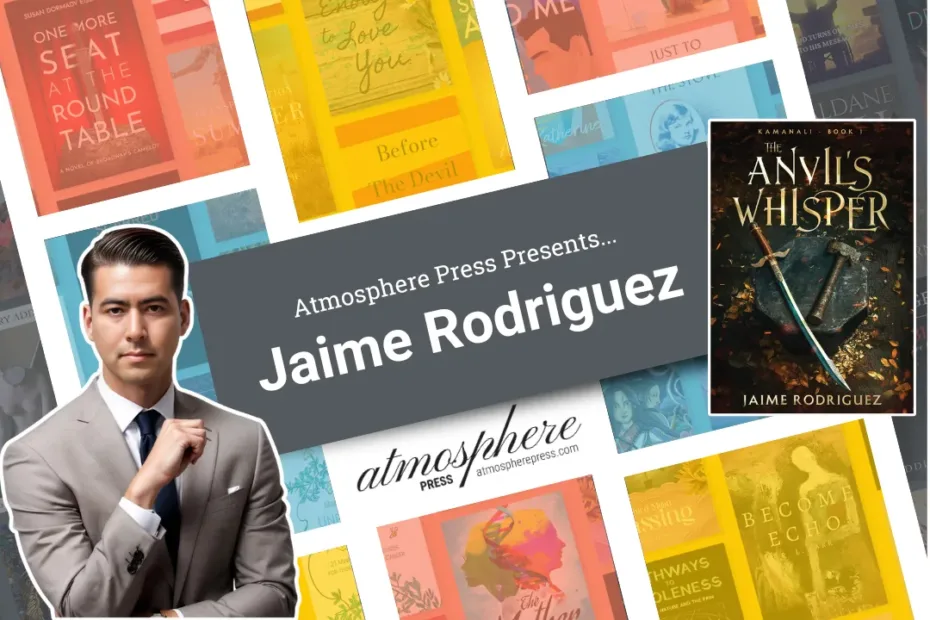
Jaime Rodriguez is a blue-collar Latino NWU writer from the 253 who found his passion for storytelling after high school. Working in construction and sales by day, he spent his free time crafting stories that explore faith, resilience, and the power of unlikely heroes. Encouraged by a teacher who helped him refine his voice without stripping away his individuality, he embraced writing as both an outlet and a calling. When he’s not writing, he enjoys hiking the Pacific Northwest and spending time with his wife and kids. The Anvil’s Whisper is his debut epic fantasy, blending rich world-building with themes of destiny and defiance.
What inspired you to start writing this book?
It started on a train ride home from Southern California to Washington with my wife and kids. I remember watching the scenery roll by, my family soaking up the gallery-like views, and I was stuck on the news, specifically what felt to me like outright gaslighting from the State Department about Gaza and the West Bank during the Biden administration. I hit a point where I could not just scroll and stew anymore, I needed a way to process it, to ask harder questions about power, faith, complicity, and what it costs to tell the truth when everyone around you insists you are the problem for seeing it.
Before that, I had been writing fanfiction for a couple of years. I was even tinkering with a Dune-like plot for a different fandom. But somewhere in the middle of that train ride, this new idea showed up fully formed, a blacksmith in a brand-new fantasy world. So, I opened my notes and started building. I spent the next couple of hours sketching the land, the beliefs, the tensions, the stakes. I called it Keleret at first, then later renamed it Anakuatl once the world found its real shape.
By the time we got later into the day, I had a rough version of chapter one. And once I wrote that first spark, I just kept going. It felt like I had finally found the right story to carry everything I was trying to say, and the kind of hero I needed, not a chosen one with easy answers, but someone ordinary who has to decide what they stand for when the heat turns up.
Tell us the story of your book’s current title. Was it easy to find, or did it take forever?
I knew early on I wanted the title to keep a thread of the blacksmithing in it, because the forge is more than a setting, it’s the story’s heartbeat. The tricky part was finding something that felt grounded and intriguing without basically blurting out the whole plot. I wanted it to hint at transformation, the kind that starts quietly, almost privately, before it changes everything.
That is why I kept circling back to the anvil. It is not flashy, it is steady. It is where pressure turns into shape. Once the phrase The Anvil’s Whisper hit me, it clicked because it carried that idea of subtle change and inevitability, like something true is being spoken under all the noise.
And yes, I did the practical author thing right after, I ran a quick Google search to make sure I was not stepping on an existing title. Once it looked clear, I committed.
If your book had a soundtrack, what are some songs that would be on it?
If my book had a soundtrack, it would be a big, cinematic blend of the music that’s lived in my head for years. I’d want it to feel mythic and emotional, but still propulsive, like the world is moving whether the characters are ready or not.
You’d hear a lot of Howard Shore for that ancient, weight-of-history atmosphere, John Williams for the sense of wonder and bold hero moments, and Hans Zimmer for the pressure-cooker intensity when everything starts tightening. Then I’d layer in the stuff that shaped my imagination early, the Gundam Wing vibe for grit and momentum, and the Digimon Adventure dub score** for that nostalgic punch of courage and heart.
And to tie it all together, I’d want a streak of Treasure Planet modern songs, that swashbuckling, star-bound feeling of adventure with real emotion underneath, like you’re chasing something huge and personal at the same time.
What books are you reading (for research or comfort) as you continue the writing process?
Right now, my reading splits into two lanes: books that help me think about story structure and meaning, and books that feel like home.
For research, I’ve spent time with The Hero with a Thousand Faces by Joseph Campbell, mainly because it helps me zoom out and ask why certain stories hit so hard across cultures and generations. I also recently went through the main Dune books by Frank Herbert. I connect with him in a couple ways; I live near where he grew up, and like him, I didn’t graduate from college. I also get the sense he had real respect for Middle Eastern philosophy and ways of thinking, and that’s something I’ve been drawn to since middle school, so reading him feels both inspiring and oddly familiar.
For comfort, I always come back to the series that shaped me as a reader. Harry Potter was the gateway. The Lord of the Rings was the one that showed me a story can feel deeper than the pages it’s printed on. And A Song of Ice and Fire taught me something I still carry into my own writing, the world is rarely cleanly good or bad, it’s people making choices, justifying them, and living with the consequences.
What other professions have you worked in? What’s something about you that your readers wouldn’t know?
I’ve bounced through a lot of jobs, which is probably why I never really buy the idea that people fit into one neat label. I started as a dishwasher at a summer camp where my now-wife worked, then became the archery specialist for a few years. After that I tried insurance sales, worked for the Seattle Mariners as a parking attendant, mostly behind the scenes with vendors and players’ families, and then spent time as a tour guide at a computer museum, which taught me a lot about how the tech we all take for granted actually works. From there it was hardware sales, working in the Seattle Seahawks team store, outside sales, then a stretch as a dump truck driver and on a tear-off crew, and now I’m a production manager in roofing.
The thing readers probably wouldn’t expect is that through all of that, ever since I graduated high school, I’ve also been an assistant coach for my high school debate team. My wife is the one who recruited me into it, and she swears she regrets that decision on the days we get into a debate at home and both of us are completely certain we’re right.
Who/what made you want to write? Was there a particular person, or particular writers/works/art forms that influenced you?
A lot of things pushed me toward writing, but the real start was honestly kind of accidental. I decided to write a fanfic that mashed up two fandoms nobody would think to combine. Last I checked, it’s still the only story that pairs them, which makes me laugh because it began as a ‘why not?’ idea and turned into the moment I realized, ‘oh, I actually love doing this.’
If there’s a person I have to credit, it’s my wife. She was the editor in the earliest days, even when it was just for fun. I’ve always worried about clarity, I struggled with that in school, and having someone I trust tell me what lands and what doesn’t made a huge difference. That’s also where debate comes in. Coaching and writing cases kept me writing consistently, even when the goal was helping my students win rounds. It trained me to make ideas sharper, more deliberate, and harder to misunderstand.
As for influence, it’s not just books or authors, it’s philosophy and it’s people. I’ve learned a lot from coworkers and managers across different jobs, including times when my managers were still teenagers while I was in my twenties. I’ve learned a lot from coaching high schoolers with scary talent who still think they’re not good enough. And I think the biggest influence underneath all of it is this need to care about the least of us, the people who get ignored, dismissed, or written off. Writing became a way to take everything I’ve seen and felt and turn it into stories that mean something.
Where is your favorite place to write?
My favorite place to write is honestly on vacation. I know that sounds backward, but it’s when I’m most relaxed, and my brain finally has room to get creative without fighting the day-to-day noise. I do write in my office sometimes, usually when I can feel a chapter is close to breaking open and I can’t stop, but I try to keep my priorities straight. My wife and kids come first, and writing is something I fit in around real life, not the other way around.
What advice would you give your past self at the start of your writing journey?
I’d tell my past self: Be glad you threw out that dystopian draft you were forcing, the one that was trying to chase a Hunger Games vibe. It wasn’t you, and you could feel it. Trust that instinct sooner.
I’d also tell myself to stop waiting for permission to write the story I actually wanted to write. The confidence didn’t show up first, the reps did. Writing that fanfic trilogy, even though it was mostly original in spirit, gave me the proof I needed. People were enjoying my work, they cared about the characters, they stuck around for what I had to say, even when the subject matter was lighter.
So the advice is simple: Keep writing, finish things, and don’t be afraid to pivot when a story feels wrong. The ‘real’ book only happened because I didn’t quit after the earlier version failed.
What’s one thing you hope sticks with readers after they finish your book?
I hope the book leaves readers with a pause, that moment after you close the last page where you just sit there and reflect for a second. Even though parts of the story were sparked by a specific real-world moment for me, I want it to feel bigger than that. I hope people connect with what the Zetians are going through, especially that gut-level feeling of seeing suffering right in front of you and having to decide what kind of person you’re going to be in response.
Are you a writer, too? Submit your manuscript to Atmosphere Press.
Atmosphere Press is a selective hybrid publisher founded in 2015 on the principles of Honesty, Transparency, Professionalism, Kindness, and Making Your Book Awesome. Our books have won dozens of awards and sold tens of thousands of copies. If you’re interested in learning more, or seeking publication for your own work, please explore the links below.