
An Interview with Elorine Jade
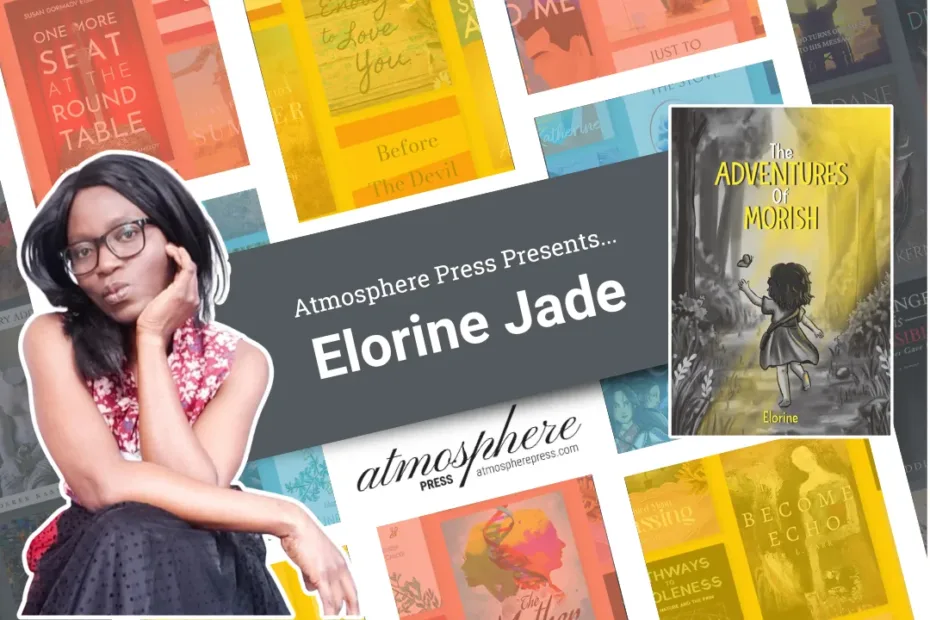
Elorine Jade is a children’s author who writes gentle, magical stories for readers who feel deeply and notice the quiet details of the world. Her work centres on courage, resilience, and emotional growth, often told through nature-rich settings and thoughtful protagonists. The Adventures of Morish is her debut novel and the first book in a series inspired by her love of storytelling, her experiences as a parent, and her belief that quiet children deserve to see themselves reflected in books.
What inspired you to start writing this book?
The Adventures of Morish began as a story I wished I’d had as a child – one where bravery isn’t loud or dramatic, but gentle and steady. I wanted to write something for children who are observant, sensitive, and often underestimated. The story was also inspired by watching my own child navigate the world with curiosity and courage, and by my belief that nature can be a powerful place of healing, reflection, and self-discovery.
Tell us the story of your book’s current title. Was it easy to find, or did it take forever?
The title came quite naturally once Morish herself fully formed as a character. I knew the story was less about a single event and more about her journey, her growth, her choices, and the quiet adventures that shape her. The Adventures of Morish felt simple, timeless, and open-ended, leaving room for the series to grow alongside her. It didn’t take forever, but it only felt right once the heart of the story was clear.
Describe your dream book cover.
My dream cover is atmospheric and gentle rather than loud; a forest setting filled with soft light, natural textures, and a sense of quiet magic. I imagine Morish as a small figure within a vast landscape, surrounded by trees, glowing details, and hints that the forest itself is alive. I love covers that invite curiosity and calm, where children feel drawn in rather than overwhelmed.
If your book had a soundtrack, what are some songs that would be on it?
The soundtrack would be subtle and emotive music that feels like walking through the woods at dusk. It would include soft instrumental pieces, gentle piano, and nature-inspired compositions. Think atmospheric film scores rather than pop songs; music that carries a sense of wonder, stillness, and quiet courage.
What books are you reading (for research or comfort) as you continue the writing process?
I tend to return to books that feel timeless and comforting rather than strictly researching in one genre. I love revisiting gentle middle-grade stories that centre nature, courage, and emotional growth, as well as lyrical novels that remind me how powerful quiet storytelling can be. I also read poetry and reflective nonfiction, which helps me slow down and stay connected to language, mood, and feeling.
What other professions have you worked in? What’s something about you that your readers wouldn’t know?
Alongside writing, I’ve worked in roles focused on care, safeguarding, and supporting others, which has deeply shaped how I see resilience, vulnerability, and strength. Something readers might not know is that many of my story ideas come from observing small, everyday moments, conversations, walks, and quiet reflections rather than big dramatic events. I believe those small moments often hold the most truth.
Who/what made you want to write? Was there a particular person, or particular writers/works/art forms that influenced you?
My love of writing began with books that made me feel seen as a child; stories where gentleness and imagination mattered. I’ve always been drawn to writers who create rich inner worlds and allow space for emotion and reflection. Over time, becoming a parent also played a huge role; it made me want to write stories that honour sensitivity, curiosity, and quiet bravery, and to create the kind of books I would have treasured growing up.
Where is your favorite place to write?
My favourite place to write is anywhere calm and uninterrupted, often at home in the early hours or late in the evening, when everything feels still. I also love writing near nature or after a walk, when my thoughts feel clearer and the story world comes more easily.
What advice would you give your past self at the start of your writing journey?
I would tell my past self to trust the quiet pace of the journey and not rush to make the work louder or bigger than it needs to be. Writing doesn’t have to follow anyone else’s timeline, and stories rooted in honesty and care will always find their readers in time.
What’s one thing you hope sticks with readers after they finish your book?
I hope readers are left with a sense of reassurance that courage doesn’t have to be loud, and that it’s okay to move through the world gently. If a child finishes the book feeling a little braver, a little calmer, or more confident in who they are, then the story has done what it was meant to do.
Are you a writer, too? Submit your manuscript to Atmosphere Press.

Atmosphere Press is a selective hybrid publisher founded in 2015 on the principles of Honesty, Transparency, Professionalism, Kindness, and Making Your Book Awesome. Our books have won dozens of awards and sold tens of thousands of copies. If you’re interested in learning more, or seeking publication for your own work, please explore the links below.