An Interview with David E. Ballard
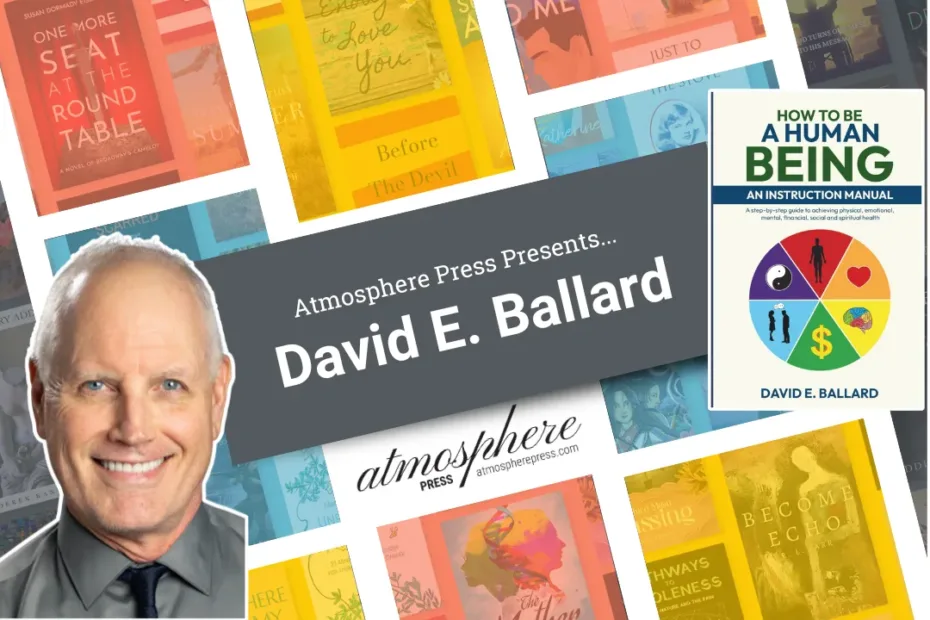
Along with being an award-winning writer-producer-actor with over two hundred hours of film and TV credits, David E. Ballard is also an honorary Anunnaki Ulema as well as an initiate of Eckankar, Sant Mat/Science of Spirituality and SGI Buddhism. His main goal as an author is to share his personal and professional life experience to help people of all ages learn how to live their best life by employing a combination of humor, honesty and practical wisdom.
What inspired you to start writing this book?
I’ve always been fascinated by the idea that after 5,000 years of human civilization, humanity has never been able to create a basic, non-sectarian, definitive ‘manual’ for living as a human being on Planet Earth (so I decided to give it a try.)
Tell us the story of your book’s current title. Was it easy to find, or did it take forever?
I have played in bands my whole life and I wrote an epic, ballad-type song a long time ago called How to Be a Human Being and I’ve always thought it would be a good title/subject for a book too.
Describe your dream book cover.
I actually like the basic idea of the cover that the book has now, but I suppose it would be nice to do a more detailed/ornate version of each symbol in the ‘pie chart’ logo.
If your book had a soundtrack, what are some songs that would be on it?
Well of course the song that I based the book on would definitely be on it! Also these songs from some of my favorite bands:
• The Beatles — Let It Be / A perfect theme of acceptance, letting go of control, and trusting the process.
• The Jam — That’s Entertainment / Captures the beauty in everyday, imperfect moments; very aligned with the book’s ‘meaningful moments’ spirit.
• David Bowie — Changes / A direct celebration of transformation and embracing who you’re becoming.
• Roxy Music — Oh Yeah (On the Radio) / Bittersweet nostalgia and acceptance of life’s imperfect emotional arcs.
• Thin Lizzy — Dancing in the Moonlight / Joyful, loose, human; invites readers to celebrate small wins and imperfect moments.
• Lou Reed — Walk on the Wild Side / A reminder to embrace authenticity, imperfection, and unconventional journeys.
• Buck Owens — Together Again / A gentle, comforting reset that encourages self-compassion after setbacks.
• Queen — Don’t Stop Me Now / Pure forward momentum; captures the optimism of progress even after setbacks.
• Blondie — Dreaming / Encourages holding onto hope, motion, and imperfect ambitions.
• The Clash — Train in Vain / Themes of resilience and continuing forward even when things don’t go as planned.
What books are you reading (for research or comfort) as you continue the writing process?
I am currently reading Foucault’s Pendulum by Umberto Eco, Plot Outlines of 100 Famous Novels by Roland A. Goodman, Palimpsest by Gore Vidal, and Unlocking the Mysteries of Birth & Death by Daisaku Ikeda.
What other professions have you worked in? What’s something about you that your readers wouldn’t know?
I am an award-winning writer-producer-actor with over two hundred hours of film and TV credits as a writer-producer for such networks as Bravo, Discovery, ESPN, History, LMN, Science Channel, and TLC and over sixty film, TV, and commercial credits as an actor.
I hold a BA in Spanish from UC Berkeley and an MA in Film from the San Francisco Art Institute, and worked as a staff writer at the San Francisco Chronicle before getting into the entertainment industry.
Who/what made you want to write? Was there a particular person, or particular writers/works/art forms that influenced you?
When I was a kid, I loved the works of Jules Verne, and as I got older, I started reading all the ‘counterculture’ authors like Gore Vidal, Ken Kesey, Hunter S. Thompson, and Tom Robbins. I will pretty much read anything if it interests me, from ancient texts to books about cutting-edge science.
Where is your favorite place to write?
I am firmly in the ‘Winston Churchill camp’ and like working in bed the best.
What advice would you give your past self at the start of your writing journey?
Don’t give up after the first draft! Just get ‘v1’ done, let it sit around for a couple of weeks, and then start writing ‘v2’ with an open mind and the willingness to completely rewrite everything you just wrote, if necessary and/or if the situation calls for it.
What’s one thing you hope sticks with readers after they finish your book?
That life on Earth is pretty rough in general, and that no matter how ‘good’ you may have it in the present moment there is always another external and/or internal problem coming along that you will have to solve. But fortunately, humans are also pretty resilient and blessed with the ability to self-reflect and meditate on our problems, which in turn gives us the superpower of ‘stepping outside’ ourselves to gain an ‘objective perspective’ that (with any luck) allows us to solve the problem. The trick to making this happen of course is to stay relaxed, have a sense of humor about yourself, and truly believe that you do ultimately and truly do have a God-given ability to handle anything that life throws at you.
Are you a writer, too? Submit your manuscript to Atmosphere Press.
Atmosphere Press is a selective hybrid publisher founded in 2015 on the principles of Honesty, Transparency, Professionalism, Kindness, and Making Your Book Awesome. Our books have won dozens of awards and sold tens of thousands of copies. If you’re interested in learning more, or seeking publication for your own work, please explore the links below.