An Interview with J. Claire
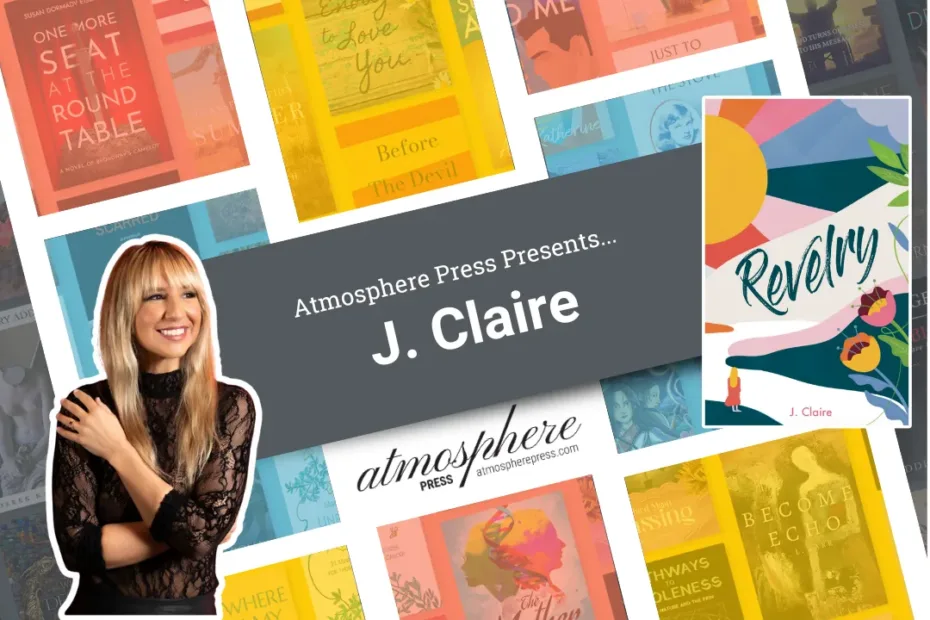
J. Claire, known as the ‘Poet of the Wild,’ is a multi-award-winning author and poet whose debut collection Revelry earned numerous honors between 2025 and 2026, including two American Fiction Awards in Narrative and Nature Poetry, finalist recognition in Contemporary and General Poetry, finalist in Contemporary and Nature Poetry from the 2025 American BookFest Best Book Awards, the International Impact Book Award in Poetry: Personal and Confessional Poetry, the NYC Big Book Award for Distinguished Favorite in Poetry: Journeys, Memory, and the Self, finalist recognition in the 2025 Positive Impact Book Awards, finalist placements in Contemporary, General, and Narrative Poetry from the American Writing Awards, and the 2026 Independent Press Award for Distinguished Favorite in Poetry: Human Identity & Connection. In 2025, she was the second-place winner at the Fall 2025 BookFest Awards in Poetry: Love, Inspiration, and Nature, and opened the Word is Art showcase at the Columbus Arts Festival.
Born in the heart of Pennsylvania and a native of both coasts, J. Claire began writing poetry in her early teen years as a refuge through the storms of adolescence. As the tides of youth gave way to adulthood, her steadfast harbor remained the written word.
Her work – also featured in Harness Magazine – gathers together love, adventure, self-exploration, loss, and healing, often colliding with revelations found in growth, nature, and stillness. A lifelong endurance athlete, avid traveler, and explorer, she is currently a writer for Colorado Springs Lifestyle magazine and continues to write as both a mirror and a medicine, offering language that illuminates the wild landscapes – both inner and outer – that shape the human spirit.
Who/what made you want to write? Was there a particular person, or particular writers/works/art forms that influenced you?
I started writing poetry when I was twelve, during a childhood shaped by tenderness, exploration in the natural world, and deep complexity. Writing became a place I could go to listen to myself, to what couldn’t always be spoken aloud, to the quiet emotional undercurrents of my upbringing. It was less a choice than a necessity, a way of making sense of the world and my place within it.
Later in life, I learned that my grandmother was a poet, and that discovery felt like a kind of remembering rather than a surprise. I come from a bloodline rich with musically talented family members, writers, and educators – people who taught, composed, sang, and shaped language and learning in their own ways. Knowing this helped me understand my creative pull not as something accidental but inherited and carried forward.
I’ve been influenced as much by art forms as by people, music, nature, and the spoken word all shaped how I write. Poetry, for me, lives at the intersection of sound, silence, and story. It is how I honor where I come from, and how I continue the lineage of listening, learning, and offering language as a bridge between generations.
What other professions have you worked in? What’s something about you that your readers wouldn’t know?
I began my professional career as an early childhood teacher, which instilled in me a deep understanding of how people grow, learn, and connect from a very young age. Over the years, I’ve expanded into a variety of roles – working with all populations and age – as a state educator in risk and compliance, and various policy work even at the national level. I hold a master’s in public policy and law, and a bachelor’s in education and psychology, which has allowed me to approach each role with both analytical rigor and a human-centered perspective.
Something many readers might not know is just how broad my professional experience has been. Beyond writing and poetry, I’ve navigated multiple systems, worked across sectors, and collaborated with diverse communities. Those experiences continue to shape how I see the world, the stories I tell, and the spaces I create for others through my writing and workshops.
Tell us the story of your book’s title. Was it easy to find, or did it take forever?
The title Revelry came naturally though it carries layers of meaning. To me, it is a lighthouse – a welcome home and a starting point on our journey. It speaks to both arrival and departure, a beacon guiding us back to ourselves. At its heart, it is a celebration of self: of presence, of curiosity, of the courage to honor who we are and the life we are creating.
What part of publishing your book made it feel real for the first time?
The moment it felt real was when I held the book in my hands for the first time. Seeing my words, my voice, and my heart bound into a tangible form, it was a powerful confirmation that this work is part of my true purpose, which is to help people, to reach them, and to offer a space for reflection, healing, and connection through poetry.
If your book had a soundtrack, what are some songs that would be on it?
This is a great question! I immediately think of an open road and a playlist to keep you company as you admire life all around you. Songs like Anchor by Novo Amor, Old Pine by Ben Howard, Mountain Sound by Of Monsters and Men, Shake It Out by Florence + The Machine, Wildflowers by Tom Petty, The Stable Song by Gregory Alan Isakov, Willow and Evermore by Taylor Swift would be lovely companions.
What’s one thing you hope sticks with readers after they finish your book?
After reading Revelry, I hope it’s a soft permission to slow down, to trust their inner wild, and to keep returning home to who they are that lingers and to know that even in the quiet seasons, the uncertain ones, nothing is wasted.
What was the most rewarding/meaningful part of publishing your book?
The most meaningful part of publishing my book was realizing it no longer belonged only to me, and it is a true honor to share this journey with my readers. Hearing readers say, “I felt seen,” or “This arrived exactly when I needed it,” has been the deepest reward. It taught me that telling the truth, gently and honestly, can become a bridge. Our most personal stories often turn out to be communal and there is something profoundly healing about letting your words walk the world on their own.
What creative projects are you currently working on?
I’m currently working on the second book in my R series, a continuation of my exploration of wildness, loss, healing, and return to self. This next collection deepens the conversation around becoming – what it means to listen more closely, to sit in the discomfort and to honor the quiet transformations that shape us.
Alongside the book, I’m expanding my Poetry of the Wild offerings through readings, workshops, and community-centered gatherings that invite people back into relationship with themselves and the natural world. I’m also nurturing The Wild Notes newsletter as a reflective space for monthly writing, presence, and connection.
Additionally, I’m completing my yoga teaching certification, expanding how I incorporate embodied practice into my creative and teaching work. This training is shaping how I hold space in workshops, readings, and community gatherings – inviting breath, movement, and mindfulness to live alongside the written word.
I’m also returning to the piano as a way to enrich my poetry performances, weaving music into live readings to create more immersive, reflective experiences. Together, these projects are guiding me toward more holistic offerings that blend poetry, embodiment, and sound – creating spaces where people can slow down, feel deeply, and reconnect with themselves and the world around them.
Are you a writer, too? Submit your manuscript to Atmosphere Press.
Atmosphere Press is a selective hybrid publisher founded in 2015 on the principles of Honesty, Transparency, Professionalism, Kindness, and Making Your Book Awesome. Our books have won dozens of awards and sold tens of thousands of copies. If you’re interested in learning more, or seeking publication for your own work, please explore the links below.