An Interview with Patrick Chuka
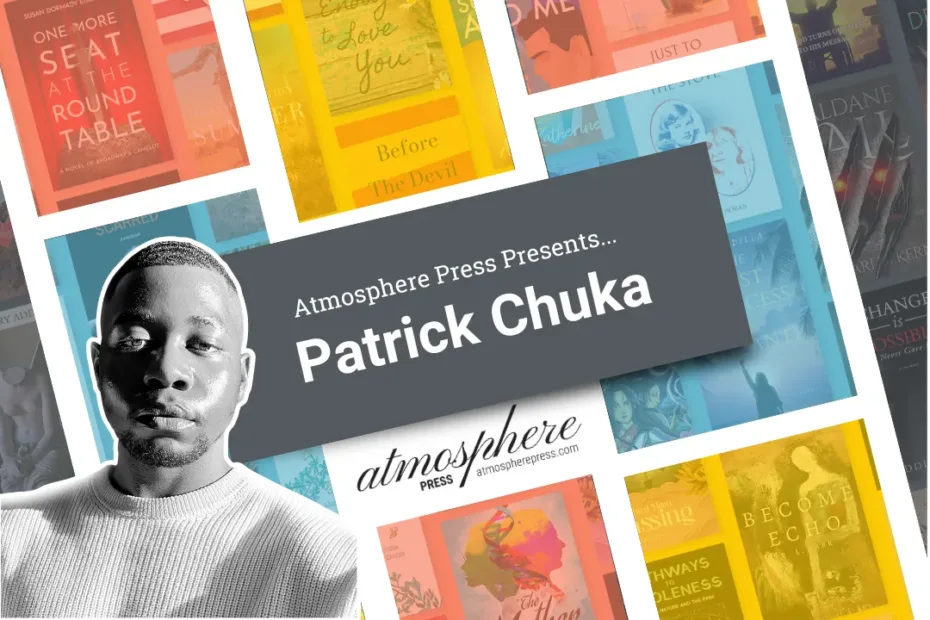
Patrick Chuka (b. 2000, Lagos, Nigeria) is a multidisciplinary artist and writer whose work explores the intersections of identity, spirituality, and human transformation. Rooted in his lived experiences and guided by a relentless drive for evolution, Chuka’s practice serves as a deep meditation on the complexities of personal and collective humanity. A self-taught artist with a background in the sciences, Chuka brings a unique perspective to his work – bridging logic and intuition, structure, and emotion. This duality shapes his creative process, allowing him to craft visually intricate and emotionally resonant pieces that invite reflection and introspection.
Patrick’s signature medium is pen and pencil, which he began exploring as early as age two in Nigeria. Over time, these tools became an extension of his – used not only to write but to render hyper realistic portraits and symbolic narratives that reflect his cultural heritage, inner journey, and connection to others. His art often highlights the human face as a vessel of memory, resilience, and grace, transcending racial and cultural boundaries.
Chuka’s portfolio is rich with themes of ancestral memory, spiritual inquiry, and the quiet strength of culture.
At the heart of Chuka’s practice is a question: What does it mean to be human, and how can art illuminate the sacred within the everyday? His work continues to offer answers – not in absolutes, but in gestures, textures, and truth-telling forms that speak across time and place.
What inspired you to start writing this book?
The book began as a spiritual reckoning. Over five and a half years, sparked by a profound awakening at the edge of the COVID pandemic, I was compelled to interrogate history, belief systems, and my own existence beyond inherited narratives. That period pushed me into deep research and inward excavation at the same time.
Afrophilia-X became the vessel for that inquiry – an art book layered with themes of spirituality, love, culture, historical distortion, abuse, and ultimately healing. I’ve lived through experiences that demanded more than survival; they demanded meaning. This work was my way of metabolizing those moments and distilling them into something honest, rigorous, and generative for others.
Tell us the story of your book’s current title. Was it easy to find, or did it take forever?
The title arrived before the book itself. Afrophilia-X first emerged as the name of the larger art series – a multidisciplinary exploration of culture through pencil drawing, 3-D sculpture, graphic design, typography, and speculative world-building. It was less a label and more a thesis statement.
As an Igbo native, the color red is culturally central to me, so it became the visual spine of the entire project – binding every work into a unified language that signals this world before a single page is turned. Afrophilia-X quite literally means a devotion to African identity, history, and futurity.
The Scapegoat That Grew Wings names the narrative at the heart of the book. The image came first: a young man with wings, sketched by hand, then reconstructed and rendered from scratch in 3-D. That figure became the portal into the universe of the book – the moment where myth, trauma, transcendence, and imagination converge.
Describe your dream book cover.
I am big on minimalism. My dream book cover would involve a lot of white space and metallic symbology that narrates a new world in a way we have never seen before.
If your book had a soundtrack, what are some songs that would be on it?
The soundtrack would move between the sacred, the ancestral, and the futuristic – music that carries both gravity and propulsion.
It would include Fela Kuti for political fire and spiritual urgency, Burna Boy for globalized African modernity, and Asa for intimacy and emotional truth. I’d weave in Sun Ra for cosmic mysticism, Floating Points for transcendental atmosphere, and Kendrick Lamar for moral interrogation and narrative weight. Classical choral textures and ritual percussion would sit beneath everything – sounds that feel ceremonial rather than decorative.
The music, like the book, would oscillate between confrontation and elevation: wounded, luminous, prophetic, and forward-facing.
What books are you reading (for research or comfort) as you continue the writing process?
Lately my reading has leaned heavily toward spiritual texts – both for grounding and for inquiry. The Untethered Soul has been a companion in inner discipline, while The Tao Te Ching continues to recalibrate how I think about surrender, flow, and power. I’ve also been returning to sacred philosophy through The Bhagavad-Gita and works like Finding God, not as doctrine, but as mirrors for consciousness.
Those books function less as reference material and more as tuning forks – keeping me aligned with the interior work that runs parallel to the visual and narrative worlds I’m building.
What other professions have you worked in? What’s something about you that your readers wouldn’t know?
Outside of art and writing, I’m unapologetically a technologist. Most readers don’t realize I’m a full-scale nerd – I currently serve as director of technology and AI systems at a marketing agency in California. My daily work involves leading teams, architecting AI tools, building software for clients, and designing automation systems that radically accelerate creative and operational workflows.
That technical life feeds the artistic one more than people expect. World-building, systems thinking, and speculative futures aren’t just themes in my work – they’re part of how I live.
Who/what made you want to write? Was there a particular person, or particular writers/works/art forms that influenced you?
The original impulse wasn’t literary – it was protective. I started writing because I wanted to create the book I needed when I was younger, something my siblings and cousins could inherit as both shield and compass.
From there it widened into something communal. I became driven by the absence of clear historical narratives available to young African readers, and by the urgency to surface truths that have been obscured or simplified over time. The work grew from a private necessity into a public offering – one meant to restore dignity, complexity, and imaginative freedom to the next generation.
Where is your favorite place to write?
This book was largely written in an office, which surprises people. I used to arrive two hours before the workday began, when the building was silent and my mind was still uncluttered. That early-morning stillness gave me the clarity and discipline the project demanded.
Over five years – moving between that quiet office and my art studio – I learned that my ideal writing environment isn’t romantic at all. It’s simply morning, solitude, and space to think.
What advice would you give your past self at the start of your writing journey?
Just start. You do not need to be the best writer in the world. You just need to be brave enough to write the truth.
What’s one thing you hope sticks with readers after they finish your book?
Hope.
Are you a writer, too? Submit your manuscript to Atmosphere Press.
Atmosphere Press is a selective hybrid publisher founded in 2015 on the principles of Honesty, Transparency, Professionalism, Kindness, and Making Your Book Awesome. Our books have won dozens of awards and sold tens of thousands of copies. If you’re interested in learning more, or seeking publication for your own work, please explore the links below.