An Interview with Peter Oloche David
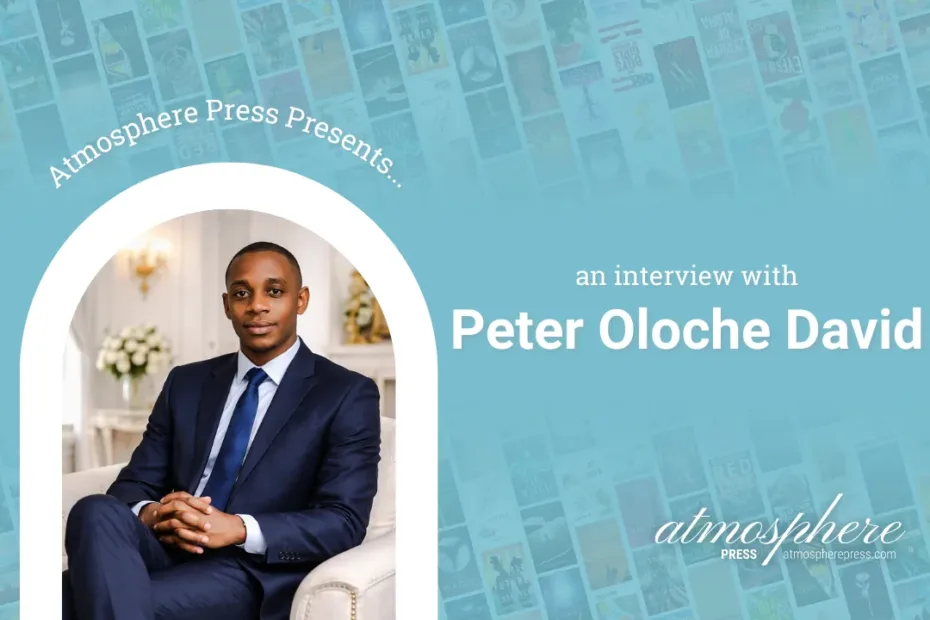
Peter Oloche David is an entrepreneur, researcher, and author whose work examines the powerful intersection of science, history, technology, and global health systems. His intellectual pursuits are driven by a central conviction: that understanding humanity’s greatest challenges requires both historical depth and forward-looking innovation.
Born in Ugbokpo, Benue State, Nigeria, and raised in Gusau, Zamfara State, Peter’s early years were shaped by resilience and inquiry. These formative experiences cultivated a disciplined curiosity and a determination to engage complex questions, qualities that would later define his professional and scholarly trajectory.
He studied at Strayer University, where he strengthened his analytical foundation and refined a multidisciplinary approach that integrates enterprise with research. Over the course of his career, Peter has led entrepreneurial and research-driven initiatives focused on strategic innovation, science-informed development, and solutions to multifaceted global challenges. His work spans business leadership, independent investigation, and interdisciplinary analysis, positioning him at the convergence of practical enterprise and rigorous scholarship.
Peter is the author of The Immortal Malady: A Global History of Cancer and the Science of Its Defeat, a research-intensive examination of cancer as both a biological phenomenon and a global systemic force. The book traces cancer from its earliest recorded presence in ancient civilizations to contemporary advances in molecular biology, immunotherapy, and artificial intelligence-driven diagnostics. Through historical inquiry and technological analysis, he explores how disease, discovery, economics, and innovation intersect across centuries.
His research centers on the historical evolution of disease, the societal and economic implications of scientific advancement, and the transformative potential of emerging technologies in modern healthcare systems. He is particularly interested in how artificial intelligence and biotechnology are redefining early detection, therapeutic development, and long-term global health strategies.
Through his writing, Peter seeks to bridge the gap between academic rigor and public understanding. His work translates complex scientific and historical subjects into structured, globally informed narratives that invite thoughtful engagement.
Currently residing in Abuja, Nigeria, he continues his research and writing while contributing to broader conversations on scientific progress, health policy, and innovation in the twenty-first century.
Who/what made you want to write? Was there a particular person, or particular writers/works/art forms that influenced you?
I was born on June 12, 1990. On August 15, 1995, my mother died of cancer. I was five years old.
At that age, I did not understand what cancer meant. I only understood absence. I understood the silence that follows loss. As I grew older, that silence gradually turned into questions. What was this disease? Why had it endured for centuries? Why, despite modern science, did it still take so much from so many?
My desire to write began there – not in ambition, but in inquiry. What started as personal grief slowly transformed into disciplined research. I felt a responsibility to understand the illness that shaped my earliest memory of loss. Writing became my way of confronting it, not emotionally alone, but intellectually.
Three authors deeply influenced how I approached that journey; their work demonstrated that science can be told as a profoundly human story; they showed how big historical forces shape our present realities; and their writing bridges medicine, ethics, and lived experience with clarity and compassion.
From them, I learned that research does not have to be distant from humanity. Data can carry memory. History can carry grief. Science can carry hope.
When I began writing The Immortal Malady, it was not simply an academic exercise. It was, in many ways, a long conversation with a past I could not change but could seek to understand. My mother’s death did not define my life, but it redirected it. It compelled me to ask deeper questions about disease, innovation, and the future of global health.
I write because I believe understanding is a form of responsibility. And for me, that responsibility began in 1995.
What inspired you to start writing this book?
The inspiration to write The Immortal Malady came from a deeply personal place as well as professional curiosity. Losing my mother to cancer at a young age left a lasting impact, planting early questions about the disease, its history, and why it continues to challenge humanity despite centuries of medical advancement.
As I grew older and pursued research and scholarship, I realized that much of the knowledge about cancer, its history, societal impact, and scientific breakthroughs, remained fragmented or inaccessible. I wanted to create a work that bridged rigorous research with human narrative, tracing the disease from its earliest historical records to modern advances in molecular biology, immunotherapy, and artificial intelligence.
In essence, the book was inspired by a combination of personal experience, intellectual curiosity, and a desire to make complex scientific and historical knowledge meaningful to a wide audience. Writing it became both a way to honor my mother’s memory and to contribute to global conversations about health, innovation, and human resilience.
Tell us the story of your book’s title. Was it easy to find, or did it take forever?
The title The Immortal Malady emerged from both reflection and persistence. From the very beginning, I knew the book needed a title that captured more than just cancer as a disease; it had to reflect its enduring presence throughout human history, its resilience, and the profound ways it has shaped societies, science, and human lives.
Finding the right words wasn’t immediate. I went through many iterations, trying to balance scientific gravitas with literary resonance. I wanted something that was memorable, evocative, and meaningful, while still signaling the research-driven nature of the book.
When I finally landed on The Immortal Malady, it felt perfect. The word ‘immortal’ conveys the disease’s persistence across centuries, while ‘malady’ gives it a timeless, almost humanized dimension. Together, they reflect the dual focus of the book: historical depth and scientific insight. It’s a title that invites curiosity, yet carries the weight of the subject matter, much like the book itself.
If your book had a soundtrack, what are some songs that would be on it?
If The Immortal Malady had a soundtrack, it would definitely be a mix of serious thinking and dramatic flair. Think Don’t Fear the Reaper by Blue Öyster Cult for obvious reasons, Under Pressure by Queen and David Bowie for every research deadline, and maybe Eye of the Tiger by Survivor for those moments of discovering a breakthrough in the lab.
Of course, there would also be some ‘Oops, I spilled coffee on my notes’ kind of songs, probably something comically chaotic like Yakety Sax. Science, history, and AI might be serious, but sometimes the soundtrack has to keep you laughing while you wrestle with the immortal malady!
What other professions have you worked in? What’s something about you that your readers wouldn’t know?
Apart from writing and research, I have worked extensively as an entrepreneur and project strategist, leading innovation-focused initiatives that bridge technology, health, and business. My professional experience spans managing teams, developing solutions for complex challenges, and exploring how scientific knowledge can be translated into practical impact.
Something my readers might not know is that I am deeply fascinated by patterns and systems, not just in science, but in everyday life. Whether it’s mapping historical trends, analyzing data, or observing social dynamics, I have a habit of turning ordinary details into insights that often inform both my writing and research. In many ways, curiosity is the engine that drives everything I do, even in moments when no one else would notice.
What books did you read (for research or comfort) throughout your writing process?
Throughout the writing of The Immortal Malady, my reading fell into two broad categories: research and comfort. For research, I immersed myself in historical texts, medical journals, and scientific literature, exploring the evolution of cancer treatment, molecular biology, immunotherapy, and the emerging role of artificial intelligence in healthcare. Several works were invaluable in shaping both the narrative structure and the depth of analysis in the book.
For comfort, I returned to books that stimulate curiosity without the pressure of research; histories, philosophy, and literary works that help me step back and reflect. Titles like Sapiens and Meditations reminded me why stories matter and how human perspective shapes understanding, even in the midst of intense scientific inquiry.
Balancing research-intensive reading with restorative reading helped me stay focused, inspired, and emotionally connected throughout the writing process.
What advice would you give your past self at the start of your writing journey?
I would tell my past self this: be patient with the process and trust the depth of your curiosity. Writing a serious, research-intensive book is not a sprint; it is a long intellectual and emotional journey. There will be moments of doubt, moments when the material feels overwhelming, and moments when the vision seems larger than your capacity. Keep going anyway.
I would also remind myself that clarity comes from revision. The first draft does not have to be perfect; it only has to exist. Discipline will carry you further than inspiration ever will.
Most importantly, I would say: Remember why you started. The purpose behind the work is stronger than the fear of not being ready.
What’s one thing you hope sticks with readers after they finish your book?
I hope readers walk away with the understanding that cancer is more than a disease; it is a force that intersects with history, society, and human innovation. Beyond the science and the statistics, I want them to see the resilience, curiosity, and collaboration that drive progress. Ultimately, I hope the book inspires both reflection and action; reflection on how far we’ve come, and action in the form of curiosity, awareness, and engagement with the challenges and possibilities of modern science and healthcare.
Are you a writer, too? Submit your manuscript to Atmosphere Press.

Atmosphere Press is a selective hybrid publisher founded in 2015 on the principles of Honesty, Transparency, Professionalism, Kindness, and Making Your Book Awesome. Our books have won dozens of awards and sold tens of thousands of copies. If you’re interested in learning more, or seeking publication for your own work, please explore the links below.