An Interview with Rae Toon
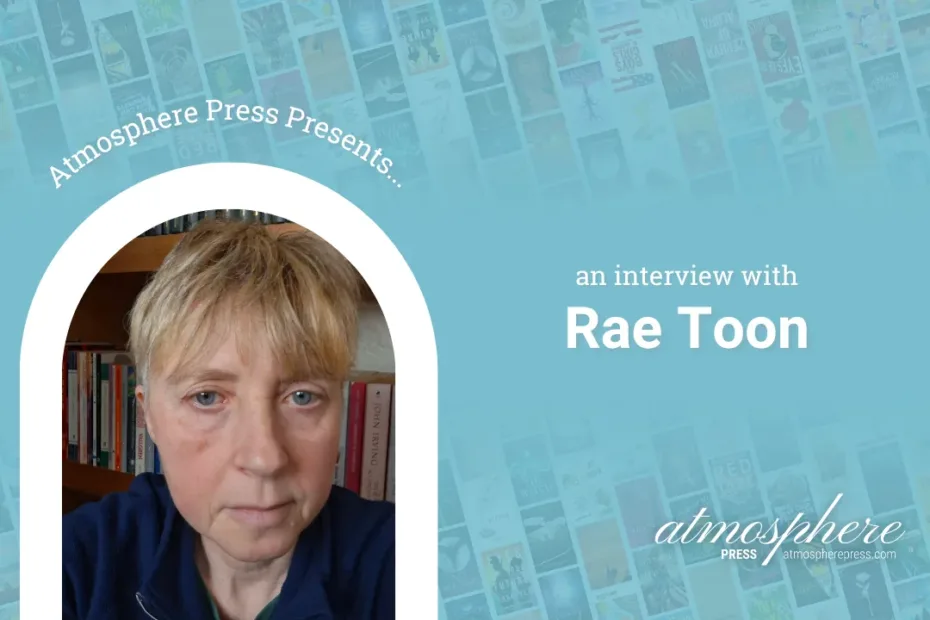
Rae has a 1st Class MA in Creative Writing. They love getting lost in a good book—recent recs would have to include The Boy From The Sea by Garrett Carr, Common Decency by Susannah Dickey, and The Hotel Avocado by Bob Mortimer. Currently reading Seven Nights At The Flamingo Hotel by Drew Gummerson. They are currently working on a collaboration with co-authors from the New2theScene writing community. Come the apocalypse, they’ll be hunkered down at the local library with a dynamo torch.
Who/what made you want to write? Was there a particular person, or particular writers/works/art forms that influenced you?
I didn’t start writing until I was in my thirties, when I returned to education. I discovered poetry and briefly dabbled in the spoken word scene (before it was ‘cool’). When I left uni, I decided to start a novel. I had read so many great books for my course: Margaret Atwood, Gabriel Garcia Marquez, Toni Morrison; and my flatmate introduced me to John Irving (my all-time favourite writer) … I suppose it was a case of being a sponge, soaking up all these ideas and styles, and then having the creative impulse and needing to find an outlet. I’d written a lot of poetry at this point and quite a few short stories, so a novel was the natural next step. I would also have to mention Stephen King. I read him voraciously as a teen. Although I don’t write horror and obviously can’t comp myself to such a master of the craft, I am prolific, so maybe I share his work ethic. Aside from horror, I think he’s one of the greatest storytellers that has ever lived. My humour is as much influenced by Victoria Wood and Morrissey as anything bookish.
What inspired you to start writing this book?
I used to go to a writing group in Nottingham (before commuting to work there put me off train travel forever!) and the idea for Mercy came from a writing prompt. We were set a challenge to write a short story about bragging rights. I wrote about an angel and ghost one-upping each other on the wonders and chaos they bestowed and inflicted on humans (a bit like notches on the bedposts). When I got to the end, having used up all my word count, I kicked myself for not thinking of phantom pregnancies. At first, I just thought I would write another short story—from the perspective of the phantom baby inside the womb. I couldn’t believe this hadn’t been done before. I fell down a phantom pregnancy wormhole, discovering all these famous females who’d had them. At one point, I think the list was around fifty or so. This was at the point when I needed to come up with an idea for my dissertation. I spoke to my MA supervisor (Mick Jackson of Ten Sorry Tales fame) and he thought the idea was ‘bonkers’ but very much encouraged me to go for it. I liked the idea of starting it back in medieval times and was originally going to have Queen Mary I as the first host womb, but then I was researching and came across the Winchester Geese (London prostitutes who worked for the bishops), and I suppose I just felt more at home in the gutter than in a palace.
Tell us the story of your book’s title. Was it easy to find, or did it take forever?
All the time I was writing the book, the working title was From Crossbones To The Stars. Because it starts in Crossbones Cemetery (a graveyard in London where prostitutes and paupers were buried) and the ending is set in space. When I started writing my pitch and querying agents, I changed the title so many times! There were at least thirty different ones on my list: Sisterhood of the Chosen Womb, Death’s What You Make It, Mercy’s Choice, 80,000-1 A Ghost Odyssey … At one point I was very attached to Mercy and The Rolodex Of Lost Wombs because I’d designed a cover around this idea. I remember one Sunday, all the family were at my mum’s house and I made them vote. There was an awkward moment when my brother took me to one side and informed me Womb Raider was already taken (by an adult movie!). Then when I signed with my agent, we had the discussion before we went on submission and she was like, “It’s about Mercy, it’s her story. Let’s just call it Mercy.”
If your book had a soundtrack, what are some songs that would be on it?
I had to be really careful with copyright and mentioning music, especially in the final part when Mercy joins the crew of an all-female space flight. There’s a scene where the crew are about to board, and it’s being filmed, and they’ve all chosen walk-on tracks. I had a lot of fun selecting songs that reference death to create a sense of foreshadowing and foreboding. There’s American Pie, Spirit in the Sky, and Jesus, Take the Wheel. Obviously, I sometimes fantasise about Mercy the movie or a Netflix series, and I think music would play an important part in establishing all the different eras and cultural movements Mercy lives through, from medieval London to the Belle Epoque Paris, to New York’s jazz clubs. Mercy is kidnapped by pirates at one point and shipped off to Jamaica, so a bit of Drunken Sailor or Blow the Man Down would give the right vibe. Underpinning this, though, is the sad refrain of Miserere mei, Deus, the song that Mercy’s mother sings to her in their reunions.
What other professions have you worked in? What’s something about you that your readers wouldn’t know?
When I left school, I worked on a farm. Then I spent ten years working in factories (labelling tinned food and folding socks!). Then I worked in a day centre supporting adults with learning difficulties and autism for a few years before going to uni. I went into teaching in 2007. Over the years, I switched from secondary English to media and film studies, and then from an FE college to a SEN college. My dream job would be working in a little second-hand bookshop or a pre-internet era library. I was diagnosed with autism in my fifties and I changed my name because Rae sounds more gender neutral than my birth name. It once took me over a year to finish a book (An American Tragedy by Theodore Dreiser). It’s not a bad book, just very long, very dense, the writing was tiny, and I was very busy! I used to be really strict with myself about finishing every book I started, but now, if I’m not enjoying it, it goes to the bottom of the TBR pile … or straight to the charity shop if I’m really not enjoying it.
What books did you read (for research or comfort) throughout your writing process?
I had to do a lot of research for Mercy to get the historical periods as believable as I could. Most of this was on websites like History Extra. I remember over Christmas 2024, having to immerse myself in Nazi ideology for the section that features Unity Mitford—that was pretty grim. I think I used The Muppets as a palate cleanser (it just isn’t Christmas without Dickens!). Because I wrote the first 10,000 words for my MA, I had to read extra stuff that I could put into my commentary. I re-read Ian McEwan’s Nutshell (a really inventive retelling of Shakespeare’s Hamlet—highly recommend to anyone who likes pitch-black humour), along with any other in utero novels I could get my hands on. Turns out nothing compares to McEwan. I read 2001: A Space Odyssey and watched the film again as well (I had completely forgotten about the Starchild, and when I saw that shot of the baby in space—mind blown!) I was going to revisit The Odyssey, but since I was retelling this myth and since Mercy has very modern sensibilities, I decided to go for something more contemporary and somehow landed on On the Road. This might seem like a really unlikely comparison, but Mercy shares many of the key themes: freedom, enlightenment, the search for meaning … and just as Sal keeps yo-yoing back and forth across America, Mercy flits back and forth between living wombs and the ghost of her mother. I’m so glad I read this book; it would be in my top five best reads of all time.
What advice would you give your past self at the start of your writing journey?
Slow down! I wrote eight novels before I started Mercy. I would type, ‘The End,’ send off a few query letters, get an idea, then start the next book. It wasn’t until I started my MA that I realised how much is in the editing process and the importance of feedback. I now have a few trusted beta readers and I’m an active part of the New2theScene writing community. I also wish I knew about BookTube way back when. When I think of all the books I’ve read … all the reviews I could have done …
What’s one thing you hope sticks with readers after they finish your book?
As far as my agent was concerned, Mercy ‘died on sub’ (we failed to get a book deal). But just like Mercy herself, the manuscript will not just die quietly. It haunts me. And it won’t give me any peace until I get it the audience it deserves. Mercy is a little ghost with a big heart, and I hope that she haunts readers long after they put the book down (in the nicest possible way). I hope that readers appreciate her ‘death’s what you make it’ mindset. I hope that she gives hope and comfort to anyone who ever felt isolated or different. I hope that she offers comfort to anyone who fears death … and I hope they remember my name because there are ten more books waiting in the wings …
Are you a writer, too? Submit your manuscript to Atmosphere Press.
Atmosphere Press is a selective hybrid publisher founded in 2015 on the principles of Honesty, Transparency, Professionalism, Kindness, and Making Your Book Awesome. Our books have won dozens of awards and sold tens of thousands of copies. If you’re interested in learning more, or seeking publication for your own work, please explore the links below.