An Interview with James B. Agape
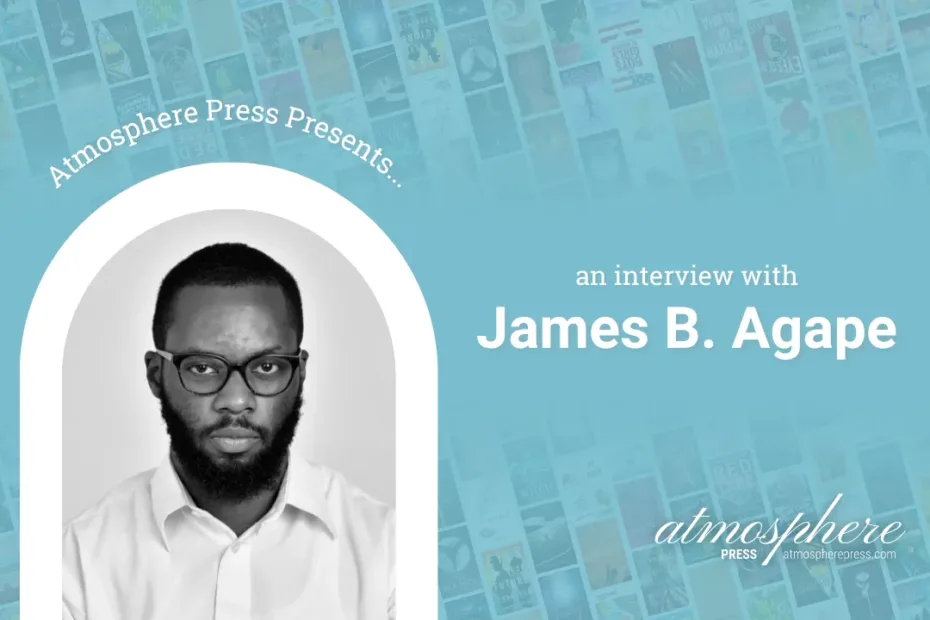
James B. Agape is a reflective writer whose work explores the quiet complexities of the human mind from anxiety and emotional struggle to healing, self-discovery, and resilience. He is the author of Pent Up Thoughts, an award-winning poetry and short-story collection recognized as one of the best in its category in 2025 by Regal Summit.
Born and raised in Nairobi, Kenya, James’ early years were shaped by solitude and introspection. As a child, he often found himself on the outside looking in, turning to books as both a refuge and a source of understanding. His fascination with literature began at a young age, nurtured by his mother, and by the age of twelve, reading had become a central part of his life.
He began writing in 2017, not out of ambition, but out of necessity, as a way to navigate inner turmoil and express thoughts he found difficult to share openly. Writing became a private space where he could confront his emotions without judgment, and over time it evolved into a voice that resonates deeply with readers who experience similar internal struggles.
Now based in the United Arab Emirates, James balances his writing with a professional career, working as a personal assistant to the chief financial officer, where he also serves as a key point of contact. Despite the demands of his day job, writing remains a central part of his identity, a continuous process of understanding, expression, and connection.
Through Pent Up Thoughts, James offers readers more than just words; he offers recognition. His writing speaks to those navigating anxiety, identity shifts, emotional fatigue, and the slow process of healing, creating a space where readers feel seen, understood, and less alone.
Looking ahead, he hopes to continue building on this foundation, with plans to publish future works that further explore the depths of human emotion and experience.
Who/what made you want to write? Was there a particular person, or particular writers/works/art forms that influenced you?
What led me to writing wasn’t a single moment of inspiration, but rather a period in my life where I found myself in a very dark and introspective place. I didn’t have an outlet to express what I was feeling, and a lot of what I was carrying internally began to eat at me. Writing became a way for me to release that, a space where I could confront my thoughts honestly, without fear of judgment. It wasn’t about creating something for others at the time; it was about survival, about understanding what was happening within me.
Over time, that private form of expression began to take shape into something more intentional. I started to realize that the thoughts I was putting on paper weren’t just mine; they reflected emotions and experiences that many people go through but struggle to articulate.
In terms of influence, authors like Fyodor Dostoevsky and Anton Chekhov played a significant role in shaping my approach to writing. Dostoevsky’s ability to explore the human psyche, the contradictions, the guilt, and the internal conflict, showed me that it was possible to go into the depths of discomfort and still create something meaningful. Chekhov, on the other hand, taught me the power of subtlety and restraint; that you don’t always need excess to convey something profound.
What stood out to me about both of them was how unapologetically they wrote about the human condition. They didn’t shy away from difficult emotions or try to make things appear more polished than they were. That gave me the confidence to approach my own writing in the same way; honestly, without filters, and without trying to conform to what writing ‘should’ look like.
What other professions have you worked in? What’s something about you that your readers wouldn’t know?
Over the years, I’ve had the opportunity to work across a few different fields, which has shaped how I see both structure and people. I started in accounting as a finance analyst, where I developed a strong foundation in numbers and analytical thinking. From there, I moved into a logistics coordination role, which taught me how to manage moving parts and work under pressure.
I later worked as a technical administrator, where I handled more structured, systems-based responsibilities, before eventually transitioning into my current role as a personal assistant to the chief financial officer. In this position, I also serve as a point of contact and coordinator, managing communication and helping ensure things run smoothly on a day-to-day basis.
As for something my readers wouldn’t know, I’m actually quite reserved in my day-to-day life. While my writing can be very open and emotionally expressive, I tend to be quieter and more observant in person. I spend a lot of time in my own thoughts, earphones plugged in and typing away.
And on a lighter note, I really enjoy anime; it’s something I can easily binge watch.
Tell us the story of your book’s title. Was it easy to find, or did it take forever?
The title Pent Up Thoughts came quite naturally as I was writing. Most of the content in the book is deeply personal; reflections of my experiences with anxiety, depression, mental health, and the process of healing.
As I was putting everything together, I found myself searching for a phrase that could capture all of those emotions without narrowing them down to just one aspect. I didn’t want something overly specific. I wanted something that could hold everything: the weight, the silence, the things left unsaid.
‘Pent up’ felt right because it speaks to that buildup of emotions and thoughts we often keep inside, sometimes for far too long. And ‘thoughts’ kept it open; not just feelings, but everything that sits in the mind and goes unspoken.
So, the title became an umbrella for the entire experience. It didn’t take forever to find, but it took the process of writing and understanding what the book truly represented for it to fully make sense.
What part of publishing your book made it feel real for the first time?
I think it truly felt real for the first time when I saw Pent Up Thoughts available on various eBook platforms, especially on Amazon. Up until that point, it still felt somewhat abstract, like something I had created but not yet fully stepped into.
But the moment I was able to purchase the book and hold it in my hands, everything shifted. It became tangible. It was no longer just thoughts on a screen or pages I had written in isolation; it was something real, something that existed beyond me.
That moment moved me deeply. It was a quiet but powerful realization that something so personal, something that once only lived in my mind, had now taken form and could reach others in a meaningful way.
If your book had a soundtrack, what are some songs that would be on it?
If Pent Up Thoughts had a soundtrack, one song that would definitely belong on it is Out of Darkness (Prologue) from Devil May Cry 4, performed by Aubrey Ashburn and composed by Tetsuya Shibata.
There’s something about the tone of that piece, the sense of quiet struggle, reflection, and emerging from something heavy that closely mirrors the emotional journey within the book. It carries both darkness and a subtle sense of hope, which is at the core of what I was trying to express.
In many ways, it feels like an introduction not just to a story, but to a state of mind, which aligns with how Pent Up Thoughts unfolds as well.
What’s one thing you hope sticks with readers after they finish your book?
If there’s one thing I hope stays with readers after they finish Pent Up Thoughts, it’s the feeling that they are not alone in what they’re going through.
A lot of the book comes from very real, often difficult emotions; anxiety, uncertainty, moments of feeling lost or disconnected. Those are experiences many people carry quietly, sometimes without ever finding the words to express them. If my writing can give even a small sense of recognition, that moment where a reader pauses and thinks, “This is exactly how I’ve felt, I just didn’t know how to say it,” then I feel like the book has done what it was meant to do.
Beyond that, I hope it leaves them with a sense of quiet reassurance. Not in a loud, overly optimistic way, but in a grounded, honest way, that even in the middle of confusion or emotional weight, there is still space for healing, growth, and understanding.
More than anything, I want the book to feel like a companion. Something they can return to when they need clarity, or even just to feel seen.
What was the most rewarding/meaningful part of publishing your book?
The most rewarding part of publishing Pent Up Thoughts has been realizing that something I wrote from a very personal and introspective place could resonate with others in such a meaningful way.
When I was writing, it was never about reaching an audience; it was about understanding myself and expressing what I was going through. So, when readers began to connect with the words, share their own experiences, or simply say that they felt seen, that meant a lot to me.
There’s something powerful about knowing that what once felt isolating can create connection. That something written in solitude can reach someone else and make them feel less alone.
That combination of personal fulfillment and connection with readers has been the most meaningful part of the journey.
What creative projects are you currently working on?
At the moment, I’m not working on a structured project in the traditional sense. Most of my time is spent simply scribbling down random thoughts throughout the day, reflections, observations, and moments that stand out to me. It’s a very organic process, similar to how Pent Up Thoughts began.
I’ve found that this approach allows me to stay honest in my writing without forcing direction too early. Over time, these scattered pieces tend to form something more cohesive.
God willing, I plan to revisit and compile these thoughts into a new body of work next year, shaping them into something meaningful and complete.
Are you a writer, too? Submit your manuscript to Atmosphere Press.
Atmosphere Press is a selective hybrid publisher founded in 2015 on the principles of Honesty, Transparency, Professionalism, Kindness, and Making Your Book Awesome. Our books have won dozens of awards and sold tens of thousands of copies. If you’re interested in learning more, or seeking publication for your own work, please explore the links below.