
An Interview with Kim Bainbridge
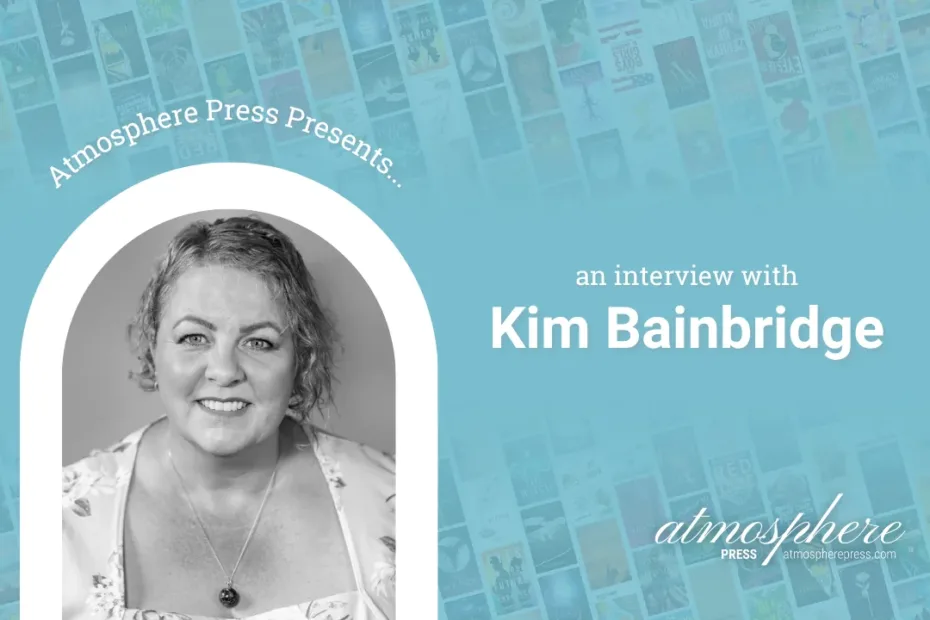
Kim Bainbridge, born as Kim van Rossum, I grew up in the small Dutch town of Megen in the Netherlands. After serving for ten years in the Royal Dutch Army, I have spent the next twelve years travelling through nearly eighty countries across Asia, Central America, Australia, and beyond.
What began as a backpacking adventure evolved into a career in photography, with my work earning international awards and recognition. My writing combines humour, honesty, and self-deprecation, drawing on experiences that range from military life and solo travel to cultural mishaps, unlikely friendships, and occasional encounters with my own poor judgement.
What inspired you to start writing this book?
The honest answer is that my friends and family kept telling me to write down my adventures whenever I shared a story. After hearing, “You should put that in a book” for the hundredth time, I eventually decided to listen.
What started as jotting down a few memories quickly snowballed into something bigger. Every story reminded me of another story, which reminded me of three more. Before long, I realised I had enough material to fill an entire book.
I began putting the stories into chronological order, as best my memory allowed. Some details had become slightly blurred by time, thousands of miles travelled, and the occasional questionable decision, but the adventures, disasters, and unforgettable characters were still very much alive in my mind.
What emerged was not just a collection of travel stories, but the story of a life shaped by curiosity, chance encounters, and a persistent inability to take the sensible route.
Tell us the story of your book’s current title. Was it easy to find, or did it take forever?
Finding a title was probably the easiest part of writing the book.
As described in the memoir, I met Mikael in Australia. A handsome Swede who had previously worked for a travel agency and knew far more about travelling cheaply than I did. As our romance blossomed and our combined expertise in budget travel grew, we became convinced we could help other backpackers do the same.
This was long before travel apps, social media influencers, and people filming themselves eating breakfast for the internet. If you wanted travel advice, you either bought a guidebook or found an internet café and waited patiently for a page to load one pixel at a time.
In those internet cafés, fuelled by enthusiasm and a complete lack of technical knowledge, we began building a travel website. We called it Life With a Backpack.
Unfortunately, our understanding of websites extended little beyond designing a logo and creating a home page. Once we discovered that building a website actually required technical skills, the project quietly wandered off into the sunset. After about a year, we admitted defeat and abandoned it.
Not long afterwards, Mikael passed away.
Years later, when I sat down to write this memoir, the title came back to me immediately. It felt right to borrow the name from a dream we once shared. In many ways, this book became the journey that the website never managed to be.
So Life With a Backpack is more than just the title of a travel memoir. It is also a small tribute to Mikael, and to an idea that began in a noisy internet café with two backpackers, a slow dial-up connection, and considerably more optimism than technical ability.
Describe your dream book cover.
Designing the cover was almost as much of an adventure as writing the book itself.
While researching travel memoirs, I noticed that many of the best-selling titles featured the author somewhere on the road, looking carefree, adventurous, and generally far more photogenic than most travellers actually are after months of living out of a backpack. It seemed to be a winning formula, so I decided to follow suit.
The photograph on the cover was taken by Mikael while we were trekking through the jungles of Sumatra in search of the elusive orangutan. The image quality is far from perfect, but I think that adds to its charm. It captures a moment from another era, before smartphones, selfies, and social media turned every traveller into their own marketing department. The slightly faded quality reflects both the passage of time and the spirit of adventure that runs throughout the book.
Later in life, I developed ambitions of becoming a travel photographer. I submitted my work to various travel magazines and guide publishers, convinced they would immediately recognise my genius. Strangely enough, they did not. Most never replied at all. Among them was my favourite publication, National Geographic, whose iconic yellow border inspired the design of my own cover.
The people who recognise that inspiration are probably exactly the sort of readers who will enjoy this memoir: curious travellers, adventurers, and people who occasionally dream of disappearing off into the world with little more than a backpack and a questionable plan.
In many ways, I ended up creating my dream book cover myself. The only thing I would change is the main character. If she could somehow look a little more like Angelina Jolie in Lara Croft: Tomb Raider and a little less like someone who had been sweating through a Sumatran jungle for days, that would have been appreciated.
If your book had a soundtrack, what are some songs that would be on it?
If my book had a soundtrack, it would probably be Roam by The B-52s. It’s quirky and optimistic, and it sounds like someone who’s happily wandering the world without a detailed plan, which describes much of my adult life. On days when my travel ego gets the better of me, I’d choose I’ve Been Everywhere by Johnny Cash and force everyone within earshot to listen to a list of places I’ve visited. Or Somewhere from Laura Greaves, which I like to play when my travel bug is starting to nag on my insides again, every time I have stayed in one place for too long.
What books are you reading (for research or comfort) as you continue the writing process?
For comfort reading, I always return to the Harry Potter series by J.K. Rowling. I am still amazed by the way she created an enormous magical world and somehow convinced millions of readers that it might actually exist. Even at forty-six, I can happily disappear into Hogwarts whenever I have a spare afternoon and emerge several hours later, wondering where the time went.
When it comes to research or inspiration, I enjoy reading about other people’s adventures. Whether fiction or non-fiction, I am drawn to stories that combine travel, humour, and the occasional dose of chaos. I love books that transport me somewhere new, introduce me to unusual characters, or make me laugh out loud while secretly teaching me something about the world.
What other professions have you worked in? What’s something about you that your readers wouldn’t know?
My life has never followed a particularly straight line. In the Royal Dutch Army, I worked as the personal chauffeur to a commander, operated military radios, and served as a first aider. Later, I drove a field ambulance before graduating to a large truck transporting dangerous goods. In my spare time, because apparently I wasn’t busy enough already, I worked as a scuba diving instructor.
During my travels, my CV became even stranger. I herded sheep in the Australian outback, worked as a professional poop scooper in Tasmania, and found myself standing in front of a classroom full of Indonesian children who were encouraged to practise their English on me. I say ‘encouraged’ because nobody seemed particularly interested in whether I had volunteered for the role.
Whenever travel funds ran low, I picked up work wherever I could. I worked across Europe as a holiday representative before becoming a campsite warden and restaurant worker in the Swiss Alps.
After settling in Newcastle upon Tyne, I worked as a domestic and later as a carer for people experiencing declining mental health, all while studying photography.
Somewhere along the way, I won the Food Photographer of the Year award twice in a row in the student category and eventually completed a master’s degree before launching my own photography business.
The business failed.
For years, I blamed smartphones, social media, and now AI. The truth is probably much simpler. I had lost interest. Like many things in my life, photography became an obsession. I threw myself into it completely, determined to learn everything I possibly could. Then, once I felt I had achieved what I wanted, I found myself looking for the next challenge.
I was recently diagnosed with OCPD, which perhaps explains a few things. I tend to approach life at full speed, become completely consumed by a goal, and then move on once the mountain has been climbed.
Along the way, I have been shot in the head, lost the love of my life, watched a business collapse, and made countless mistakes that would have convinced a more sensible person to stay at home.
Fortunately for readers, I didn’t.
Those disasters, adventures, passions, triumphs, and spectacularly poor decisions are woven together throughout Life With a Backpack. It is a memoir about travel, certainly, but also about resilience, reinvention, and the curious ability of humour to survive even the worst days.
Who/what made you want to write? Was there a particular person, or particular writers/works/art forms that influenced you?
I never wanted to become a writer.
To be honest, it would have been a strange career choice for someone whose first language isn’t English and who has spent most of her life wrestling with dyslexia. Reading has never come naturally to me, and the idea of writing an entire book would once have sounded about as realistic as becoming an astronaut.
The book happened almost by accident. For years, friends and family kept telling me, “You should write these stories down.” I ignored them, naturally. Then one day, I started writing a few memories. One story became another, and another became a chapter.
Before I knew it, I had a manuscript.
Of course, starting something and finishing it are two very different things. Plenty of people begin writing books. Far fewer reach the last page.
That is where my OCPD probably played its part. Once I commit to something, it tends to become an obsession. I research it, analyse it, refine it, and keep going long after a sensible person would have taken a break. What started as a few travel stories slowly grew into a memoir, and my brain simply refused to let me abandon it halfway through.
So I can’t honestly say I always dreamed of being an author.
I simply started writing down a few adventures because people kept asking me to, and then my stubbornness took care of the rest.
Where is your favorite place to write?
My ideal place to write would be a tropical beach somewhere in Southeast Asia. Picture a white sandy shore, jungle stretching down to the sea, a gentle breeze, and me sitting beneath a palm tree with a cocktail served in a coconut. The sort of place travel brochures promise and usually charge a fortune for.
Unfortunately, the reality is somewhat less exotic.
I write in a spare bedroom that once doubled as my photography studio. There are no swaying palm trees, unless you count the neglected houseplant in the corner. The soundtrack is not tropical birdsong but the occasional washing machine cycle and my husband asking whether I fancy a cup of tea.
That said, it is actually a pretty good place to work. The kettle is just downstairs, which is an essential feature of any successful writing environment. The WiFi is reliable enough for me to trust the grammar corrections that save me from publicly embarrassing myself. It is quiet, comfortable, and I get to see my husband every day.
I work at a large computer screen from a desk chair that has faithfully supported me through years of studying, essay writing, photo editing, and now writing Life With a Backpack. The leather has become so worn from thousands of hours of use that I am beginning to suspect it has permanently moulded itself to my shape.
In fact, after spending so many years sitting in that chair, I am fairly certain my bum cheeks have developed their own postcode and an extra layer of cellulite.
So while my dream writing location remains a tropical beach with a coconut cocktail, my spare bedroom in Newcastle turns out to be a pretty good second choice.
What advice would you give your past self at the start of your writing journey?
Don’t start. Just don’t do it.
What’s one thing you hope sticks with readers after they finish your book?
If I’m being completely honest, my ego would love readers to close the book and think, “Wow, what an incredible life.” Perhaps followed by a little jealousy and a strong desire to tell their friends they once read about a woman who travelled the world, survived all sorts of disasters, and had the photographs to prove it.
What is more likely to stick with them, however, are some of my truly spectacular poor decisions and my occasional tendency to boast about places I’ve visited as if I personally discovered them.
Beneath the adventures and the humour, though, I hope readers take away something more meaningful.
I hope the book gives them a gentle nudge to look beyond their own back garden and embrace a little more of what life has to offer. Not necessarily by travelling to eighty countries or hitchhiking across continents, although I can thoroughly recommend at least parts of that experience.
I hope it encourages people to be curious. To take chances. To make mistakes. To get lost occasionally. To understand that pain, loss, failure, and heartbreak are not the end of the story, but often the chapters that teach us the most.
Life has knocked me down more than once. I have lost people I loved, watched dreams fall apart, and made enough bad decisions to fill a second memoir (coming soon). Yet every setback taught me something, and every wrong turn eventually led somewhere worth going.
If readers finish Life With a Backpack feeling inspired to chase an adventure, take a risk, or simply fight a little harder for their own happiness, then I will consider the book a success. And if they also finish it thinking, “Thank goodness I’m not making decisions like Kim,” that’s perfectly acceptable too.
Are you a writer, too? Submit your manuscript to Atmosphere Press.

Atmosphere Press is a selective hybrid publisher founded in 2015 on the principles of Honesty, Transparency, Professionalism, Kindness, and Making Your Book Awesome. Our books have won dozens of awards and sold tens of thousands of copies. If you’re interested in learning more, or seeking publication for your own work, please explore the links below.