
An Interview with Monique Hayes
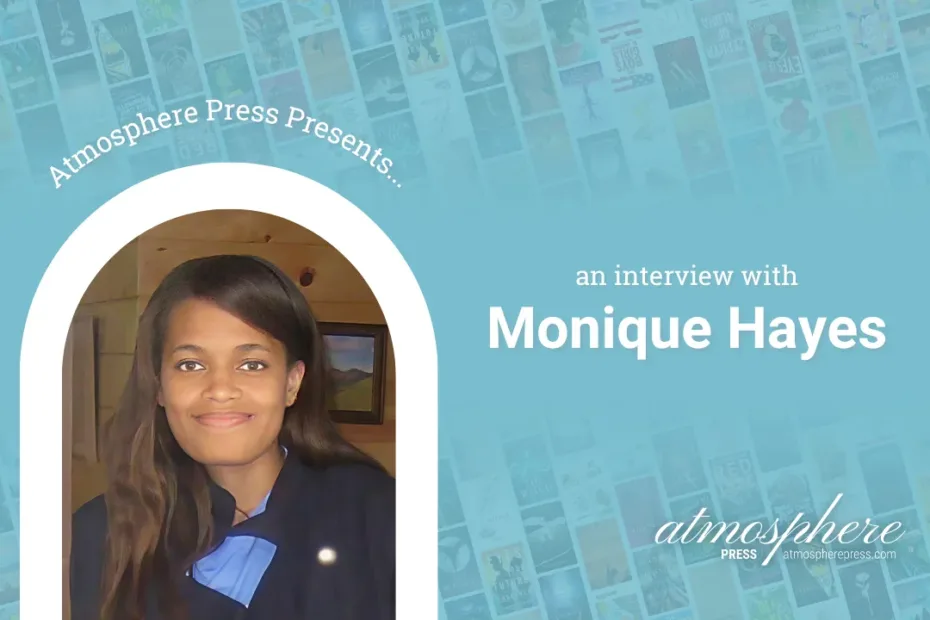
Monique Hayes is a fiction author, poet, and screenwriter from Maryland. A Periplus and Hurston/Wright Fellow, she received her MFA from the University of Maryland College Park. She’s the recipient of an American Antiquarian Fellowship, an Eccles Visiting Fellowship (British Library), and a Maryland Independent Artist Award. A Pushcart Prize nominee, her work has been supported by the deGroot Foundation, the Fine Arts Work Center, the Historical Novel Society, and the New England Research Fellowship Consortium.
What inspired you to start writing this book?
While visiting the National Museum of African-American History and Culture in Washington D.C., I saw a placard about Black soldiers during the Revolutionary War. I was astonished when I learned that over 20,000 Blacks joined the British army while over 5,000 Black men fought with the Patriots. That’s quite a difference and I wanted to know why. Then, the woman next to me admitted that she didn’t know African-Americans fought in the Revolution. I thought about all the other people who were unaware of these facts and decided I could write about two Black brothers who served on opposing sides of the war. So, I wanted to turn my ‘light bulb moment’ into a book that enlightened others. I knew very little about the subject myself, but these past few years of research have made me much more appreciative of their sacrifices and achievements. That one placard led to hundreds of pages of detailed notes, and life-long gratitude for the Black soldiers in the Founding Era.
Tell us the story of your book’s current title. Was it easy to find, or did it take forever?
When I chose Sally Forth, that was by far the easiest part of my novel’s journey. I stumbled upon the military term ‘sally forth’ early on and it essentially means to go bravely into a dangerous mission. That describes my protagonists perfectly. Once they leave their plantation in Pennsylvania, it takes tremendous courage for them to step into the unfamiliar and onto the battlefield after receiving guarantees of freedom for their service. Every new move the brothers take is a risk and no day is ever promised once they don their respective uniforms. I believe it’s such a fitting title for a book about two young adults grappling with the uncertainties of war, but eager to take advantage of opportunities that weren’t offered to them before.
Describe your dream book cover.
My novel follows two enslaved brothers who fight on opposites sides of the American Revolution, and I would be thrilled if the cover captured both of their remarkable journeys to gain their freedom. Older brother Albie has a special affinity for the sea, so I’d love to see a portion of the cover with him sailing to Africa, his dream destination. A split map of the colonies could be in the middle, because Albie chooses to break their childhood pact by becoming a British soldier while younger brother Brook still joins the Continental Army. So, on the other side of the book cover, I’d like to see Brook in his Patriot uniform, looking over toward Albie on the ship. I believe passersby would see the division between them on the cover but also wonder if there’s any chance for reconciliation. Hopefully, that’s a ‘stop you in your tracks’ cover and they’ll rush to read it.
If your book had a soundtrack, what are some songs that would be on it?
Whenever I’m preparing to write, I’m blasting movie soundtracks to get my adrenaline up so I can compose riveting scenes on and off the battlefield. They’re usually blockbuster soundtracks from war or historical films (Amistad, Glory) and my go-to is Hans Zimmer. So, if I had to create a soundtrack for Sally Forth, it would be full of trumpet solos, pounding drums, and stirring songs that make you want to stare danger in the face. The listener might not want to go to battle, but you wouldn’t want to sit still either!
What books are you reading (for research or comfort) as you continue the writing process?
Over the course of my research, I’ve read some amazing resources about Black Patriots and Loyalists. Right now, I’m studying James Walker’s book The Black Loyalists: The Search for a Promised Land in Nova Scotia and Sierra Leone and it’s truly helping me understand the hopes and disappointments of the Black soldiers who emigrated to those two countries after the war. In Death or Liberty: African Americans and Revolutionary America, Douglas Egerton writes eloquently about the challenges African-Americans faced in the colonies, crafting petitions and seeking emancipation well before the Civil War. Then, I’m grateful they’ve digitized so many primary documents from the Revolutionary War period, so I can read texts from Prince Hall, Olaudah Equiano, Lemuel Haynes, and the Founding Fathers. All of these materials give me a more nuanced view of a time when many Black voices were silenced. I take them into account whenever I’m writing, and I believe they’ve made my scenes far more meaningful.
As for comfort, I always love to retrieve a humorous Mark Twain sketch or Charles Dickens novel. I remember spending days reading about dark historical moments at the British Library. Then, I would leave and pick up The Pickwick Papers and have a good laugh. Sometimes you need that relief because the subject matter’s so intense. It’s good to remind yourself that authors like Twain and Dickens wrote dark and light-hearted works at the same time and their careers weren’t too shabby.
What other professions have you worked in? What’s something about you that your readers wouldn’t know?
I enjoyed Renaissance and medieval literature throughout college, so I worked as a page at the Folger Shakespeare Library for eight years. I’ve never written a story or poem or play set in those periods, but I was captivated by the language and the history. Additionally, it was my first job after I received my undergraduate degree, so I felt blessed to be touching the First Folios and other rare documents. Most people are surprised when I tell them that was my introduction to the working world. Frankly, I was shocked when I received the position and was walking past the Puck statue every day during my lunch breaks. I think it strengthened my love of books and research, which ultimately led me to the path I am now on.
Who/what made you want to write? Was there a particular person, or particular writers/works/art forms that influenced you?
My all-time favorite writer is Toni Morrison, because she finds both the heart and horrors of a place. When you’re reading her books, you feel as though you’re in that family or community, no matter your background, and that’s something I’ve found to be true in all of her works. Her prose is marvelous, but the fact that it’s rooted in history makes it more profound and satisfying to me. If I can accomplish what she does, I will feel extremely proud of my work.
Over time, I’ve also come to love Geraldine Brooks, E.L. Doctorow, and Ernest J. Gaines. I am always blown away by the worlds they build, the messages they impart, and how the authors make you empathize with their characters, no matter what time period they’re living in or what they’ve done in the past. I would be ecstatic if I could create novels like theirs and make an impact on another historical fiction author someday.
Where is your favorite place to write?
I love writing in parks or near historical sites or monuments because I feel like they’re timeless places where I can be inspired. Not only does being outside help me write richer sensory descriptions, but the trips also allow me to imagine the time periods of my characters. For instance, I wrote a scene about the printing of the Declaration and Benjamin Franklin near the Signer statue in Philadelphia, right beside the American Philosophical Society. I felt the magnitude of that moment when I was there, writing about the priceless document nearly 250 years later. I composed a scene about Stephen Blucke’s school looking out over the shores of Birchtown in Nova Scotia. This was right after walking the floorboards of Blucke’s classroom and seeing what remained of the community the Black Loyalists struggled to build because of prejudice. One of the brothers says goodbye to his enslaved mother when they’re beside the Liberty Bell and I wrote that scene after walking by the famous landmark that same day. For me, it’s important to be immersed in those one-of-a-kind places, like I’m standing in their shoes before I put their voices on the page.
What advice would you give your past self at the start of your writing journey?
I would immediately tell myself that I don’t need to know everything to produce a good story. In the past, when I was deep in the research process, I’d jot down every fact I could because I thought I would need it later. I figured out that wasn’t the case years later, so there are quite a few colorful notebooks lying around me with facts that won’t even make it into a first draft. Of course, you comfort yourself and say they can be used in another project, but that’s not guaranteed either. One of the best pieces of advice I received was from James McBride at the National Book Festival. Instead of simply signing my book, he put one important detail on the title page: “Remember. You’re only going to be using thirty percent of the research.” That was mind-blowing to me, but he was completely right. The weight came off my shoulders after that comment and now I’m more selective during the research process and I feel more freedom when I write. I know I won’t be using it all and that’s okay. Does the reader need to know every item that was on an eighteenth-century poet’s desk? No, but it’s important that they see what my protagonist notices on Phyllis Wheatley’s desk, what he’ll remember years from that moment. Try not to collect everything and hone in on the special things. They’ll come to you.
What’s one thing you hope sticks with readers after they finish your book?
For too long, I’ve felt the contributions and stories of Black soldiers during the Revolutionary War have been overlooked even though they shed as much blood and fought with the same fervor as their white counterparts. My novel puts them front and center, so they won’t be ignored any longer. I’m hoping readers from all over the globe will be open-minded and open-hearted while reading about their experiences. They did everything to attain freedom, a universal desire that should be cherished. As much as we celebrate the actions of George Washington or Joseph Warren, there’s also room to commemorate Prince Hall or Salem Poor or James Forten. I hope readers will be compelled to do this long after they’ve turned the last page of Sally Forth.
Are you a writer, too? Submit your manuscript to Atmosphere Press.

Atmosphere Press is a selective hybrid publisher founded in 2015 on the principles of Honesty, Transparency, Professionalism, Kindness, and Making Your Book Awesome. Our books have won dozens of awards and sold tens of thousands of copies. If you’re interested in learning more, or seeking publication for your own work, please explore the links below.