An Interview with Rob Lee
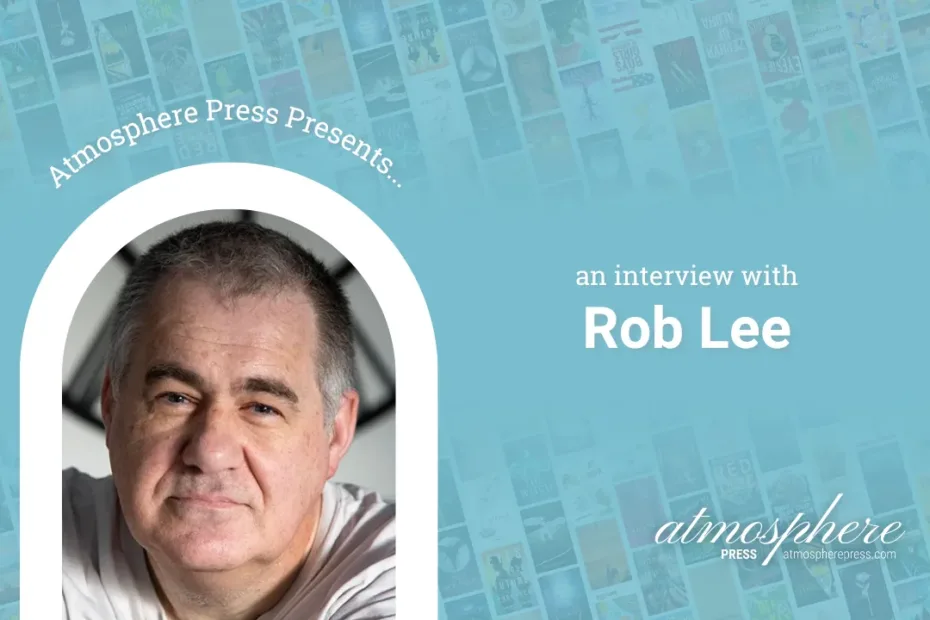
Rob Lee is an acronym for ROBotic Letter Election Equipment, a device created by professors at Cloudsville Theoretical University. They wanted to prove that enough monkeys at enough typewriters could produce a line of Shakespeare and deduce how many monkeys were required. Unfortunately, they were denied the grant for bananas.
Instead, they developed software which would produce random strings of letters. The result was then published as The Other Sun.
Or maybe Rob is a fifty-something human male who lives in England with his partner and their dog and believes that his real life is not interesting enough to pad out a bio. (That’s Rob’s belief, not the dog’s. The dog knows he is awesome.)
What inspired you to start writing this book?
Joining a writing group; it’s as simple as that. I’ve been writing on and off for decades, half-heartedly hoping to make something of it. But life kept happening at me and writing took a back seat.
When I joined the local writing group in December 2022 — which is a serendipitous story in itself — I suddenly had a reason to write every month. Rather than writing a new story each time, I decided to combine them into an overarching tale; monthly chapters if you will.
The unwavering encouragement from the group boosted my confidence, which led to the launch of my website, Instagram account, and, ultimately, the courage to try self-publishing.
I tidied up the original chapters, realised I had something that exceeded the length of a short story, and thought I could use it to learn the self-publishing ropes.
Tell us the story of your book’s current title. Was it easy to find, or did it take forever?
Titles and names — the hardest part of writing. Forget the loneliness, the painstaking hours taken with every comma placement or the eternal dread that someone will eventually cotton on that I’m an imposter, getting the character’s names and title just so probably takes up a high percentage of the writing process.
I was lucky with The Other Sun. Around month three, I had to research ancient Latvian gods and I came across the word for their land of the dead. We all know the terms Hell, Hades, and Valhalla, but I had never before heard of Viņsaule. I knew that was too niche to be the title of a novella, but its meaning in English, The Other Sun, just lent itself for the purpose.
It’s been called that in my head for so long that any other title would seem unnatural.
Describe your dream book cover.
I like dark, moody images, so I’d have to choose a black background with an eerie red glow. Underneath a blood red sun stands the silhouette of a monstrous figure.
Hang on — have I just described my own book cover? Well, that makes sense, because getting it published was a dream come true.
If your book had a soundtrack, what are some songs that would be on it?
I love this question because music is such an integral part of our lives. For the opening sequence, I think Gustav Holst’s Mars has the right amount of menace. But it’s very Imperial March-y, so instead I’d opt for the middle part of Saturn.
The soundtrack would have to include Snow Patrol’s Chasing Cars because the song is referenced in chapter one.
Quietus by Epica would be perfect for the interlude — it fluidly melds mediaeval style with a heavy metal overtone.
Finally, January Jam’s Hold Onto Green is fitting for the epilogue.
What books are you reading (for research or comfort) as you continue the writing process?
My preferred genre is horror, but I like to read (or listen to) anything. Podcasts are brilliant for creative advice, in particular Writing Roots.
When it comes to reading for pleasure, I’m a firm believer in supporting new authors. I do as much beta and ARC reading as my schedule will allow and read debut books so I can leave an honest review.
Most notable betas of the past year are Kevin Carlin’s The Probability Machine, Rip Morris’s The Motu Pahoa Incident, and Chesterfield Cemetery by Maria D’Antonio-Reich. Of books which are already on the market, I recently finished Emily Cooper’s Season of Fear (which I cannot praise highly enough) and am currently reading Darcy Graves’ The Harlot of St. Cecelia’s.
What other professions have you worked in? What’s something about you that your readers wouldn’t know?
My working life has been spent in different offices, from a hotel to the civil service to customer services, because sitting behind a desk is always better than doing real work. I also spent a week as a postman, with the 4 a.m. starts and angry dogs. The least favourite was civil service — give me a feisty Fido any day.
Other jobs which never panned out include being a mime on a podcast and a bellboy at a bee hotel.
What wouldn’t readers know about me? Let me give you two examples: Firstly, on my seventeenth birthday, I swam the English Channel. An impressive feat at any age. Secondly, I have a tendency to invent impressive feats to make myself sound more interesting than I am.
Who/what made you want to write? Was there a particular person, or particular writers/works/art forms that influenced you?
The desire to be a writer has been in me for so long, I honestly can’t remember what initially sparked it. What I can tell you is that my early years of reading James Herbert and Sean Hutson certainly influenced my writing genre and, probably, style. Then I discovered Dean Koontz and knew I’d found the guy whose shadow I’d be happy to walk in. I also can’t deny the influence of Clive Barker, Neil Gaiman, and Sir Terry Pratchett – even though my stories are not as funny as his.
Where is your favorite place to write?
Alone at the dining table. But it’s less the place and more the time: 9 p.m., when everybody in the house has gone to bed and the room is all mine.
For the past year or so, I’ve forced myself to write in this one to two-hour window and now it’s become a habit. I can be falling asleep in front of the TV before 8 p.m. but at 9 p.m. my brain switches on, my excitement levels rise, and the stories flow.
What advice would you give your past self at the start of your writing journey?
I’d love to give my fourteen-year-old self this advice, not just for writing but for life. And it’s two-fold.
Number one: Don’t take yourself too seriously. Unless it’s affecting somebody’s health, it’s not as big a deal as you think it is.
Number two: Have the confidence to be yourself. You deserve the space you occupy in the world. You’re not gonna please everybody, so don’t even try. Just make sure that you’re happy with what you write and, hopefully, somebody else out there in the world will also like it.
The problem is, I know what I was like as a teenager and I wouldn’t have listened.
What’s one thing you hope sticks with readers after they finish your book?
Fiction is a fantastic way to tackle — or at least pose — important philosophical and social questions. There are many writers who do this far more eloquently than I.
But it’s just as important to make time for unabashed enjoyment and that’s what I aim for.
If anybody reads my stories and takes something away, that’s fantastic. But I’ll be happy if they finish this novella thinking, “I enjoyed that.” And if that thought is followed with, “I would like to read more of Rob’s work,” I would be over the moon.
How can readers learn more about you?
My website, WalkingShadowTales.com, is updated every month, or I can be emailed at WalkingShadowTales@gmail.com.
Are you a writer, too? Submit your manuscript to Atmosphere Press.
Atmosphere Press is a selective hybrid publisher founded in 2015 on the principles of Honesty, Transparency, Professionalism, Kindness, and Making Your Book Awesome. Our books have won dozens of awards and sold tens of thousands of copies. If you’re interested in learning more, or seeking publication for your own work, please explore the links below.