An Interview with Shawn Daniel
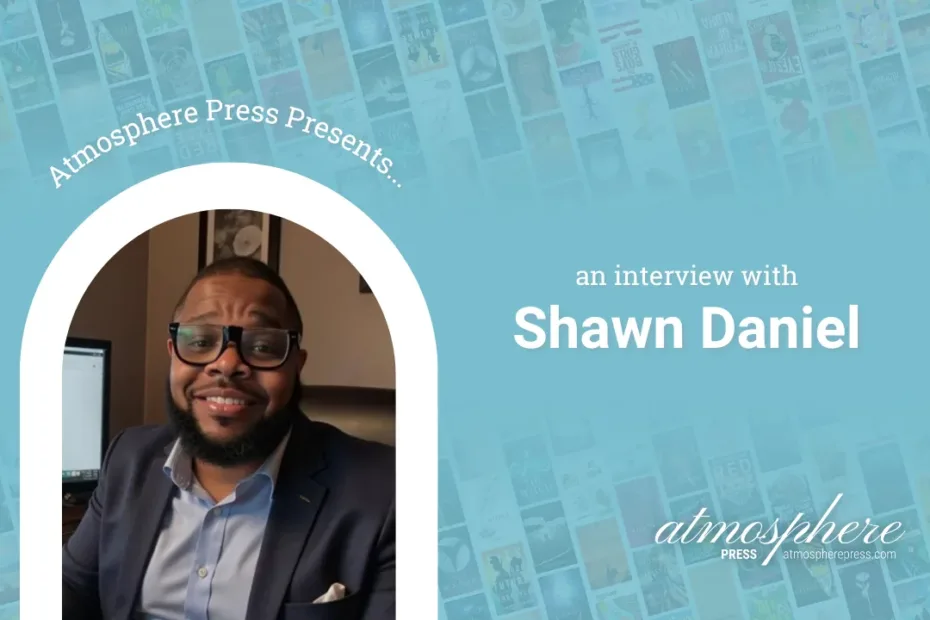
I’m Shawn A. Daniel, a father, author, and Black man with cerebral palsy. I write from lived experience about disability, dreams, identity, independence, and the conversations families often struggle to begin.
I was born and raised in the Bronx, New York, where I learned how to move through the world with courage, humor, and a little bit of armor. My own childhood dream of becoming a police officer eventually had to change, but that experience helped shape the message behind my work: Children do not need smaller dreams. They need stronger ones, built with truth, dignity, preparation, and room to pivot.
Through my writing, I hope to help parents, caregivers, educators, and communities have more honest conversations with disabled children about real life without taking away their hope.
What inspired you to start writing this book?
I started writing this book because I kept thinking about the conversations I wish had happened earlier in my own life.
Growing up with cerebral palsy, I was loved, encouraged, and told I could do anything I put my mind to. That belief helped me, but when my childhood dream of becoming a police officer had to change, I realized encouragement alone had not fully prepared me for that moment.
Now, as a father, I see those conversations differently. I understand how hard it can be for families to talk about disability, dreams, limits, fear, and the future without feeling like they are taking hope away.
This book came from that tension. I wanted to write something honest, practical, and human for families who love their children deeply but may need more language for the hard parts.
Tell us the story of your book’s current title. Was it easy to find, or did it take forever?
The title Not Everyone Can Be an Astronaut came from the tension at the center of the book.
At first, it sounds harsh. I know that. It can almost sound like someone telling a child to stop dreaming. But that is not what I mean by it at all.
For me, the astronaut has a double meaning.
First, the astronaut represents the big dream a child carries before they fully understand what the path may require. My version of that dream was becoming a police officer. I believed in it for a long time, until I eventually had to face the reality that my life with cerebral palsy would make that path look different than I imagined.
But the astronaut also represents the child leaving the safety of home and entering a world that can feel like an unknown planet. At home, a child may be loved, protected, and understood. Outside, the air can feel different. The rules can feel different. They may have to deal with society’s expectations, assumptions, judgment, and barriers no one fully prepared them for.
The title took some thought because I wanted something honest, not cruel. Something that made people pause. The book is not about smaller dreams. It is about stronger dreams — dreams with truth, preparation, dignity, and room to change without shame.
Describe your dream book cover.
My dream book cover is bold, cinematic, and emotionally meaningful. I picture a young Black teen in a wheelchair wearing an astronaut suit, holding a helmet, and looking upward with a sense of hope, thoughtfulness, and possibility. I want the background to feel cosmic and expansive, with stars, planets, or space imagery that reflects both the dream of becoming an astronaut and the deeper metaphor of navigating an unfamiliar world.
I want the title to stand out in a big, powerful way, while the overall cover still feels clean and professional. Most of all, I want the cover to feel inspiring, thought-provoking, and true to the heart of the book.
If your book had a soundtrack, what are some songs that would be on it?
If my book had a soundtrack, hip hop would definitely be at the center of it.
I’m from the Bronx, so hip hop is not just music to me. It is part of the environment I came from. The rhythm, the confidence, the storytelling, the humor, the pain, the survival, the way people turn struggle into language — all of that shaped me.
A soundtrack for this book would probably include songs about resilience, identity, faith, family, pressure, and finding your way when life does not go according to plan. I would want music that feels honest, not overly polished. Songs that sound like getting knocked down, laughing through it, praying through it, and still figuring out how to keep moving.
Because that is the spirit of the book. It is not about pretending everything is easy. It is about carrying hope with some truth in it.
What books are you reading (for research or comfort) as you continue the writing process?
For this book, I did not lean heavily on other books for research because so much of it comes from lived experience. I was writing from memory, reflection, fatherhood, and the things I wish I had more language for growing up with cerebral palsy.
That said, storytelling has always shaped me. One of my favorite authors is Donald Goines because of the way he could make environments feel real. His work dealt with raw topics, real pressure, and people trying to survive inside difficult circumstances. I have always respected writing that does not feel sanitized or distant.
That influence matters to me because I wanted this book to feel human. Not academic. Not overly polished. Real enough that people can feel the world behind the words.
What other professions have you worked in? What’s something about you that your readers wouldn’t know?
Before becoming an author, I spent much of my career in public service and security. I worked for the Bureau of Alcohol, Tobacco, Firearms and Explosives for many years, eventually building a career in physical security. That work kept me connected to the law enforcement world in a different way than I first imagined when I was younger and dreamed of becoming a police officer.
Something readers may not know about me is that humor has been one of my biggest survival tools. I can write about serious things because I have lived serious things, but I also believe laughter helps people tell the truth without falling apart.
Who/what made you want to write? Was there a particular person, or particular writers/works/art forms that influenced you?
My mother is probably the biggest reason I wanted to write this book, even if I did not realize that at first.
She raised me with love, strength, faith, and a belief that fear could not run my life. Growing up with cerebral palsy, I needed that. I needed someone who saw more in me than my disability and pushed me to believe I had a place in the world.
But as I got older, and especially after becoming a father, I started looking back at my childhood with more understanding. I could see both the power of my mother’s encouragement and the conversations we did not always have language for.
Writing this book became a way to honor her, tell the truth, and help other families begin those hard conversations with more love, honesty, and courage.
Where is your favorite place to write?
I do not really have one specific favorite place to write. For me, inspiration comes from everywhere.
A lot of this book started as thoughts in my phone. My notes app is full of random lines, ideas, memories, chapter points, and sentences I typed when something hit me — at work, at home, in the middle of a conversation, or while I was thinking through something I could not let go of.
So, I guess my favorite place to write is wherever the thought finally gets loud enough that I have to capture it.
Sometimes writing looks like sitting down with intention. Other times it looks like pulling out my phone quickly because a sentence showed up and I know if I do not save it, it might be gone.
That is how this book came together: not all at once, and not in one perfect place, but through moments I kept paying attention to.
What advice would you give your past self at the start of your writing journey?
I would tell my past self to just start.
Not because it will feel easy, but because your brain will try to talk you out of it in a hundred reasonable-sounding ways. It will tell you that you need more time, more clarity, more confidence, more proof that people will understand what you are trying to say. Really, it is just trying to keep you comfortable.
Writing the book is hard, but letting the world in on you may be the harder part. Once your story leaves your hands, people will bring their own experiences, opinions, wounds, and assumptions to it. Not everyone will read your words the way you meant them. That is probably the toughest part to accept.
But I would remind myself that being misunderstood by some people is not a reason to stay silent. If the work is honest, useful, and rooted in love, put it out anyway. Start before you feel fully ready. The courage usually shows up after the first step, not before it.
What’s one thing you hope sticks with readers after they finish your book?
One thing I hope sticks with readers is permission.
Permission to tell the truth with love. Permission to admit that some conversations are hard. Permission to stop pretending that encouragement alone is always enough. Permission to love a child deeply while still helping them prepare for the world as it actually is.
I also hope readers leave with courage. Not the loud kind that pretends nothing hurts, but the steady kind that says, “We can talk about this. We can face this. We can make a plan.” More than anything, I want families to walk away with realistic hope. Hope that is not fragile. Hope that does not collapse when life changes. Hope that is armed with language, preparation, dignity, and the belief that a different path can still lead to a meaningful life.
Are you a writer, too? Submit your manuscript to Atmosphere Press.

Atmosphere Press is a selective hybrid publisher founded in 2015 on the principles of Honesty, Transparency, Professionalism, Kindness, and Making Your Book Awesome. Our books have won dozens of awards and sold tens of thousands of copies. If you’re interested in learning more, or seeking publication for your own work, please explore the links below.