
An Interview with David Schoorens
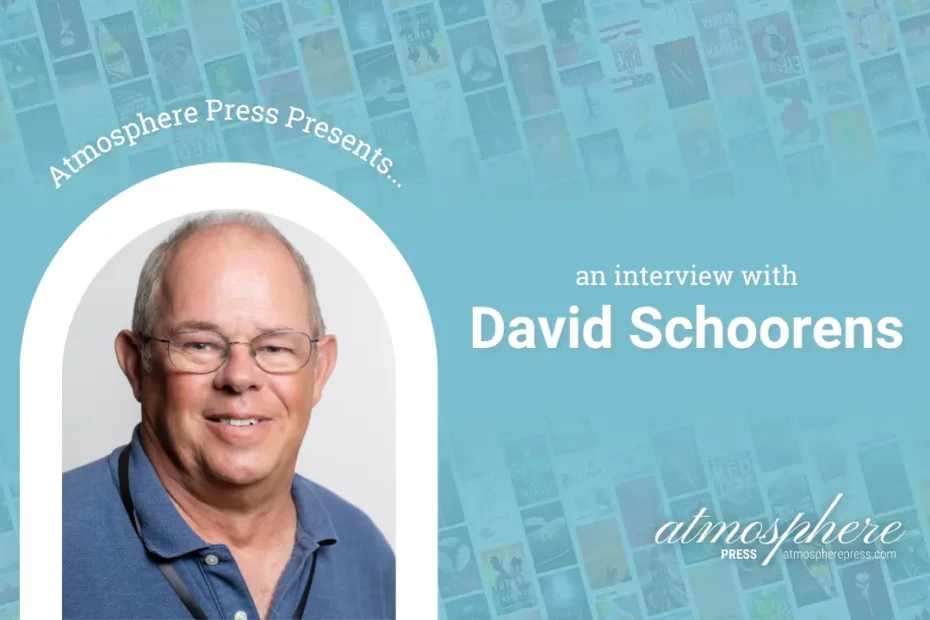
I’m a veteran junior officer of the U.S. Coast Guard, once serving as the operations officer of Baltimore Group. In that job, I learned much about the operations of the Coast Guard small boat stations found along our shores. One such station found in Eastport, Maine, plays a prominent role in my political and moral thriller Refuge: A Novel of Lost Democracy.
I’ve been around. I lived in Maryland before moving to Germany for four years. While there, I earned my second graduate degree from Boston University in Brussels, Belgium. Cheyenne, Wyoming, came next, before going back to Germany once more. In 2001, we settled back in the United States.
Living in other parts of the United States and in Germany, as well as studies alongside people from all over the world and travels through much of Europe, yielded many experiences, friendships, and memories. These have served my writing well, allowing me to enrich my novels with authenticity and detail.
Just before the pandemic, I retired after fifteen years as a high school science teacher, finally putting my degree in biology to use. I did other jobs before that, but none was as worthy. With retirement, however, it dawned on me that I needed to do something with all this time.
Take it from a science teacher: The second law of thermodynamics requires an increase in entropy over time; that is, an increase in disorder and randomness of the matter and energy of the universe. Meaning with every action I take, at any time, within my body and within my surrounding environment, I break down complex things into simpler things. Things must fall apart. In other words, I get older. Same goes for you. No exceptions.
So, I could wait for entropy to do its thing, leading to the inevitable knee or hip replacements and countless other medical procedures and maladies. Or I could do something I always wanted to do. I decided to write.
Refuge: A Novel of Lost Democracy is my debut novel. Refuge’s genre is military and political thriller with a large measure of the dystopian fiction genre. But it goes beyond the usual tactical thriller. Set in the near future, the story imagines the rapid descent of American democracy into autocracy. The fall comes not in aftermath of economic collapse or war. All it took was an election. Enough of us chose to end democracy in favor of a strongman. The story builds to an emerging conflict between the United States and Canada. Published in 2022, many readers see Refuge as a prescient cautionary tale. I see it as political horror.
Captive is my second novel. A psychological thriller about a man who wrote a novel. More to the point, he wrote a novel intended as a defense of democracy. Instead, the story infuriated a great many people, who call him un-American and a traitor. Who threaten to harm him. To kill him.
This wounded and decorated combat veteran of the U.S. Army’s 82nd Airborne Division, now an old man and alone, faces new enemies hiding amongst his fellow countrymen. Doxed, harassed, threatened, stalked, vandalized, and assaulted, he faces mortal danger from an enemy who does not stop. His fight to save himself will drive him to the edge of sanity.
In a sense, Captive continues to defend democracy which began with Refuge, by exploring a terror which any author may have imagined from time to time.
More novels will follow.
Who/what made you want to write? Was there a particular person, or particular writers/works/art forms that influenced you?
The desire to write always seemed to be in my mind. Not always at the front of course. Life does often prioritize other things, such as work and family. Upon retirement, I had the time and resources to finally try. I eventually discovered how wonderful a feeling it is to hold in your hands a work of one’s own creation.
What other professions have you worked in? What’s something about you that your readers wouldn’t know?
Quite a few. A good deal of my adult life was enjoyed following my Air Force wife from duty station to duty station. That required me to be flexible in choosing work. For example, I’ve worked as a university representative at two U.S. military bases. Youth sports direction at a NATO base.
I began my employed life as a junior officer in the U.S. Coast Guard. I retired as a high school science teacher. Those were the two most worthy jobs I’ve had.
Tell us the story of your book’s title. Was it easy to find, or did it take forever?
The title of my second novel, Captive, came almost immediately. In a single word, it says what happened to the main character. I won’t go beyond that. No spoilers.
What part of publishing your book made it feel real for the first time?
It became real when I held my first author proof copy. The novel was no longer a MS Word file collection of hidden binary code. It had genuine mass. I could touch it.
If your book had a soundtrack, what are some songs that would be on it?
I would use What a Wonderful World as recorded by Louis Armstrong, but as an ironic twist because in Captive, it is not a wonderful world at all.
What’s one thing you hope sticks with readers after they finish your book?
I try to keep the plots rooted in actual places and events. For my first, Refuge, I drew heavily on my Coast Guard search and rescue experience, while Captive required research into such topics as the law. For both my novels, I hope the reader closes the book and thinks, “Yes, this could happen.”
As a matter of fact, for Refuge, I slipped it into the genre of political horror. A story where the monsters are real, they are here now and they won’t go away when the book is closed. For Captive, I believe I created a story of terror imagined by any author. That what they write could make them a target of hate. Indeed, that could happen to any of us who make their opinion known, especially in a world of social media.
What was the most rewarding/meaningful part of publishing your book?
There have been a number of rewarding experiences. No one was more surprised than me when I got to those wonderful last two words, THE END. There is also the experience of meeting other independent authors and sharing stories about writing and promoting the book. As confident as one wants to be about the work, there is always doubt. That is, until the first five-star review comes in. Affirmation is a powerful drug.
An especially enjoyable part of writing fiction is creating the characters. I’ve been asked how I come up with them. I say, “It’s simple. You already know them. They are you. Your friends and family. They are people you’ve met along the way.”
Indeed, the entire writing experience saved my retirement. I could have played a lot of golf. And all I’d have to show for it was the memory of a poorly played game. I was rubbish at the game anyway. However, to hold in your hand a work of your own creation, that feeling is simply magnificent.
What creative projects are you currently working on?
A third novel. This time, historical fiction inspired by my grandfather’s experience as a boy living under German occupation in Belgium during World War I. I’ll be changing his story a bit to create a main character who is a few years older than grandpa actually was. He’ll escape occupation to join the Belgian Army under King Albert I, still in the fight against the Kaiser’s army, holding out from Yser to the sea. The war ends and he emigrates to the United States to start a new life. He keeps the trauma of combat to himself. He marries, has a son, and sees his only child go off to war against his old foe, the Germans. I’m hoping to explore that theme in depth. The father’s pride in seeing his son do his duty, weighed against the terror of knowing the true nature of war. Give me about a year or so and I’ll have the first draft.
Are you a writer, too? Submit your manuscript to Atmosphere Press.

Atmosphere Press is a selective hybrid publisher founded in 2015 on the principles of Honesty, Transparency, Professionalism, Kindness, and Making Your Book Awesome. Our books have won dozens of awards and sold tens of thousands of copies. If you’re interested in learning more, or seeking publication for your own work, please explore the links below.