An Interview with Evan Hulick
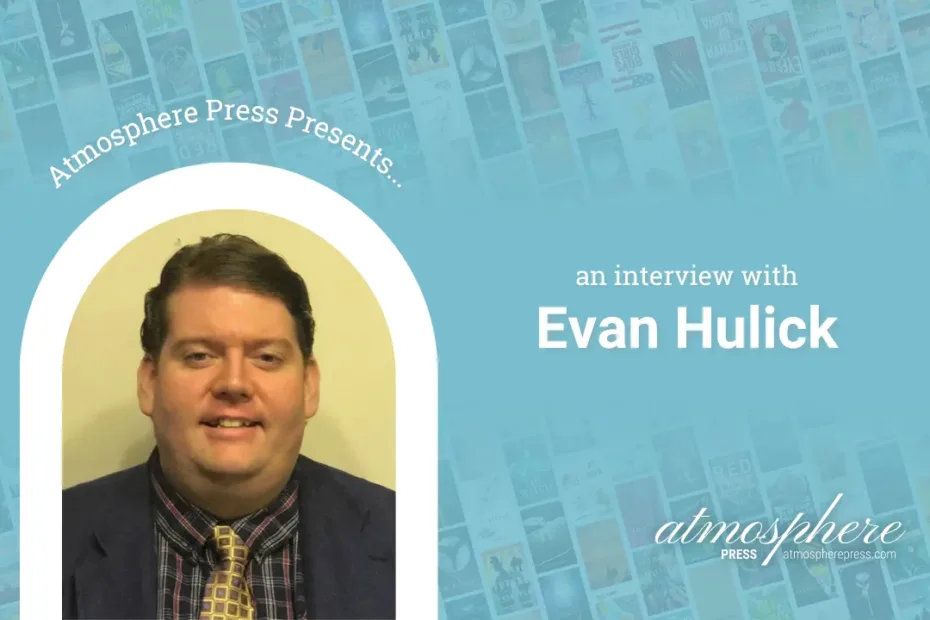
Evan Hulick, PhD, is a visiting instructor of English (VI) at Georgia Southern University in Statesboro, GA. He graduated with his PhD from The Catholic University of America (CUA) in May 2024 after successfully defending his dissertation titled, ‘Transcending Genres: J.R.R. Tolkien’s Influence on Narrative Worlds in Ursula K. Le Guin, Margaret Atwood, and Junot Díaz.’ He had fortuitously received response letters (and/or emails) from both Atwood and Díaz; he is immensely grateful to both authors for their wisdom and guidance. His dissertation was mentored by Dr. Ernest Suarez, then-English department chair at CUA, executive director of the American Association of Literary Scholars, Critics, and Writers (ALSCW). Evan earned his MA in English at The State University of New York (SUNY) at New Paltz in May 2016, and his BA in political science (theory concentration) at the same institution in May 2013, mentored by Dr. Jeffrey Miller in political science and Dr. H.R. ‘Stoney’ Stoneback, former president of the International Ernest Hemingway Society. He owes very much to his mentors, including his expansive way of seeing the world, of understanding history, philosophy, and literature, and of the never-ending story of understanding his fellow human beings.
Innyhow, with all of that ‘covered’: Evan has been writing fiction since he was ten years old, as well as poetry. His brain is always busy with new ideas and imagining the next plot points for his characters. He has traveled extensively to Ireland, the UK, Italy, Bosnia-Herzegovina, Croatia, France, Germany, and Spain, as well as across the continental US. He is always seeking more inspiration. He has a zany sense of humor, a frenetic mind, and often questions his own sanity. Isn’t that wonderful? *Laughs!*
Evan’s book, Shattered Sunlight Rising: Midnight Phoenix, is about three protagonists, tentatively named Rospus (often named ‘Ros’), Zalana, and Shynus (often named ‘Shyn,’ as in ‘Shine’), at this moment. Ros and Shyn grow in abject poverty on the Avantasi Hill in a brothel. But Ros learns he’s the bastard son of Ainus Caisus Aigus, one of the vying emperors, who takes Ros as his pawn, his ward, his last resort short of a legitimate son and heir. He legitimizes Ros but hates him on account of his status.
Yet the gods, the mysterious Vani, have a parallel Realm of their own, replete with whole new lands, empires, kingdoms, and plans for the trio. They often deceive mortals to gain what they desire, though some prefer a greater relationship between human and Vanian alike. At the heart lies the mysterious Shadow, who curses Ros to suffer murder at the hands of his own father. Will it happen? Will the dreadful doom arise? Or will the prophecy of the Phoenix Three who shall stop the Great Unraveling, the terrible threat to all the Realms, find its fulfillment in them?
The cast of characters is diverse, including in that some of my heroes are LGBTQ+, as well as in their ethnicities. After all, in some large regards, it is ‘fantasy Rome,’ and there are many curveballs and surprises. Book one is only the beginning.
What inspired you to start writing this book?
In late 2015, I survived a head-on collision caused by another driver. I almost lost my life six times, with severe injuries and nine major surgeries and countless procedures. Before and after then, I had grown the sense that I would become a writer. My endurance — three long months of acute hospitalization followed by acute physical rehab — really sealed that deal. I always had an avid love for J.R.R. Tolkien’s The Lord of the Rings and Peter Jackson’s famed film adaptations. I often turned to LOTR to help me endure through my own traumatic experiences, as well as Ernest Hemingway and other writers of interest.
The development of the book had many false starts, and it even shifted genres: from a modern tale to late-Roman historical fiction, largely fighting my own imposter syndrome. I never thought I could write something of Tolkien’s magnitude, and then I realized a little secret: to stop even thinking I could try. Instead, I had to look both outward, at the many sufferings that exist in the world, and inward into my own trauma, and write from the strengths of my own knowledge and experiences. I no longer ‘had to be’ that famed philologist; I could finally give myself permission to be myself and write as myself.
So, it became an epic fantasy loosely inspired by the late Roman Empire, especially the eras of Diocletian and Constantine the Great. Those were darker times; mass persecutions, multiple emperors running around, socioeconomic crises — sound familiar, anyone? The world, for ordinary people, felt completely out of control, with a sheer crushing weight of power-players, and you didn’t know what would happen to you. It all depended on who ‘won’ and where they stood on various issues of the time. I never write with any specific politics in mind; I’d rather say that there are recurrent problems we human beings tend to have across our storied history, and it tends to come in waves, and it often depends on which bed you’re born in, who you are, as well as your choices. It’s both, really: your environment and your options. You have to learn to do the best you can, no matter what, and part of that means giving yourself some grace when things don’t work-out or take that double-dip into trauma. Hemingway had a line that helped keep me alive, from A Farewell to Arms: “The world breaks everyone and afterward many are strong at the broken places.” I owe a lot to my late-mentor, Dr. H.R. ‘Stoney’ Stoneback (yes, the ‘Stoney’ of the Jerry Jeff Walker country song), for teaching me that, among countless other things. I would like for my readers to learn to laugh despite their suffering (I can be so silly so many times! I’m pretty sure Jon Stewart overheard me cackling in the audience at his recent Bushnell Hartford show!), and I would also, in addition to entertaining them, like for folks to take-away something like this: that we, as human beings, should be using our mutual suffering to connect toward each other rather than fight against each other. In the ‘no, your suffering isn’t worse than mine’ game, there are no ‘winners.’ So, let’s not play that game; let’s try something completely different that might help heal all the various rifts between us as people!
Tell us the story of your book’s current title. Was it easy to find, or did it take forever?
Tolkien once said, “The tale grew in the telling,” and like magic, my own work began to grow steadily and find its niche across the past decade. There was something in the air. Richard Swan wrote Grave Empire, Ryan Cahill wrote Of Blood and Fire, Antonia Hodgson wrote The Raven Scholar, and John Islington wrote The Strength of the Few. While I did not encounter these books until searching for my comparative titles, I found my own work had developed well by mysterious circumstances; it seemed to fit a niche between those works: akin and yet original. I had also been an avid Game of Thrones fan and read a few of Martin’s works; I knew I had to respond to them. So, the title Shattered Sunlight, came earlier from my process. The title of ‘book one’ of my SSR series, Midnight Phoenix, took a long time to arrive; it involved revising my ending, which I shall not spoil. Doubtless, this title may change a lot before publication — but I like that it keeps my themes centered. Why the phoenix? The phoenix is beautiful, supernatural, fiery, and it also has to die in order to find resurrection, to find rebirth. In some ways, it’s the most human of the mythological creatures; there are no shortcuts for the phoenix.
Describe your dream book cover.
I have two dream book covers. One would depict the Phoenix Three and the Lion in their animal forms, blazing with fire. Another would depict my protagonists in the manner of a Star Wars movie poster, with the antagonist looming in the background and the three primary co-heroes centered.
If your book had a soundtrack, what are some songs that would be on it?
Fall Out Boy’s The Phoenix; Sia’s Phoenix Rising; and League of Legends, Cailin Russo, and Chrissy Costanza’s Phoenix for more contemporary readers (Three phoenixes! A song for each!).
Mozart’s Requiem, Igor Stravinsky’s Firebird Suite, and Wagner’s Das Rheingold (you know … for certain villains of mine), for the more classically inclined.
For those who love movie-scores, probably John Williams’ Duel of the Fates, Battle of the Heroes, and Imperial March.
Speaking of marches, Miklós Rózsa’s grand movie scores for ‘Hollywood Rome’ — Ben-Hur, Quo Vadis, King of Kings, all the originals. I loved shucking my futile attempts at strict historical fiction aside when I realized I had fallen in love with ‘fantasy Rome,’ not so much the real one (and yes, I’ve seen the HBO series — pretty good!). I also should clarify: my tale is very anti-slavery, anti-exploitation; there were many aspects of Rome I disdain, which, by the way, are still happening across the globe today, and my tales have plenty to say about them.
What books are you reading (for research or comfort) as you continue the writing process?
Richard Swan’s Grave Empire, Ryan Cahill’s Of Blood and Fire, Antonia Hodgson’s The Raven Scholar, and John Islington’s The Strength of the Few. I look forward to reading their sequels! I love any stories with elves, dwarves, romans, pseudo-Romans, any kind of fantasy kingdom or realm or society, and so much more. I am a voracious reader. I can never get enough!
What other professions have you worked in? What’s something about you that your readers wouldn’t know?
As a first-year writing professor, very far from anything resembling tenure at the moment in my early career, I’ve really witnessed the power that writing has, especially among my students, especially those who engage. I always teach my students to view writing as their ‘best friend’ rather than their ‘enemy.’ The wise one’s usually take me up on that offer. They learn to master the process, and thereby master their own learning, instead of letting college ‘happen to them’ as just another thing to ‘get through.’ It’s all a mindset, really: an attitude, and we decide which types of attitudes we want to have. I also really like injecting some acting and humor into my college classes, to help engage my students more. I like helping to make the classroom a safe, inclusive, and a hopefully far more exciting place to learn (I don’t always win that battle! But I try!). It’s usually a balancing-act. I want my students to get excited about learning and engaging willingly in that process without removing the overall … erm … importance of what we’re doing. Passion, wisdom, rigor, and precision need to work together.
I’ve also started attending my first fantasy-cons. I was completely surprised to meet Daredevil stars Charlie Cox and Wilson Bethel recently in White Plains, and Maile Flanagan, the voice actress of Naruto Uzumaki, one of my childhood inspirations. That was so much fun! It’s been wonderful to branch out into my niche a lot more!
Who/what made you want to write? Was there a particular person, or particular writers/works/art forms that influenced you?
I always loved those Hollywood ‘Rome-themed’ films, and the adaptation of I, Claudius (BBC) was a strong influence on me. I’m probably the only ex-American teenager who can say that I was really into that stuff as a teen. It wasn’t a ‘normal’ upbringing, that’s for sure. It was a fun one, even if a bit eccentric! I always felt writing as a calling when thinking about how excited I felt: Claudius was about ‘to write the strange history of his life’ just for me! I read Robert Graves’ actual novels and enjoyed them immensely.
All of that fed into my love for reading classical myth, philosophy, and political theory. I was that weird kid ‘acting out’ Thucydides’ History of the Peloponnesian War using Star Wars action figures on a map of Greece he, himself, had drawn, preparing for college. Yeeeeep. That was me, alright. If they don’t institutionalize me, perhaps someone will be so kind as to read my books, *laughs*!
Where is your favorite place to write?
Well, I loved writing in marble notebooks in Hemingway’s favorite brasserie, La Closerie des Lilas, on Boulevard Montparnasse in Paris, and in Arles, in southern France, and all over northern Spain — including near a few Game of Thrones filming locations. I even co-won the Best Graduate ‘Why I Love Hemingway and Paris’ Award at the 2018 International Ernest Hemingway Society Conference and read my terse paragraph at the Tour Eiffel. I can say I shared a stage with Adam Gopnik at The New Yorker, so to speak. It was remarkable. I was very privileged to be able to travel to these amazing places. It also made my solitary laptop, or worse, an iPhone notes app on any kind of a flight, a lot less exciting; I’ve always ‘made do’ with whatever circumstances I’ve got. I generally find it easier to type than handwrite, and at times, trying to decipher my own handwriting is far less efficient than just typing it up. But ah, it doesn’t replace the magic of writing something that’s new and fresh in an enchanted place, just like in any movie you’ve ever seen about a writer, pretty much.
Wherever there is quiet, inspiration, and usually some exercise, like my Tae Kwon Do martial arts, swimming, hiking, et cetera, usually I really want to write something new, and wherever I land thereafter becomes my favorite place to write.
What advice would you give your past self at the start of your writing journey?
In the immortal words of Tim Allen’s Captain Taggart from the film Galaxy Quest: “Never give up! Never surrender!” Also, don’t let ‘victory’ or getting some winner book deal or some grand triumph be your goal; don’t let imagined fame or imagined anonymity stop you, nor imagined audiences, nor imagined critics. Write. Write what you care about. If that care translates in the emotional core and nexus of the story, readers will come.
By the way: don’t be a snob, younger Evan.
In fact, usually, whenever I write something that sounds snobby, it’s to make-fun of snobbery and its snobs, *laughs!* I usually imagine my self-critic as some trenchant, balding elder who keeps trying to slap my hands with his stick, like in those older boarding schools, and usually I end up kicking him off the roof of Notre Dame (Hunchback fans will know what I’m talking about!).
Self-critic: “I dare say your work is the vilest arrangement, you dare name these words? I dare say, have you ever met a fellow human being?”
My response: “No. Have YOU?” *kicks away the self-critic* Ah, that’s better! Oh, and nice try with your fiery whip: you’re not dragging this Gandalf off the bridge. Not so fast!
What’s one thing you hope sticks with readers after they finish your book?
1) I hope they’re entertained; I hope I’ve ‘put on a good show.’
2) I’d like my readers to realize that, no matter how bad or awful things get in life, love is always stronger so long as you actively pursue it. What I mean is, so long as you continually seek out good people in good places who want to help and make things better. We’re still out there, no matter how awful things sound in the news. The world can be a very bleak place, and not every problem has a simple solution; never lose your own dignity inside yourself as a human being. Remember: If we are akin to the phoenix, mythological-speaking, then rebirth always follows the ashes — even in doubt, even in death. Believe it in your heart of hearts. As my favorite childhood anime hero, Naruto, would say: “Dattebayo! Believe it.” (And my eternal gratitude to Masashi Kishimoto for his amazing characters … if I can write a character, any character, who has as much heart and spirit as Naruto, I shall count my job completed and retire … maybe. *Winks*)
Are you a writer, too? Submit your manuscript to Atmosphere Press.

Atmosphere Press is a selective hybrid publisher founded in 2015 on the principles of Honesty, Transparency, Professionalism, Kindness, and Making Your Book Awesome. Our books have won dozens of awards and sold tens of thousands of copies. If you’re interested in learning more, or seeking publication for your own work, please explore the links below.