
An Interview with Wayne Delk
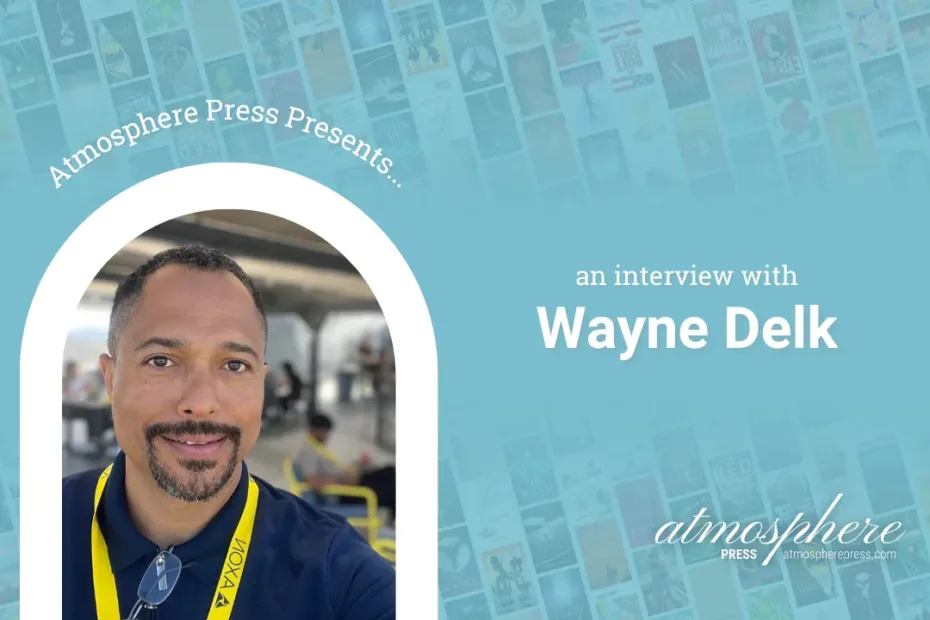
Wayne Delk is a writer, husband, father, former schoolteacher, and retired police sergeant whose work is shaped by more than three decades of service, leadership, and personal reflection.
During his twenty-six-year law enforcement career with the Cobb County Police Department in Georgia, Wayne served in patrol, criminal investigations, training, and media relations. As the department’s public information manager, he became a familiar public voice during critical incidents and helped other public safety professionals communicate with clarity, compassion, and integrity.
But Wayne’s writing is not simply drawn from a resume. It comes from the quieter battles behind the uniform—the weight of responsibility, the consequences of mistakes, the demands of marriage and fatherhood, the struggle to reconcile strength with tenderness, and the lifelong work of becoming the man God calls us to be.
In The Warrior and The Witness, Wayne brings together biblical wisdom, Stoic philosophy, and lessons forged through real life. He writes especially for men who carry heavy responsibilities, often silently, and who are searching for a better way to lead themselves before attempting to lead anyone else.
Wayne lives in the Atlanta area with his wife and family and is the founder of Delk Media Group.
What inspired you to start writing this book?
This book began long before I realized I was writing a book.
It began in patrol cars, hospital hallways, crime scenes, press conferences, training rooms, and difficult conversations at home. It grew out of twenty-six years in law enforcement, but it also came from my experiences as a husband, a father, a leader, and a man who has not always gotten everything right.
For much of my life, I understood the warrior. The warrior acts. He protects, endures, solves problems, and carries responsibility. Those qualities served me well professionally, but strength without reflection can become pride, anger, isolation, or simple exhaustion.
The witness is the quieter part of us—the part that steps back, examines our motives, recognizes our failures, and asks whether the life we are living is aligned with what we claim to believe.
I began writing because I saw too many men carrying enormous burdens without the language or tools to understand what was happening inside them. I was one of those men at different points in my life.
I wanted to write the kind of book I wish someone had placed in my hands years ago: not a lecture from someone pretending to have mastered life, but an honest guide from a man who has learned through both wisdom and mistakes.
Tell us the story of your book’s current title. Was it easy to find, or did it take forever?
The exact title took a little time, but the central idea had been following me for years.
I kept returning to the tension between two parts of a man’s character. There is the warrior—the part of him that moves toward responsibility, danger, sacrifice, and action. Then there is the witness—the inner observer who examines his thoughts, measures his conduct, and reminds him who he is supposed to be.
A man needs both.
The warrior without the witness can become reckless, domineering, or consumed by his own strength. The witness without the warrior can become passive, endlessly analytical, and afraid to act. Character is formed when the two are properly ordered: the witness provides wisdom and restraint, and the warrior carries that wisdom into action.
Once the phrase “The Warrior and the Witness” came together, it felt less like I had invented a title and more like I had finally found the name of something I had been trying to describe for years.
The subtitle—A Man’s Guide to Peace, Power, and Purpose—followed quite naturally. Those three words represent what many men are searching for, although we do not always know how to articulate it. We want peace within ourselves, power over ourselves, and a purpose greater than ourselves.
If your book had a soundtrack, what are some songs that would be on it?
The soundtrack would flow between struggle, reflection, faith, regret, and resolve.
Johnny Cash’s version of Hurt would belong because it captures the painful honesty of looking back at the consequences of one’s choices.
I’d also include The Man Comes Around by Johnny Cash because it carries the sense of reckoning that runs through the book—the understanding that our actions matter and that every man eventually has to account for the life he has lived.
Tom Petty’s I Won’t Back Down represents perseverance without unnecessary bravado. Sometimes courage is simply refusing to abandon what is right.
Disturbed’s version of The Sound of Silence is a favorite of mine, and it reflects the unspoken pain man men carry and the cost of remaining emotionally isolated.
The Living Years by Mike + The Mechanics is a great fit for the themes of fathers, sons, regret, and the things men often leave unsaid until it’s too late.
I would also include Even If by MercyMe because faith is not the assurance that everything will happen as we desire. Sometimes (many times, if I’m looking back at my own life) faith means remaining steady even when the answer we hoped for does not come.
What books are you reading (for research or comfort) as you continue the writing process?
The Bible has become the foundation of my reading, especially Proverbs, Ecclesiastes, Psalms, the Gospels, and Paul’s letter. Scripture continually brings me back to the relationship between wisdom and action, strength and humility, justice and mercy.
I also return quite often to Marcus Aurelius’s Meditations, Seneca’s Letters from a Stoic, and the teachings of Epictetus. I don’t see Stoic philosophy as a substitute for faith. Instead I see it as a practical framework that can help us examine our responses, govern our emotions, accept what we cannot control, and act responsibly within what we can control.
I also find myself returning to C.S. Lewis’s philosophical works when I need writing that combines intellectual seriousness with spiritual clarity.
Almost all of these began as companions on my own personal journey to manhood, and they have all become research pieces as I worked on the book.
What other professions have you worked in? What’s something about you that your readers wouldn’t know?
Many readers may not know that I began my professional life as a schoolteacher.
Teaching and policing may appear to be very different professions, but both require communication, patience, preparation, and the ability to recognize that people do not all respond to the same message in the same way.
I later spent twenty-six years with the Cobb County Police Department. I worked in patrol, criminal investigations, firearms and academy training, and media relations. I eventually served as the department’s public information manager, where I communicated with the public and news media during major incidents and helped train other public safety professionals.
After retiring from law enforcement, I continued working in communication, training, public safety technology, and media through Delk Media Group.
Much of my life has revolved around translating difficult experiences into understandable language. Whether teaching students, speaking to a concerned community, preparing an officer for a media interview, or writing a chapter about personal responsibility, the underlying work has been remarkably similar: find the truth, make it clear, and communicate it in a way that helps someone move forward.
Who/what made you want to write? Was there a particular person, or particular writers/works/art forms that influenced you?
I can’t point to only one person.
The people I encountered during my law enforcement career influenced me: officers carrying experiences they could not easily explain, families living through the worst day of their lives, victims searching for meaning, and communities trying to make sense of tragedy.
My wife and children also influenced me. Fatherhood has a way of forcing a man to consider not only what he believes, but what his life is actually teaching. My children made the work more urgent because I began thinking more seriously about what I would leave behind beyond possessions or professional accomplishments.
As a writer I have been deeply influenced by Scripture, the Stoic philosophers, C.S. Lewis, J.R.R. Tolkien, Dean Koontz, and Stephen King (I actually wrote a bit of fiction before I moved over to nonfiction). William Wordsworth’s poem Character of the Happy Warrior also gave language to an image that has remained important to me: the warrior as a man of character, discipline, compassion, and duty rather than merely a man skilled in combat.
Film and visual storytelling have influenced me as well. A powerful scene can communicate through silence, posture, light, and restraint. I try to bring some of that visual quality into my writing so readers can feel an idea rather than merely being told what to think.
What advice would you give your past self at the start of your writing journey?
I would tell my past self not to confuse intensity with consistency.
There were times when I would write almost obsessively for several days and then step away for weeks or even months. I thought I needed the perfect mood, an uninterrupted schedule, or a sudden rush of inspiration.
I would tell my younger self that books are rarely completed through inspiration alone. They are completed by returning to the work.
I would also tell myself to stop waiting until I felt qualified. Writers can hide behind research, preparation, and revision because those things feel safer than allowing someone to see what we have written.
The first draft does not need to be impressive. It needs to be honest. You can refine an imperfect page, but you can’t revise a blank one.
Most importantly, I would tell myself that the experiences I regretted were not necessarily disqualifications. When examined honestly, they could become part of the reason the writing might help someone else.
What’s one thing you hope sticks with readers after they finish your book?
I hope readers remember that real strength begins with self-government.
Strength is not domination. Power is not aggression. Peace is not passivity. A strong man is not a man who never feels fear, anger, grief, or uncertainty. He is a man who refuses to allow those emotions to govern his character.
I want readers to understand that they are not powerless simply because they can’t control everything happening around them. They still have authority over their response, their conduct, their habits, their words, and the standards by which they choose to live.
I also hope men recognize that reflection is not weakness. The witness within us is not there to condemn us endlessly. It is there to tell the truth, redirect us when necessary, and remind us of the man we remain capable of becoming.
The warrior gives the courage to move. The witness makes sure we’re moving in the right direction.
Are you a writer, too? Submit your manuscript to Atmosphere Press.

Atmosphere Press is a selective hybrid publisher founded in 2015 on the principles of Honesty, Transparency, Professionalism, Kindness, and Making Your Book Awesome. Our books have won dozens of awards and sold tens of thousands of copies. If you’re interested in learning more, or seeking publication for your own work, please explore the links below.