
An Interview with Grace Glendon
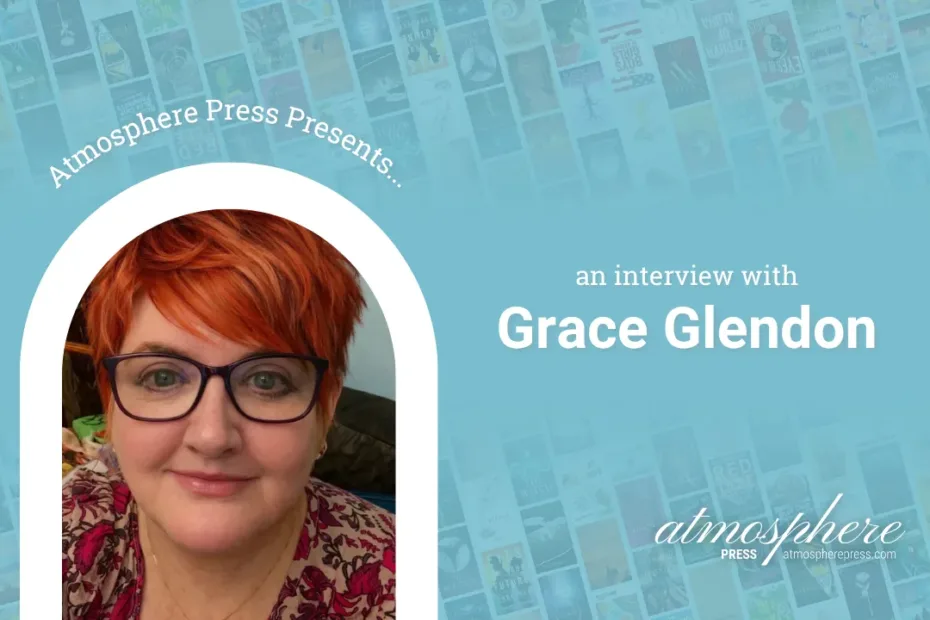
In spring 2005, I was sexually assaulted by a colleague at work. I was drugged at the end of the night and raped. It took a while for all my memories to come back to me. Two weeks later, I started hallucinating and became delusional. I saw my grandparents wherever I went.
I was working as a purchasing supervisor in an automotive factory, but on August 11, 2005, I had a complete breakdown and went to see my doctor. I was paranoid, convinced that people were following me, and becoming scared and withdrawn.
By February 2006, I was diagnosed with paranoid schizophrenia. I knew something was wrong, but I was struggling to express my feelings and didn’t trust my doctors. I thought they were informing my employer about everything, which totally destroyed my confidence.
I became paranoid, traumatised, and was experiencing hallucinations, but I thought everything was real. My grandparents had passed away in the 1980s, but when I was going through the most difficult time of my life, I felt as though they were still with me.
My father was there for me, taking notes and supporting me. I resigned from work and embarked on a long and difficult journey, one filled with fear of hospitalisation and nearly two decades of sedation. There were many highs and lows, but I never completely gave up on myself.
I had to fight to reclaim my life. I learned my post-graduate certificate in education, qualifying me to teach individuals over the age of fourteen. I became a community champion for a food bank, and later became a mental health first aid instructor for Mind.
My journey has been filled with challenges, but it has also shown me the strength and resilience I never knew I had. I have learned that my diagnosis does not define who I am. I am still me.
I wrote my memoir, Guiding Star Through the Storm, to share my experiences, challenge the stigma surrounding mental health, and help others understand that behind every diagnosis is a person with their own story, hopes, dreams, and ambitions.
I hope that by sharing my story, I can encourage greater understanding, empathy and compassion, and help others who may be facing their own battles to know that they are not alone.
What inspired you to start writing this book?
I was encouraged to attend counselling and was asked to keep a journal to help me make sense of the delusions I had experienced. As I began writing, I realised that although I was dealing with the effects of trauma, I was also experiencing another battle: The stigma surrounding schizophrenia.
What I found particularly difficult was that, at times, the stigma came from professional people. I am highly educated, motivated and have always wanted to achieve things in my life, but suddenly, because of my mental health diagnosis, I felt as though some people no longer saw me as Grace. Instead, I was simply labelled a “service user.”
Yes, I use mental health services when I need help and support, but that does not define who I am. I felt patronised and belittled, and I realised that I needed to take back control of my life and feel empowered once again.
In many ways, I inspired myself to write my memoir. My mother’s love and support also made the process much easier. She encouraged me to write it using my maiden name, which I did, and I am so grateful that I followed her advice.
I want the general public to understand the importance of empathy and respect. We never truly know what another person has lived through or what battles they may be dealing with every day.
Because of my diagnosis, I have sometimes felt that people assumed I was violent or a potential threat to others. I believe that this comes from ignorance and a lack of understanding about mental illness. The vast majority of people living with schizophrenia are not violent, and we should not be defined by stereotypes or misconceptions.
I wrote my memoir because I feel passionately about challenging this stigma. I wanted to stand up for what I believe in and show that a diagnosis does not take away a person’s identity, intelligence, ambitions, or humanity.
If sharing my story makes life a little easier for the next person living with the same diagnosis—if it helps them receive the support and respect they deserve without judgement—then everything I have been through and everything I have written will have been worthwhile.
Tell us the story of your book’s current title. Was it easy to find, or did it take forever?
The title Guiding Star Through the Storm came to me as a reflection of my journey through schizophrenia—a journey that tested every part of me but ultimately led to healing and purpose. For years, I kept hearing a voice I called my angel, reminding me that even in the storm, there is light. That voice became my guiding star.
My memoir tells how I transformed from someone surviving mental illness into someone who could guide others. Through kindness, determination, and hope, I found strength not only to recover but to illuminate the path for others—survivors of trauma, families, and anyone searching for their way through darkness.
My journey is proof that no matter your age or circumstances, there is always room to grow wiser and stronger. Every hardship, every fall, every challenge teaches us something vital. When we find peace and healing, we become the light that helps others find their way.
I want readers to see that resilience is possible—that even in life’s toughest moments, hope can rise again. Guiding Star Through the Storm is a reminder that we can all reach the other side, carrying with us the wisdom and certainty that the light never truly goes out.
Describe your dream book cover.
I live in the valleys of South Wales, UK—not far from the Brecon Beacons. Pen y Fan is a mountain 886 meters high, the highest in South Wales.
While I was taking antipsychotic medication, I gained a lot of weight and lost confidence. One day, my psychiatrist encouraged me to challenge myself—to rebuild my confidence. I was so unfit, but my friend began taking me for walks around the country park, and slowly my strength returned.
Eventually, I completed my first climb up Pen y Fan. It was hard work—every step felt like a battle. My sister walked beside me, encouraging me to keep going. I was the last to finish, but I completed the walk within an hour. That day, I felt proud.
As my confidence grew, I climbed Pen y Fan again. Standing at the summit, I looked out over the valley and felt a deep sense of achievement. The view stretched mile upon mile—rolling hills fading into the distance. As dusk settled, the valley below darkened and the horizon glowed with the last fading light, spreading across the sky in soft shades of pink and orange.
Above me, a single bright star appeared—clear, steady, and alone in the early night sky. In that moment, it felt symbolic: a guiding star shining through the storm I had survived. That star became the inspiration for my memoir’s title, a reminder that even in the darkest times, there is always a point of light to move toward.
If your book had a soundtrack, what are some songs that would be on it?
If my memoir had a soundtrack, I would choose:
– Something Inside So Strong—for my resilience and the strength I found within myself.
– Basket Case, Green Day—for my humour and those times when I needed to escape, let off steam, and forget about everything for a while.
– This Is Me, Keala Settle—for finding my voice and becoming proud of who I am.
– Shake It Out, Florence + The Machine—for letting go of the past and moving forward.
– Fix You, Coldplay—for the emotional and healing side of my story.
– Grace—because of the connection between the Grace in my memoir and my own life. Joseph was a prisoner suffering from psychosis, fighting for what he believed in, while Grace gave him unconditional love and support. I felt like a prisoner in my own mind, and Simon’s love and support helped me find my way back to myself.
– What a Wonderful World, Louis Armstrong—for where I am now, and learning to appreciate the beauty in life.
– I Love to Boogie, T. Rex—for the fun, lively side of me, and the fact that life is about more than the difficult things I’ve experienced.
– I Fought the Law, The Bobby Fuller Four—for my fighting spirit, with a little bit of my humour thrown in!
What books are you reading (for research or comfort) as you continue the writing process?
The books that have inspired me come from quite different places. I’ve read books about mental health and psychology, such as Nathan Filer’s This Book Will Change Your Mind About Mental Health and Steve Peters’ The Chimp Paradox. I’ve also been inspired by stories about love, relationships, spirituality, and personal struggles, including Ruth Jones, Lorna Byrne, and Bryony Gordon. I think all of these books have influenced me in different ways because my own memoir isn’t just about mental illness—it’s about trauma, love, resilience, recovery, and, ultimately, hope.
What other professions have you worked in? What’s something about you that your readers wouldn’t know?
Grace’s career has been wonderfully diverse, spanning continents and causes. She began working in Japanese car part supply chains in Honda before retraining as a teacher and earning her postgraduate certificate in education. Later, she became a mental health advocate and instructor, supporting people living with schizophrenia and helping them find their voice again.
Her dedication to community service earned her a Community Champion Award, and she was honoured to meet Queen Elizabeth II, King Charles, and Queen Camilla two years before the late Queen’s passing. Martial arts became another source of strength and confidence—Grace trained in kickboxing, kung fu, and Tang Soo Do, learning to defend herself and to teach others empowerment through movement.
During the pandemic, she helped deliver food parcels to families in need, witnessing firsthand how generosity ripples through communities. Many of those she supported later donated to help others who were struggling.
Publishing her memoir was an act of courage and vulnerability. Opening her life to readers felt daunting, yet the response has been extraordinary—a testament to the power of honesty and resilience.
Who/what made you want to write? Was there a particular person, or particular writers/works/art forms that influenced you?
The one person who inspired me to write my memoir was my mother; her self-belief and love, and her “we will conquer the world together” attitude made me want to write everything down. I found it so hard to express my feelings and let people know what I had experienced in life; I was deep, but so were my parents. My mother used to keep a journal and I started doing the same, trying to understand what was happening in my head. So when I had a delusion, I would write it down, and I told my mam I would put it together into my memoir. She asked me to write in my maiden name, for my dad’s family to know it was me, and there were so many delusions relating to my father’s parents, who lived in Kilkenny, Ireland, and she wanted them to be a part of my story. My mam’s inspiration, love, and kindness has helped me come out the other side when at times it felt like the world had given up on me.
Where is your favorite place to write?
My favourite place to write is actually at around 3:00 a.m. The whole house is quiet, my husband Simon is asleep upstairs with our dog Bailee, and I can relax on our sofa by the bay window in our terrace house.
Our front room is our snug, and it is a very cosy space, filled with Bailee’s cuddly toys, fairy lights, and big fluffy throws. It is the perfect place for me to sit with my journal, let my mind wander, and write down my thoughts as I feel inspired.
I often found myself writing in the early hours because there were no distractions. It was just me, my thoughts, and my journal. I could be completely honest with myself and allow whatever needed to come out onto the page.
My dad had not long passed away when I was writing, and I always felt that he was somehow guiding me. I felt as though he was letting me know which parts of my story I should include and which parts I should leave out. I found that incredibly comforting and reassuring.
I have always felt that 3:00 a.m. is a very special time. Some people call it the “witching hour,” and I have always believed that it is a time when the spiritual world can feel closer. Whether it was my imagination, my grief, or something more spiritual, I found great comfort in feeling that my dad was somehow there with me, guiding me as I wrote.
Those quiet hours in my snug became a very special part of writing my memoir. It was where I felt most connected to myself, my memories, and, in some way, to my dad.
What advice would you give your past self at the start of your writing journey?
The advice I would give is, writing your memoir might make you feel vulnerable, but you have bottled your trauma up for years; it’s time to let it out. You are strong enough to speak your truth and readers will appreciate it. Have faith in yourself and believe in the person you have always been. Your memoir will be empowering; you will gain strength and confidence from your own words.
You will have readers sharing your book with all of their friends and randomly leaving copies in cafes for strangers to read. You look deep inside yourself and find Grace the girl from the valleys who will not give up her passion, resilience, and self-belief. Keep on inspiring others, embrace life, you got this!
What’s one thing you hope sticks with readers after they finish your book?
What I hope readers take from my memoir is a sense of hope—real, grounded hope that comes from lived experience, not from clichés or empty reassurance. My story is about schizophrenia, yes, but it’s also about rediscovering purpose, rebuilding identity, and finding strength in places you don’t expect.
I want people to understand that even in the darkest moments, there is still the possibility of light. Darkness doesn’t mean the end; it’s often the beginning of something new. Stars are born in the night sky, and in the same way, resilience is born in struggle.
I wrote this book to show that no one is ever truly alone in their fight for recovery. Isolation, fear, and silence can feel overwhelming, but they don’t define you. There is courage in simply continuing, in taking one more step, in refusing to give up even when everything feels impossible. If someone reads my story and feels seen or finds a little more strength for their own journey, then I’ve done what I set out to do. I want readers to walk away knowing that healing is possible, that identity can be rebuilt, and that even after the hardest chapters, life can still open into something meaningful and bright.
Are you a writer, too? Submit your manuscript to Atmosphere Press.

Atmosphere Press is a selective hybrid publisher founded in 2015 on the principles of Honesty, Transparency, Professionalism, Kindness, and Making Your Book Awesome. Our books have won dozens of awards and sold tens of thousands of copies. If you’re interested in learning more, or seeking publication for your own work, please explore the links below.