An Interview with Kenneth Thompson
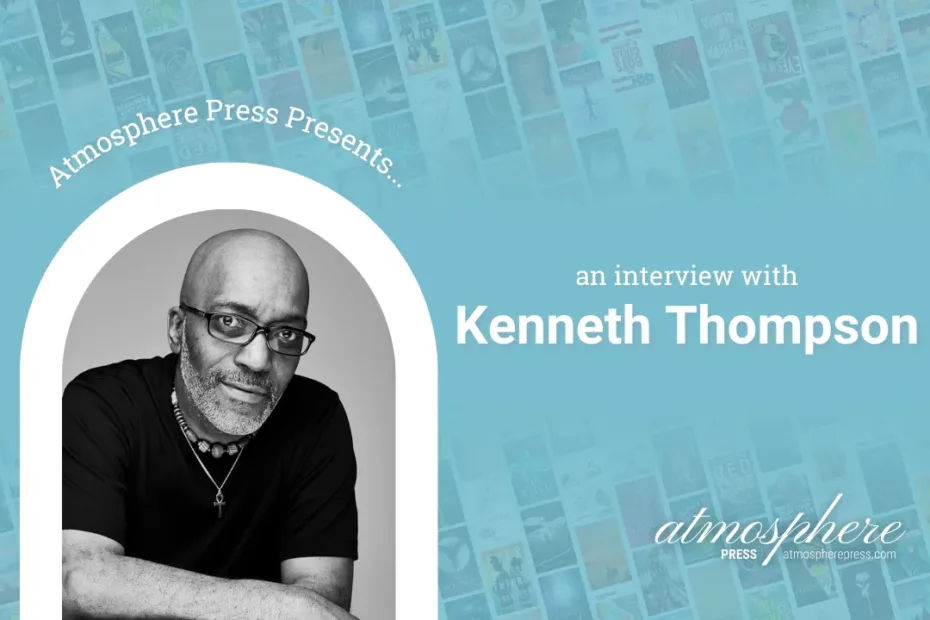
Kenneth Dwayne Thompson Sr., the second oldest of his mother’s seven children and the eldest biological son in his father’s clan of nine, has devoted his life to transforming responsibility into purpose. Married at nineteen to his high school sweetheart, Alisha, he discovered the profound meaning of fatherhood through their son, Kenneth Jr.—a relationship that would influence every step of his journey. Entrusted by his childhood coaches to lead the East Austin Youth Foundation for two decades, he helped shape generations of young people and uplifted an entire community. He later made history as the first Black person elected to public office in Pflugerville, serving with humility, courage, and steadfast conviction.
His leadership extends across systems and spaces: opening doors for diversity and inclusion in local schools, co-chairing the Austin-Travis County Reentry Roundtable, representing fathers on national and city commissions, and elevating family voices on his community-focused radio talk shows. His professional path—spanning Fortune 500 management, transformative work within the Texas Child Welfare System, and influential roles advancing climate equity—reflects both resilience and innovation.
Whether coaching Little League, refereeing youth sports, or advocating for fathers inside Texas prisons and courtrooms, Thompson has consistently championed a guiding belief: fathers matter, families matter, and community is a sacred inheritance. Grounded in reverence for those who paved the way and committed to building bridges for those yet to come, he considers fatherhood his greatest calling. Watching his son grow into a compassionate leader—and seeing him walk among national figures, including the first Black President of the United States—remains one of Thompson’s deepest joys and the most powerful affirmation of a father’s love, labor, and lasting legacy.
Tell us the story of your book’s title. Was it easy to find, or did it take forever?
The title Full Circles: The Circles of Life Navigated to Become the Father I Wish I Had came from reflecting on the many circles in my life—people, places, experiences, disappointments, mentors, and moments that shaped who I became. The title actually took some time to find because I knew I wanted something that represented more than just my journey as a father. I wanted it to capture the way life has a way of bringing us back to places and experiences that once seemed unfinished.
Full Circles became the perfect expression of that journey. Growing up, I knew my father, but I did not truly know my father. That left what I describe as a “hole in my soul.” Becoming a father myself allowed me to confront that absence and make different choices. Along the way, mentors, coaches, family, community, and fatherhood helped me complete some of those circles. The title represents coming full circle—not by changing the past, but by using it to shape the father, husband, mentor, and man I wanted to become. In many ways, writing this book allowed me to recognize that some of the very experiences that wounded me also became the seeds of my purpose.
How did it feel when you first saw your book cover? Or when you first held your book in your hands?
That moment was deeply emotional, because the book cover made the journey feel real. For so long, Full Circles existed in my mind, in my memories, and on pages that I was still shaping. Seeing the cover for the first time was like looking at a visual representation of a journey that had taken a lifetime. I thought about the little boy I was, the father I became, the people who poured into me, and the experiences that helped shape my purpose. It was humbling to realize that my story had become something I could actually hold in my hands.
Holding the finished book was even more powerful. I thought about the people who were part of the journey—my wife, my son, my family, my mentors, and the young men and fathers I’ve had the privilege of serving. There was a sense of gratitude, but also a sense of responsibility. Full Circles is not just a book to me; it is a piece of my legacy. It represents turning some of the wounds of my past into wisdom and purpose and, hopefully, giving someone else permission to look at their own life, recognize their unfinished circles, and believe they can complete them.
Who/what made you want to write? Was there a particular person, or particular writers/works/art forms that influenced you?
I think what made me want to write was the realization that my story could be useful to someone else. For years, I carried experiences from my childhood that shaped how I understood fatherhood. I knew my father, but I did not know my father, and that created what I call a “hole in my soul.” Becoming a father myself forced me to confront that feeling and ask a different question: What kind of father do I want to be? Over time, my experiences as a father, husband, mentor, community advocate, and public servant showed me that our most difficult experiences can become sources of purpose when we are willing to examine them.
I was also influenced by the men who poured into my life—coaches, mentors, educators, family members, and community leaders who demonstrated that fatherhood and leadership are often about presence, character, and service. Their examples taught me things that no book could have taught me. Ultimately, I didn’t set out to become a writer; I set out to tell a story that I believed needed to be told. Writing Full Circles became a way of honoring the people who helped shape me, acknowledging the wounds that shaped my journey, and hopefully encouraging fathers and families to recognize the power they have to change the trajectory of the next generation.
What other professions have you worked in? What’s something about you that your readers wouldn’t know?
My professional journey has taken me through a number of different worlds. I have worked in manufacturing and corporate environments, including experiences with IBM and Applied Materials, and later moved into education, public service, community advocacy, and fatherhood engagement. I served as a school board trustee, worked in community development and youth programs, hosted talk shows, facilitated fatherhood education, and ultimately became the first Fatherhood Program Specialist for the Texas Department of Family and Protective Services. Each of those experiences gave me a different perspective on leadership, families, and the importance of showing up for people. In many ways, my career has been a collection of circles that eventually connected back to my passion for fatherhood and community.
Something readers may not know about me is that I didn’t always see myself as an author. Writing Full Circles required me to become comfortable with vulnerability in a way that public speaking and professional leadership never quite demanded. I could stand in front of a room and talk about fatherhood, but putting my own story on paper meant confronting parts of myself that I had spent years navigating. I discovered that writing can be therapeutic. It can help you revisit a “hole in your soul” and begin to understand how that experience influenced the person you became. What readers may see as a book is, for me, also a record of healing, gratitude, and legacy.
What was the most rewarding/meaningful part of publishing your book?
The most rewarding part of publishing Full Circles has been realizing that my story may help someone else make sense of their own. I didn’t write the book simply to tell people what I have accomplished. I wrote it to be honest about the journey—the challenges, the people who poured into me, the mistakes, the lessons, and the transformation that came from becoming a father. Knowing that a father, a son, a mentor, or someone carrying their own “hole in the soul” might read my story and feel less alone is incredibly meaningful to me.
Publishing the book also gave me an opportunity to honor the people who helped me along the way. My wife, my son, my family, my mentors, and the communities that shaped me are all part of these pages. For me, Full Circles is ultimately about legacy. It is about taking what life gives you, including the difficult parts, and deciding what you will pass on to the next generation. Holding the finished book and knowing that it now exists beyond me is a powerful feeling. I hope it reminds people that our beginnings do not have to determine our endings, and that sometimes the greatest purpose in our lives comes from completing the circles we once thought could never be closed.
If your book had a soundtrack, what are some songs that would be on it?
If Full Circles had a soundtrack, it would be a combination of soul, R&B, funk, and music that speaks to different seasons of my life. Each song would represent a chapter, a feeling, or a lesson along the journey.
Earth, Wind and Fire—That’s the Way of the World would definitely be on it. The song speaks to the world we inherit and the responsibility we have to make it better. That connects deeply with my journey as a father and community advocate.
Prince—7 would represent the belief that there is something greater than ourselves and that our lives have meaning beyond what we can immediately see. Prince’s music also reminds me that individuality and authenticity matter.
Marvin Gaye—What’s Going On would speak to my years of community engagement and advocacy. It captures the questions we ask when we look at our families, our communities, and the world around us and wonder how we can make things better.
The O’Jays—Family Reunion would be another important song, because family is at the heart of Full Circles. Family isn’t always perfect, but it is where many of our most important lessons, memories, wounds, and celebrations begin.
I would also include Earth, Wind and Fire—September, because some songs simply make you remember people, places, and good times. Marvin Gaye—Inner City Blues (Make Me Wanna Holler) would represent the realities and challenges that shaped my community. And I would probably add Prince—The Most Beautiful Girl in the World as a reminder of love and appreciation.
But if I had to choose one song to play at the very end of the book, it might be That’s the Way of the World. Full Circles is ultimately about understanding where you came from, embracing the people and experiences that shaped you, and then deciding what kind of world—and what kind of legacy—you will leave for those who come after you.
What is one thing you hope readers take away from reading your book? How do you envision your perfect reader?
The one thing I hope readers take away from Full Circles is that our past may explain us, but it does not have to define us. We all have experiences, relationships, disappointments, and wounds that shape who we become. Some of us carry what I call a “hole in the soul.” But I believe we have the power to decide what we do with those experiences. Becoming a father gave me the opportunity to confront what I did not receive from my own father and intentionally become the father I wished I had. I hope readers see that their unfinished circles can become opportunities for growth, healing, and purpose.
My perfect reader isn’t necessarily a particular age, gender, or background. It is someone willing to look honestly at their own life. It could be a father trying to understand the importance of his presence, a son trying to understand his relationship with his father, a mother who wants to encourage the father of her children, or someone who has experienced disappointment and is wondering what comes next. I want readers to close the book and ask themselves, “What circles in my life need to be completed, and what legacy do I want to leave?” If Full Circles inspires even one person to become more present, more intentional, or more purposeful in the lives of others, then telling my story was worth it.
What creative projects are you currently working on?
Right now, my creative work is really an extension of Full Circles. I am developing opportunities to take the conversations from the book beyond the page—particularly conversations about fatherhood, family, mentorship, healing, and legacy. I want Full Circles to become more than a memoir; I see it as a platform for meaningful conversations that encourage fathers and families to be more intentional about their relationships and the time they have with one another.
I am also exploring speaking engagements, fatherhood discussions, community events, and ways to connect with young men and fathers through storytelling. I have spent much of my life advocating for fathers and mentoring young people, so this next chapter gives me an opportunity to combine those experiences with my voice as an author. I am especially interested in creating spaces where men can talk honestly about their experiences—their fathers, their children, their mistakes, their victories, and the legacy they want to leave. For me, the creative process isn’t over with the publication of Full Circles. The book may have completed one circle, but it has opened several new ones.
How was working with Atmosphere Press? What would you tell other writers who want to publish?
I really enjoyed my experience working with Atmosphere Press. One of the things I appreciated most was the opportunity to have face-to-face conversations with members of the team from different parts of the world. Those conversations made the publishing process feel personal rather than transactional. I also valued the diversity of voices and perspectives across the Atmosphere Press team. Each person brought something different to the process, and that helped me see my book from perspectives I may not have considered on my own. For other writers who are thinking about publishing, I would say don’t be afraid to tell your story, and don’t wait for the “perfect” time to begin. Your story has value, even if you don’t know exactly where it will lead. Be open to feedback, trust the process, and surround yourself with people who respect your voice and your vision. Publishing Full Circles taught me that writing the story is only part of the journey. Bringing it to life requires patience, vulnerability, collaboration, and a willingness to let others help you shape something that ultimately remains authentically yours.
Are you a writer, too? Submit your manuscript to Atmosphere Press.
Atmosphere Press is a selective hybrid publisher founded in 2015 on the principles of Honesty, Transparency, Professionalism, Kindness, and Making Your Book Awesome. Our books have won dozens of awards and sold tens of thousands of copies. If you’re interested in learning more, or seeking publication for your own work, please explore the links below.