An Interview with David Aretsky
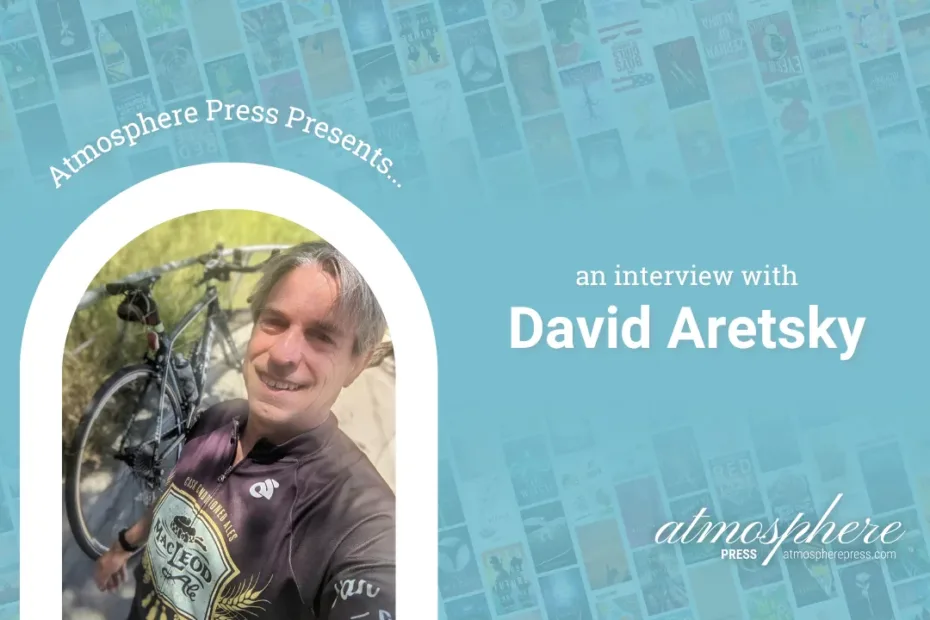
Dave Aretsky is a multi-media artist with over forty years of experience in the entertainment technical services business. His journey began at the age of thirteen, when he started working for local bands as a roadie, lighting director, and audio engineer. Over the years, he has collaborated with various live production companies in Los Angeles, taking on roles such as a live stage technician, film/TV lighting tech, gaffer, grip, swing, and scenic artist. Dave holds certifications as a recording engineer, part 107 UAV drone pilot, and PADI advanced open water scuba diver He also has a background in art photography and works as an independent videographer, editor, and special effects artist. In his free time, Dave enjoys biking, traveling, good food, sipping freshly brewed beer, and working out at the gym.
Who/what made you want to write? Was there a particular person, or particular writers/works/art forms that influenced you?
I started writing after my breakup with my long-term girlfriend. At the advice of friends I took a look back through my unusual life to reflect on where I had been, and where I was at presently.
My friend Mikal had encouraged me to write whenever we worked next to each other in Starbucks, so I thank him, too.
What other professions have you worked in? What’s something about you that your readers wouldn’t know?
I have worked as an entertainment technician for my whole life. Mostly on a live performance stage but also in film, TV, editing, post, camera, and other positions. Mostly, I consider myself as a stagehand. I’m mostly a quiet person in real life. Not as exciting as you would think!
Tell us the story of your book’s title. Was it easy to find, or did it take forever?
At first, I was going to call the book The Ex, as the story quite often revolves around my relationship with my ex-girlfriend. But my editor thought that the book title should reflect my work and life story. And if I am anything in this life, it’s a stagehand.
What part of publishing your book made it feel real for the first time?
It took five years to complete, from beginning writing until I held a printed version in my hand. It was real to me as soon as I started the massive job of editing. The book was another 300 pages at first. A lot had to be removed or re-written. It took a lot of hard work. But I suppose that the defining moment was handing my friend Peabo Bryson the proof version of the book—the first print. I had told him the year before that I would place a book in his hands when we met next, and I did. I was so excited that I forgot to autograph it!
If your book had a soundtrack, what are some songs that would be on it?
Haha! So many. Led Zeppelin, Kashmir. The Rolling Stones, Paint It Black. Some Dolly Parton, Tony Bennett, Johnny Mathis, of course, my friend Peabo Bryson. There’s so much music, as that’s a large part of how I spent my life.
What’s one thing you hope sticks with readers after they finish your book?
I hope that they see that they can achieve their dreams and do what they want in life as long as they keep at it. Also, that the people they look up to in the media are human like the readers themselves. The performers I have worked with are not superhuman; they live lives with all the same highs and lows the readers have.
What was the most rewarding/meaningful part of publishing your book?
Being able to share some of the stories with the people who I wrote about. And also with readers who are curious about what goes on behind the curtain. My business is supposed to be invisible, so by default many don’t ever know what stagehands do. It’s nice to be able to shine a light on the profession. It’s also nice when something in my book helps other lives.
What creative projects are you currently working on?
I’m working what will probably be my last year as a stagehand on a live stage before retirement. I’m always doing something, though. I have tons of drone footage to edit and will probably take up other creative endeavors shortly.
Are you a writer, too? Submit your manuscript to Atmosphere Press.
Atmosphere Press is a selective hybrid publisher founded in 2015 on the principles of Honesty, Transparency, Professionalism, Kindness, and Making Your Book Awesome. Our books have won dozens of awards and sold tens of thousands of copies. If you’re interested in learning more, or seeking publication for your own work, please explore the links below.