An Interview with Connie Senior
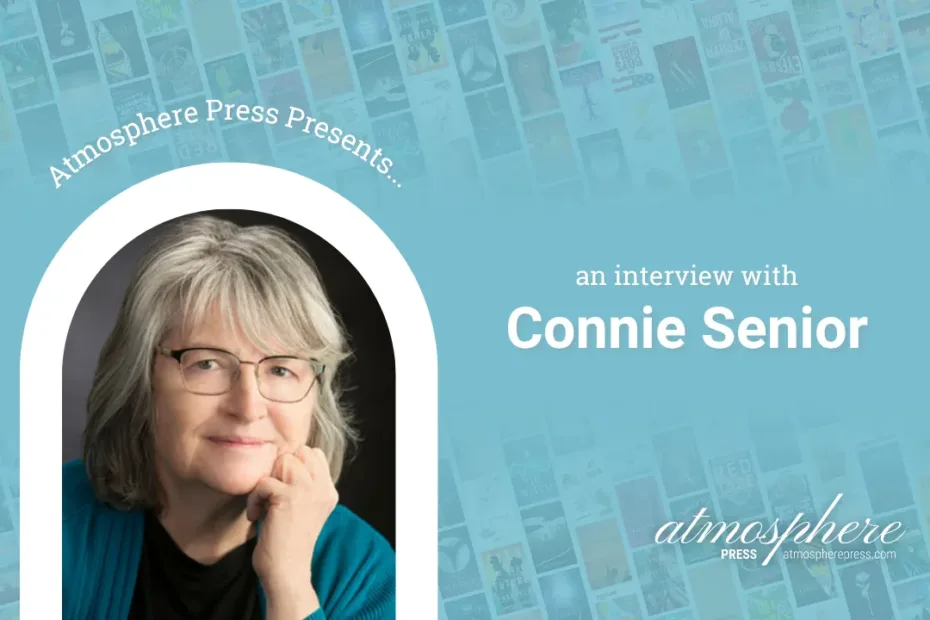
Connie Senior is an engineer by training but obsessed with werewolves. She blends magic and science in her urban fantasy series set in New England, where werewolves struggle to find family while battling their ancient enemies, vampires. Blue Moon, the third book in her series, will be out in November 2026. She lives in Northampton, MA. More at conniesenior.com.
Who/what made you want to write? Was there a particular person, or particular writers/works/art forms that influenced you?
It’s hard to remember a time when I wasn’t making up stories in my head. I had a hunger to learn to read by age three. After that, I devoured books. I read fantasy and science fiction as soon as I could check books out of my elementary school library. I haven’t stopped, though my taste in books has broadened. The first story I remember writing was in second grade, and it was called The Haunted Space Station. I have no recollection of the content, nor do I have a copy of the story; only the title remains. One summer, when I was eight or nine years old, I complained to my mother about being bored. She told me to go write a story (possibly to get me to stop bothering her). On a manual typewriter, I clacked out a detective story in the style of Perry Mason. I’ve always had stories in my head, from childhood until now. I can’t pick out a particular writer that influenced my writing, but, in terms of genres, epic fantasy and noir detective fiction come the closest.
What inspired you to start writing this book?
The current book, Blue Moon, will be published in November 2026. It’s the third book in a fantasy series that I’ve been writing since 2006. Before that, in 2000-2001, I wrote fanfiction in the Harry Potter universe. At that time, online communities were frothing with new writing, much of it bad but it made for a wild ride, nonetheless. I gravitated toward the werewolf characters in the Potterverse but ultimately felt unsatisfied with how they were portrayed as either sad, cursed cowards, or cartoonishly feral beasts. Wasn’t there more to werewolves? I stewed on that question for a few years, then began writing my answer in a world of my own creation. My books follow the coming of age of a werewolf in late twentieth-century America, from age seventeen to twenty-seven. A trilogy was intended from the beginning, though I didn’t know how the series would end (nor did I know how long it would take to finish!). I let the characters take me on a twenty-year ride, which I found most satisfying.
Tell us the story of your book’s title. Was it easy to find, or did it take forever?
Early in the plotting process, I determined that this book would be organized around full moons in the summer of 1993. Full moons have names: Strawberry Moon, Buck Moon, Sturgeon Moon, etc. August 1993 contains two full moons, the second always called Blue Moon. I chose that second full moon as the title. Soon after, the meaning of the title came into focus. The final chapter in the book was written five years ago to answer this question: could a blue moon represent a second chance, an opportunity for characters to start over? Then, I merely had to figure out how to get them there.
If your book had a soundtrack, what are some songs that would be on it?
I have a playlist! For the last four or five years, I’ve been accumulating songs that roughly follow the plot of Blue Moon. Currently: 161 songs, eleven and a half hours. As one might expect, there are a couple of renditions of Blue Moon (by Billie Holiday and Elvis Presley), Werewolves of London (of course), and many, many songs about howling at the moon. The titles of most of the chapters are taken from songs in the playlist.
What other professions have you worked in? What’s something about you that your readers wouldn’t know?
In addition to a lifelong passion for reading and writing fantasy, I’ve always been interested in the environment. I have a PhD in environmental engineering and worked for decades on understanding and designing systems for controlling air pollution. For much of that time, writing fiction took a back seat to technical writing. As an engineer, I wrote technical papers and grant applications. Weirdly, those applications turned out to be great training for fiction: creating a vivid, believable dream of something that doesn’t yet exist, and then convincing the reader that it’s going to be fabulous. However, the use and misuse of science found its way into my fiction, from a vampire grad student studying high energy physics to experiments on mice aimed at making humans immune to vampire bites.
What books did you read (for research or comfort) throughout your writing process?
Research focused on the history and geography of the locations in the books as well as on wolf packs in the real world, which informed my conception of werewolf behavior in my made-up world. For comfort and inspiration, I turned to detective novels like Gorky Park (Martin Cruz Smith) or those with fantasy elements like The Yiddish Policemen’s Union (Michael Chabon), and Terry Pratchett’s Night Watch novels. I absolutely did not read contemporary fiction containing werewolves and vampires. I didn’t want my conception of these magical creatures to be overly influenced by other writers’ ideas. I wanted to build a coherent world that operated on rules of my own devising.
What advice would you give your past self at the start of your writing journey?
I’d advise my past self to establish a regular writing practice. For most of the twenty years of this series of books, I went for months without writing. My life was busy and chaotic (demanding job, children to raise), but even a few minutes on a regular basis to scribble ideas in a notebook would have moved the stories along. I’d also tell myself to find and/or create a writing community. Writing is a largely solitary process, but inspiration flows from critique and conversation with other writers. Finally, I’d remind myself to not dismiss the niggling voice in my head that points the story in unexpected directions. Story bubbles up from the unconscious mind; the writer needs to listen.
What’s one thing you hope sticks with readers after they finish your book?
If I had to limit myself to one thing that the book is “about,” it would be the importance of finding and creating family, not necessarily the family one is born into. This is as true for a werewolf finding a pack as it is for the rest of us humans. I hope that sticks with readers.
Are you a writer, too? Submit your manuscript to Atmosphere Press.
Atmosphere Press is a selective hybrid publisher founded in 2015 on the principles of Honesty, Transparency, Professionalism, Kindness, and Making Your Book Awesome. Our books have won dozens of awards and sold tens of thousands of copies. If you’re interested in learning more, or seeking publication for your own work, please explore the links below.