An Interview with A.B. Taylore
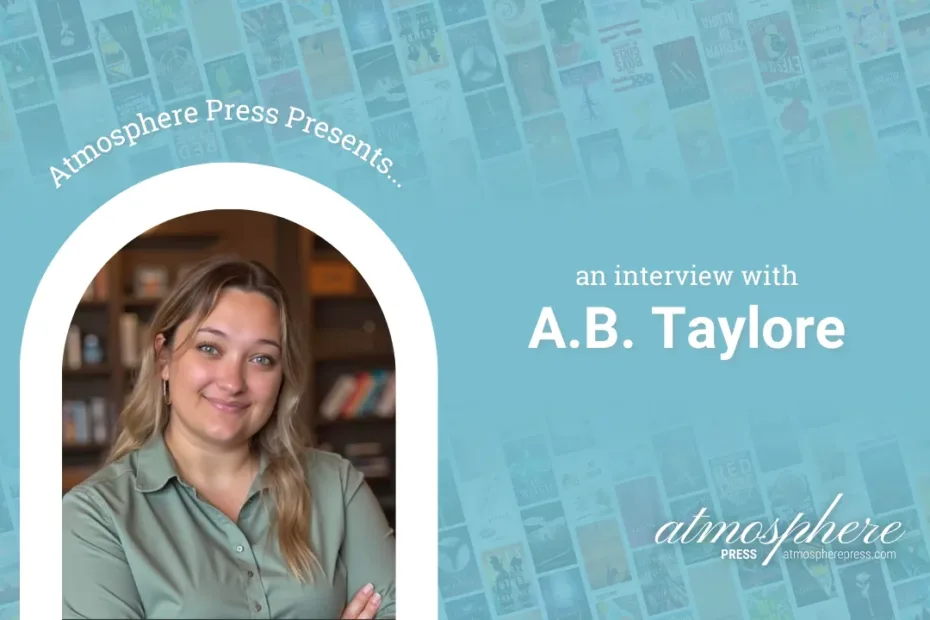
A.B. Taylore is an imaginative storyteller and high school biology teacher who believes that the natural world is the greatest source of wonder. By day, she guides students in Grades 9 to 12 through the intricate beauty of cells, ecosystems, evolution, and the delicate systems that sustain life. By night – and in every spare creative moment – she transforms that same sense of awe into fantastical tales born from boundless curiosity.
Blending a scientist’s fascination with life and a storyteller’s love of the extraordinary, A.B. Taylore crafts unique worlds where living landscapes breathe, mysterious creatures evolve, and characters grow in unexpected ways. Each story springs to life with the same energy and interconnectedness found in nature itself.
Through vivid imagination and thoughtful storytelling, A.B. Taylore invites readers to explore worlds where science and fantasy intertwine – and where every adventure begins with curiosity.
Who/what made you want to write? Was there a particular person, or particular writers/works/art forms that influenced you?
I’ve been an avid and dedicated reader for as long as I can remember. Books were never just entertainment for me – they were portals. Growing up, I always had a story in my hands, and over the years I’ve built a personal library of more than two hundred books. Each one represents a different world I’ve stepped into, a different life I’ve briefly lived. That constant immersion in story is what first made me want to write.
Fantasy, especially, captured my imagination. I was drawn to sweeping landscapes, intricate magic systems, ancient prophecies, and characters who were forced to grow through impossible circumstances. Epic love stories also left a lasting impression on me – the kind where relationships are tested by fate, distance, sacrifice, or even entire worlds at stake. Those stories taught me that the emotional journey can be just as powerful as the physical adventure.
The writers I gravitated toward created worlds so vivid and immersive that they felt real. I remember finishing certain books and feeling almost disoriented, like I’d returned from somewhere far away. That feeling – of being completely transported – is something I now strive to create for my own readers. I want them to feel that same ache when a story ends and that same pull to revisit a world again and again.
Beyond specific authors, I’ve always been inspired by the art of storytelling itself – whether through novels, films, mythology, or even the narratives woven into history and science. As someone who teaches biology, I see storytelling everywhere: in evolution, in ecosystems, in the resilience of life. The natural world is filled with conflict, adaptation, survival, and transformation – elements that mirror the heart of every great story.
Ultimately, no single person made me want to write. It was the cumulative power of story – the thousands of pages I turned, the characters who stayed with me long after I closed the book, and my own deep love of creating worlds on paper. Writing feels like a natural extension of being a lifelong reader. After spending years exploring other people’s worlds, I felt called to build my own.
What inspired you to start writing this book?
This book was born at the intersection of two lifelong loves: story and music.
I’ve always been a dedicated reader – fantasy realms, epic love stories, sweeping emotional journeys. Those kinds of books shaped the way I see storytelling: big stakes, bigger emotions, and characters who are transformed by what they endure. But music – especially rock music – added something different. It gave the story a pulse.
Rock lyrics, in particular, have always felt like miniature epics to me. They’re raw, emotional, rebellious, vulnerable. A single song can capture longing, heartbreak, defiance, devotion, or redemption in just a few verses. I’ve often found myself listening to a track and imagining the larger world behind it. Who are these people? What happened before this moment? What happens after? The emotional intensity in rock music makes everything feel heightened, almost mythic, and that energy naturally began spilling into my writing.
Many scenes in this book were sparked by a lyric, a melody, or even just the feeling a song created. Rock music carries a kind of dramatic urgency that mirrors the sweeping fantasy and epic romance I love to read. It’s bold. It’s unapologetic. It’s passionate. Those are the qualities I wanted this story to embody.
As someone who has always loved crafting worlds and exploring deep emotional arcs, combining that with the rhythm and intensity of rock felt inevitable. This book is, in many ways, what happens when a lifelong reader of fantasy and epic love stories sits down with a soundtrack turned all the way up and lets the music shape the story.
Tell us the story of your book’s title. Was it easy to find, or did it take forever?
Hymn of the Hollow God was one of those titles that felt both inevitable and hard-won.
For a long time, the book had a working title that never quite fit. It described the plot, but it didn’t capture the feeling. And for me, titles have to carry emotion. They have to sound like something you could whisper…or scream. Something that feels like a lyric.
Because music – especially rock – deeply influences my writing, I knew I wanted a title that felt almost like a song title. Something dramatic. Something reverent and rebellious at the same time. The word ‘hymn’ came first. I loved the contradiction in it. A hymn suggests devotion, worship, something sacred and sung. It carries rhythm and resonance. It feels ancient and powerful.
But this story isn’t about simple faith or uncomplicated devotion.
That’s where ‘hollow’ entered the picture. That word captured the emotional core of the story – the emptiness beneath power, the echo inside something that should be whole, the ache that lingers in both gods and mortals. ‘Hollow’ gave the title weight. It added tension.
And then there was ‘God.’ The story wrestles with power, belief, identity, and what it means to be worthy of devotion – or to survive it. Once that word anchored the title, everything clicked.
Hymn of the Hollow God suddenly felt like a lyric pulled straight from the heart of the book. It sounded epic. It sounded musical. It hinted at faith, loss, longing, and something broken at the center of something powerful.
It definitely took time to get there. I turned over dozens of possibilities, testing them the way you test a chorus – saying them out loud, listening for rhythm, feeling for resonance. But once this one formed, I knew. It didn’t just describe the story. It sang it.
If your book had a soundtrack, what are some songs that would be on it?
If Hymn of the Hollow God had a soundtrack, it would absolutely lean into powerful, emotionally charged rock – the kind of music that feels like it could shake cathedral walls or echo through an abandoned throne room.
At its core, this story is about devotion, emptiness, power, and longing, so the soundtrack would need songs that carry intensity and vulnerability at the same time. Think soaring vocals, haunting instrumentals, and lyrics that feel almost sacred.
Some songs that capture the spirit of the book:
Immortal – Evanescence
For the aching, lingering grief that threads through the story. It embodies the quiet devastation that shapes the characters’ choices.
Take Me Back to Eden – Sleep Token
This one feels almost tailor-made for the book’s themes: worship, identity, surrender, and the complicated relationship between devotion and destruction.
Hallelujah – Jeff Buckley (cover)
A fragile, reverent, almost broken kind of hymn – beautiful but heavy with meaning. It mirrors the tension between the sacred and the hollow.
Control – Halsey
For the internal battles, the struggle with power, and the fear of becoming something monstrous.
Bring Me to Life – Evanescence
Because every epic story needs that moment of awakening – the shift from numbness to fire.
Knights of Cydonia – Muse
For the sweeping, cinematic scale. This one feels like riding into destiny.
Overall, the soundtrack would move between haunting ballads and explosive anthems – songs that feel like prayers turned into battle cries. It would be dramatic, emotionally raw, and just a little bit reverent in a way that makes you question what you’re worshipping.
Because at its heart, Hymn of the Hollow God doesn’t just unfold like a story.
It plays like one.
What other professions have you worked in? What’s something about you that your readers wouldn’t know?
By profession, I’m a high school biology teacher, and that role has shaped me more than any other job I’ve had. Teaching teenagers about cells, ecosystems, genetics, and evolution every day keeps me grounded in the complexity and resilience of life. It also constantly reminds me that growth – whether biological or personal – is rarely linear. There’s struggle, adaptation, and transformation in both.
Before fully stepping into education, I explored different paths that all revolved around communication and creativity in some way – tutoring, mentoring, and academic support roles that centered on helping students find confidence in subjects that initially intimidated them. Those experiences strengthened my belief that everyone has a story, and that understanding often begins with curiosity.
As for something readers might not know about me: I’m a meticulous world-builder. The same part of my brain that loves breaking down biological systems also loves constructing fictional ones. I create ecosystem maps for imaginary kingdoms. I think through food chains, political hierarchies, religious structures, and evolutionary histories of creatures that don’t technically exist. If there’s a ‘hollow god,’ you can be sure I’ve considered what that means anatomically, culturally, and symbolically.
Another thing readers might not expect? I build playlists before I build chapters. Music is often my entry point into a scene. Sometimes a single lyric unlocks an entire character arc.
At my core, I’m both scientist and storyteller. I analyze structure by day and unravel emotional chaos by night. And in many ways, those two worlds aren’t separate at all – they both revolve around understanding life, in all its beautiful, complicated forms.
What books did you read (for research or comfort) throughout your writing process?
For me, reading has always been about comfort first. It’s where I go to feel grounded, inspired, and recharged. During the writing process, I wasn’t necessarily reading with a highlighter in hand or dissecting craft in a technical way. I was reading the way I always have – curled up somewhere quiet, fully immersed, letting the story take me wherever it wanted.
But inspiration has a funny way of sneaking in.
I find it in almost every book I read. Sometimes it’s a character I adore, and I’ll catch myself thinking, “What if they made a completely different choice? What if they turned into the villain instead?” Or I’ll read a subplot and think, “I wish this had gone darker. Or softer. Or more tragic.” My brain is constantly running little ‘what if’ experiments in the background.
Even when I’m reading purely for comfort – especially fantasy or epic love stories – I’m absorbing tone, pacing, emotional beats. I’m noticing the moments that make my chest tighten or my heart race. Those reactions tell me something about the kind of stories I want to write. The kind that linger.
So while I didn’t sit down with a strict research list, every book I picked up fed the creative process in some way. Reading reminds me what’s possible. It reminds me how powerful a twist can be, how devastating a betrayal can feel, how satisfying a redemption arc can land.
Comfort and inspiration aren’t separate for me. They’re intertwined. The stories that make me feel safe are often the same ones that make me want to build something bold and emotionally unforgettable of my own.
What advice would you give your past self at the start of your writing journey?
If I could go back to the very beginning of my writing journey, I would sit my past self down and say this:
Build the world first.
Not every detail has to be perfect but know the bones of it. Understand the rules. How does power work? What does it cost? What do people believe? What do they fear? What does daily life look like for the most ordinary person in your world? When you know those things, everything else feels grounded. The plot stops floating and starts standing.
I would also say: Define your characters before you throw them into chaos. Know what they want. Know what they’re afraid of. Know the lie they believe about themselves. If you understand their emotional core, the story almost begins to write itself. Conflict becomes natural instead of forced.
And maybe most importantly: Take notes. Organize them. Future you will be grateful.
Worldbuilding details, timelines, character traits, random sparks of dialogue – write them down somewhere consistent. Inspiration feels unforgettable in the moment, but it isn’t. Having organized notes saves so much frustration later.
I’d also remind myself that if you see a scene vividly in your head, write it immediately – even if it doesn’t fit where you are in the draft. Write it separately. Save it. Protect it. Some of the most powerful scenes come out of order. You can always build the bridge to that moment later.
You don’t have to write chronologically. You just have to keep writing.
And finally: Trust your instincts. The dramatic idea. The darker turn. The unexpected betrayal. The character who might become a villain. If it excites you, explore it. You can always revise. But you can’t revise a blank page.
Start with the foundation. Protect your sparks of inspiration. Stay organized.
And don’t be afraid to build something bold.
What’s one thing you hope sticks with readers after they finish your book?
One thing I hope sticks with readers after they finish Hymn of the Hollow God is this:
Not every story is meant to end happily – and that doesn’t make it any less meaningful.
I want readers to sit with the ending. To wrestle with it a little. To question what was right, what was justified, what was inevitable. Some of the most powerful books I’ve ever read are the ones that unsettled me – the ones that didn’t tie everything up neatly, but instead trusted me to think, to feel, to decide for myself.
I hope this story lingers. I hope it makes readers examine devotion, power, love, sacrifice – and ask themselves where they would draw the line. I hope it encourages them to read stories that challenge them, not just comfort them. The kinds of books that make you close the cover and just sit there for a minute.
Because sometimes the stories that shake you are the ones that shape you.
And maybe most of all, I hope readers feel that this is just the beginning. I’m building something right now that is completely different and entirely new – something bold in its own way – and I can’t wait to share it. If this book opens the door, what’s coming next might just push it off its hinges.
Are you a writer, too? Submit your manuscript to Atmosphere Press.
Atmosphere Press is a selective hybrid publisher founded in 2015 on the principles of Honesty, Transparency, Professionalism, Kindness, and Making Your Book Awesome. Our books have won dozens of awards and sold tens of thousands of copies. If you’re interested in learning more, or seeking publication for your own work, please explore the links below.