An Interview with Arthur Jenkins
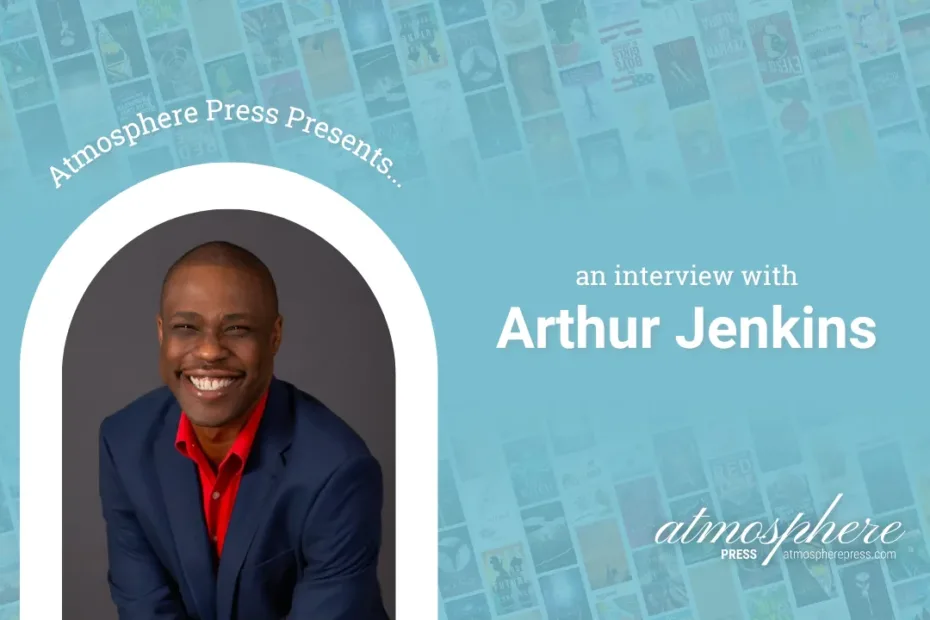
Arthur L. Jenkins is a writer of fiction and non-fiction, a poet, and a mental health professional. Arthur writes books for African American LGBTQ+ people of all ages. His debut novel, The Prince of Brown: A Fictional Memoir, focuses on the struggles of mental health, education, family, and intersectional identities.
He received his bachelor of arts in psychology from Widener University, his master of science in clinical mental health counseling from Gwynedd Mercy University, and an academic creative writing certificate from Community College of Philadelphia, where he was a winner in the Judith Stark Writing Contest multiple times.
The Philadelphia native is a lover of naps, cheesesteaks, and exotic countries like Ghana and Dubai. He’s currently residing in the suburb of Philadelphia he loves, most likely multitasking.
Arthur grew up in Germantown but also counts neighborhoods like West Oak Lane, University City, East Falls, and North Philly as his home. He attended Philadelphia High School for the Creative and Performing Arts for instrumental music, classical, and jazz.
He believes that good fiction, non-fiction, and poetry can change the world, and he uses it to inspire and empower young LGBTQ+ people of color, and people in general of all ages, through his interactive website where he posts weekly blogs on Black gay literature, featured Black queer authors, education, and current events. You can visit him at www.Black-Gay-Writers-and-Readers.com.
Tell us the story of your book’s title. Was it easy to find, or did it take forever?
The title of the book was something thought of twenty-three years ago. Initially, the book was going to be about family lineage. As I got older, more things happened in life and the book turned into a memoir, but I kept the title. Brown was a color associated with the color of one’s skin. As an African American, the usage of the word ‘brown’ encompassed all that the main character stood for. Family history, struggles, poverty, etc. The psychology of the color ‘brown’ suggests stability, reliability, and groundedness. But too much brown can feel stark, dull, or overly serious. The character is a prince because he inherits his struggle in life. Hence, The Prince of Brown.
How did it feel when you first saw your book cover? Or when you first held your book in your hands?
When I first saw the book cover, I was very excited. It was my work—my writing—coming to life. The cover communicated to the reader what style of book it was. The cover was very eye-catching, professional, and appealing. Something I’d never achieved before.
Who/what made you want to write? Was there a particular person, or particular writers/works/art forms that influenced you?
I am inspired by many writers, but that is not why I write. When I write I feel a sense of togetherness, accomplishment, and creativity that is exclusively my own creation. I’m able to tell the stories I want to write about the Black LGBTQ community that I think don’t get told often. I believe I’m filling the gap in Black literature.
Many writing styles influence me. I try to write in many different genres. As a novice writer still, I am curating my craft. So, you might find me reading Rivers Solomon to work on my skill as an Afrofuturist writer, or Alice Walker and Toni Morrison for literary realism. I want to contribute a piece to every genre, making me a diverse writer.
What other professions have you worked in? What’s something about you that your readers wouldn’t know?
I have worked customer service jobs for many years until returning to school to finish my degrees. I am now a crisis caseworker and a group therapist working in mental health. I enjoy helping people in their most vulnerable states and putting them back on the road to recovery. It was a hidden passion of mine that came to the surface when I was motivated enough to make changes in my life. It will be my life’s work.
What was the most rewarding/meaningful part of publishing your book?
The most meaningful part of publishing my book is seeing my hard work meet a standard, be received, and achieve a status in the Black LGBTQ community. The most rewarding part of publishing my book is seeing my story reach others and help them in their own lives.
If your book had a soundtrack, what are some songs that would be on it?
If my book had a soundtrack, some songs that would be on it would be Amy Winehouse’s You Know I’m No Good, Rihanna’s Umbrella, and The Pharcyde’s Passin’ Me By.
What is one thing you hope readers take away from reading your book? How do you envision your perfect reader?
I envision my perfect reader to be a young Black LGBTQ man who has or is currently struggling with his mental health. The takeaway from the book is to inform people, especially young Black men, that there is help and we do not have to navigate mental health alone through life.
What creative projects are you currently working on?
I am currently working on my first Afrofuturist book. It follows Dr. Hakim Okoye in Atlanta, Georgia in the year 2225. The story takes place in an America that is familial, sexually, educational, and economically segregated due to the lack of resources in the world. The main focus is on repurposing, bringing back the dead to use as fieldwork to ensure and maintain resources. The Mayor of Atlanta G-19 (new Atlanta) has made himself immortal through the scientific advancements of repurposing. Hakim must stop him from ravaging the city.
How was working with Atmosphere Press? What would you tell other writers who want to publish?
Atmosphere Press is a breath of fresh air. Having had bad experiences with former publishers, Atmosphere Press restores my faith in writing. If another writer can afford it, I always recommend Atmosphere Press.
Are you a writer, too? Submit your manuscript to Atmosphere Press.
Atmosphere Press is a selective hybrid publisher founded in 2015 on the principles of Honesty, Transparency, Professionalism, Kindness, and Making Your Book Awesome. Our books have won dozens of awards and sold tens of thousands of copies. If you’re interested in learning more, or seeking publication for your own work, please explore the links below.