An Interview with Blake Anderson
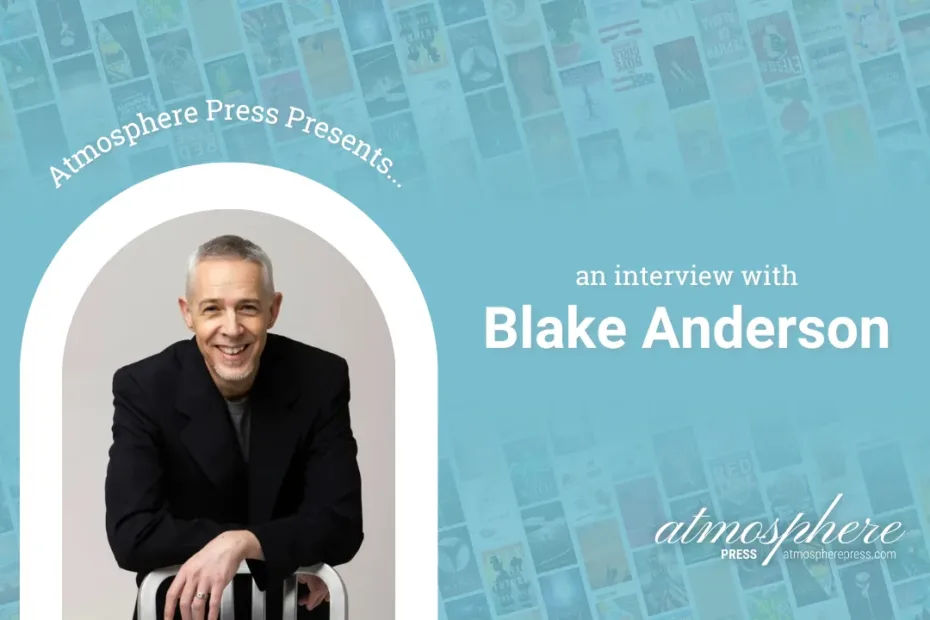
Blake Anderson spent more than three decades in the technology industry, including over twenty years at Microsoft, before retiring to pursue new passions as a certified life coach and author.
His work is driven by a lifelong curiosity about the questions that shape the human experience, particularly those involving consciousness, belief, morality, and the pursuit of meaning. Drawing on interests in science, philosophy, psychology, and human behavior, Blake writes stories that entertain while inviting readers to examine their own assumptions and wrestle with difficult questions.
Blake lives in Washington State with his wife, Brandi, and their daughter, Braelyn.
Tell us the story of your book’s title. Was it easy to find, or did it take forever?
The title came to me almost immediately. Once I understood the story I wanted to tell, The Great Awakening felt like the only title that truly fit.
On the surface, it refers to the extraordinary event that transforms humanity. But as the story unfolds, I hope readers begin to realize that the title has a deeper meaning. The real awakening isn’t simply what happens to the world — it’s the gradual recognition that some of the things we instinctively want to eliminate, such as suffering, uncertainty, and conflict, may be inseparable from what it means to be human.
I considered other titles, but none captured those layers as well. The Great Awakening was the title from the beginning, and it never felt right to call it anything else.
How did it feel when you first saw your book cover? Or when you first held your book in your hands?
Honestly, it felt a little surreal. Less than a year earlier, The Great Awakening didn’t exist. It wasn’t a lifelong dream or a manuscript I’d been working on for years. An idea popped into my head, I started writing, and within months I was holding a finished novel in my hands.
There was definitely a sense of accomplishment, but more than anything, I found myself thinking, “Wow … this is a real book.” It was strange to see something that had existed only in my imagination become something tangible that other people could actually pick up and read.
Who/what made you want to write? Was there a particular person, or particular writers/works/art forms that influenced you?
The story made me want to write.
I never reached a point where I thought, “I want to be a novelist.” Instead, I found myself with an idea that I couldn’t stop thinking about. The more I explored it, the more convinced I became that it was a story worth telling. My biggest concern wasn’t finding the motivation to write — it was making sure I did the idea justice.
As for influences, Stephen King has probably had the biggest impact on me as a reader. I’ve always admired his ability to create believable, relatable characters and place them in extraordinary situations. I didn’t consciously set out to write a Stephen King-style novel, but looking back, I can certainly see his influence in my writing.
What other professions have you worked in? What’s something about you that your readers wouldn’t know?
Before becoming an author, I spent more than three decades in the technology industry, including over twenty years at Microsoft. After retiring, I became a certified life coach, helping people navigate challenges involving relationships, careers, health, finances, and life’s biggest transitions.
Something readers might not know about me is that I have no formal education in philosophy, psychology, or theology, despite spending an enormous amount of time thinking about all three. I’m endlessly fascinated by the questions that don’t have clear answers, and I probably spend far more time exploring ideas than I do trying to defend conclusions.
What was the most rewarding/meaningful part of publishing your book?
The most rewarding part has been seeing the story resonate with other people.
When I started writing, I felt like I had a compelling idea, and my biggest hope was simply that I could do it justice. As people began reading it — first friends and family, then my developmental editor, followed by fellow authors and independent reviewers — I kept trying to steel myself for the possibility that someone would tell me it wasn’t nearly as good as I thought it was.
That moment never came.
Instead, the feedback has been incredibly encouraging. Watching readers engage with the characters, the ideas, and the questions at the heart of the story has been both validating and humbling. That’s been the most meaningful part of the entire experience.
If your book had a soundtrack, what are some songs that would be on it?
My soundtrack would include:
Grand Canyon – Puscifer
A Stranger – A Perfect Circle
The Humbling River – Puscifer
Under Your Skin – Aesthetic Perfection
Mad World – Gary Jules cover
Into Dust – Mazzy Star
Counting Bodies Like Sheep to the Rhythm of the War Drums – A Perfect Circle
At this point, you may have one of two questions: Too much Maynard? Or not enough?
In all seriousness, I didn’t choose these songs because they match the plot. I chose them because they create the same contemplative, expansive atmosphere I hope readers experience while reading The Great Awakening.
What is one thing you hope readers take away from reading your book? How do you envision your perfect reader?
More than anything, I hope readers come away with a greater appreciation for the complexity of the human experience. We spend so much of our lives trying to eliminate pain, uncertainty, fear, and conflict, but The Great Awakening asks whether those things, difficult as they are, might also be inseparable from love, growth, freedom, and what it means to be human.
My perfect reader isn’t someone who agrees with me. In fact, I’m not even sure the book expresses a single point of view. My ideal reader is simply someone who enjoys asking big questions and is willing to challenge their own assumptions. If they finish the book still thinking about it days later or arguing about it with a friend, then I’ve accomplished exactly what I hoped to accomplish.
What creative projects are you currently working on?
I’m strongly considering a sequel to The Great Awakening. I have what I think is a compelling premise and a story that asks a new set of difficult philosophical questions, but I haven’t yet found the ending that convinces me it’s time to start writing.
That’s how The Great Awakening came to be. Once I felt confident I had a story worth telling from beginning to end, the writing happened remarkably quickly. Until I have that same confidence again, I’m content to let the idea continue to evolve.
How was working with Atmosphere Press? What would you tell other writers who want to publish?
Working with Atmosphere Press has been a great experience. As a first-time author, I had a lot to learn about the publishing process, and their team guided me through each step with professionalism, patience, and thoughtful feedback. I always felt like the book remained my book while benefiting from the experience and expertise of people who had done this many times before. For writers hoping to publish, my advice would be to focus first on telling the best story you can. It’s easy to become consumed by publishing, marketing, and sales, but none of those things matter if the story itself isn’t compelling. Once you’re confident you’ve written the best book you can, seek out honest feedback, be willing to revise, and don’t let the fear of criticism keep you from sharing your work with the world.
Are you a writer, too? Submit your manuscript to Atmosphere Press.
Atmosphere Press is a selective hybrid publisher founded in 2015 on the principles of Honesty, Transparency, Professionalism, Kindness, and Making Your Book Awesome. Our books have won dozens of awards and sold tens of thousands of copies. If you’re interested in learning more, or seeking publication for your own work, please explore the links below.