An Interview with Bryan Sanders
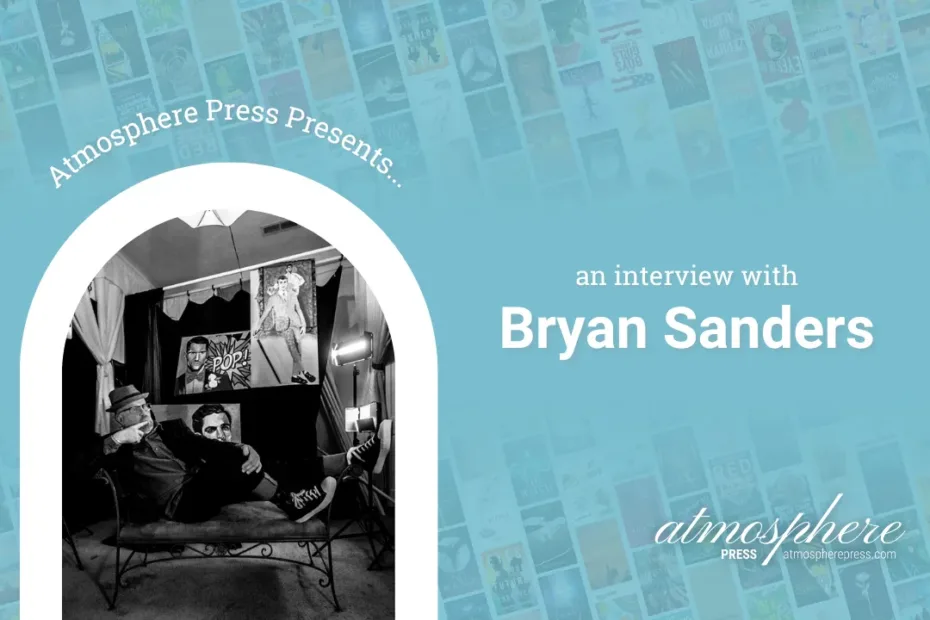
Bryan Sanders writes quiet, atmospheric fiction that treats emotion as a physical force. His work is rooted in restraint rather than spectacle, allowing mood, sensation, and implication to carry narrative weight. He favors intimate interiors, institutional settings, and moments of charged stillness where characters experience recognition before understanding.
Sanders’ prose is sensory and deliberate, often using weather and environmental response as extensions of a character’s inner life. Rather than explaining power or trauma directly, he externalizes it – through architecture, temperature, silence, and bodily reaction. Violence in his work is rarely loud; it arrives as a consequence rather than an action.
His narratives explore grief, love, and choice within rigid systems, focusing on the moral cost of survival rather than triumph. Characters are defined less by what they do than by what they restrain, endure, or refuse. He trusts readers to read between the lines, allowing meaning to accumulate gradually and emotionally rather than through exposition.
Sanders writes tragedies with a human center – stories where inevitability is not cruel, but honest, and where tenderness survives even when outcomes do not.
What inspired you to start writing this book?
My author friend, Andy Reagan, sent me a writing prompt one afternoon. (She has several books written.) We were talking one afternoon, and she knew I was looking for a new challenge to spark my creativity. Being a writer in the past, I decided to challenge myself with it. The prompt was: ‘A modern take on the Jack Frost tale, only you have to explore his love story.’ Once I spent time outlining, developing the characters – their tics, their arcs, their physical characteristics – I realized I had a fully fleshed-out story. So, I started expanding and building the world.
Tell us the story of your book’s current title. Was it easy to find, or did it take forever?
At its heart, it is a powerful take on the star-crossed lovers narrative. The struggle against a predetermined fate and the question of what one would sacrifice for love. I wanted to explore this classic theme through a modern, nuanced queer romance that deliberately subverts stereotypes. By grounding the fantasy in real-world emotional struggles like anxiety, self-doubt, and body image, I make the characters and their love feel immediate and relatable to a contemporary audience by weaving a narrative about two young men, Elias and Julian, who are each other’s perfect counterpart and, by the cruel rules of their world, each other’s doom. They find love in a magical academy, only to be hunted by the very institution meant to protect them, forcing them to an impossible choice. In a world that says ‘no two can exist,’ can their love find a way to survive, or is the greatest expression the ultimate sacrifice? Set in a world of dark academia, with 1930s-era aesthetics and modern technology, Divergent Academy – a building that breathes and feels, a library like the ribcage of a beast – I want to create a world that is not just a backdrop, but a character in its own right.
Surprisingly, it was easy to find. I carry it with me. While the plot is altered, it is much of my story. The tagline slapped me the moment I read the prompt. ‘How Do You Kill Your Heart?’ seared behind my eyes like the stars you see when you get hit in the head. It felt instantaneous.
I lost my partner to cancer on his birthday twelve years ago, and for the longest time, I blamed myself. How could I kill my heart? It had been nesting there, waiting to wake.
So far, the writing is flowing. The story has entered the B side now, so I hope to have the first draft completed by the end of April. I have been writing it since February 12 and crossed the 50,000-word mark last night.
Describe your dream book cover.
Ohhh, this is tough for me. I am a full-time artist, so the world has beauty in everything I look at. If I had to pinpoint a vision, I think it would infuse the style of a graphic novel, with colors that strengthen the image, leaning toward power and control. Two figures representing Julian and Elias. Poised to face their fears, like action heroes. Angle skewed from a worm’s eye view, a faint cigal (representing the crest of Divergent Academy) behind them. No Two Can Exist, the ‘no’ having a strikethrough line from the left of the cover to where ‘no’ starts, placed on the image of the boys like ice – transparent and see-through. My author imprint: Bryan. K. Sanders, ‘ryan’ with a strikethrough too. (I haven’t thought about this much hahahaha.)
If your book had a soundtrack, what are some songs that would be on it?
This is such a fun question, and it truly does have one. At least for me.
I am an eighties-era boy, so the music of that generation resonates. Each of the four main characters has their own sound, which I use while writing from their P.O.V.
Elias: Depeche Mode
Julian: ZZ Top
Seattle: Pat Benatar
‘M’: Katrina and the Waves
But the distinct soundtrack for the world and the story is a remix album compilation of Depeche Mode by artists like Keller Technik, A.R., Miss Ang’Hell, and DJ Jules Redux. (All can be found on YouTube.)
What books are you reading (for research or comfort) as you continue the writing process?
I listen to podcasts often for craft. Bookfox, Jed Herne, Savannah Gilbo, and currently reading Save The Cat! Writes a Young Adult Novel. For entertainment, I recently completed the Farseer Trilogy by Robin Hobb, and I am currently reading Leigh Bardugo’s Ninth House series and the Six of Crows duology.
What other professions have you worked in? What’s something about you that your readers wouldn’t know?
For most of my life, I was a tradesman: I refinished gymnasium floors for high schools across the Midwest. Sanding, refinishing, and branding them with the school’s mascots and brands, which led to my current career as a full-time artist.
Hmmm, that’s a fun question. Okay, here goes: I am a twin to the most non-creative man alive. Hahahaha – love you, bro.
Who/what made you want to write? Was there a particular person, or particular writers/works/art forms that influenced you?
I was recently reminded by some long-lost friends from high school that I used to write all the time then, and next came my friend Andy Reagan and this prompt. I’m not sure what happened, but I just knew, instinctively, I needed to share this story. You see, it is my own. It’s about self-doubt, fear, and grief. Three things that I still carry.
Where is your favorite place to write?
I have a designated study/studio for all my creativity. I became so excited about writing that I purchased a desk just for it. Some mornings, I sit outside in my gardens, coffee and a pad nearby. Meditation clarifies, along with morning sun and birdsong. I am old school. Everything is handwritten before being archived on the computer.
What advice would you give your past self at the start of your writing journey?
Oh, well, this should have happened long ago. I gave up on dreams in the past because of opinions I let matter to me. We all have opinions. Only ours should matter. (Unless it has to do with singing – if your instructor says you need more work, listen. Hahahaha, I jest.)
What’s one thing you hope sticks with readers after they finish your book?
Hmmm – that there is always something to dream of. Each of these four characters has been given something in their lives that none of us would want to face. We as humans face our own challenges. Challenges that we most often create ourselves. Face them boldly. Be brave. Be strong. Be true.
When faced with the hardest decisions in life, we can still find ourselves on the other side of them. It may not be the outcome we hoped for, but it may be the outcome we need.
Are you a writer, too? Submit your manuscript to Atmosphere Press.
Atmosphere Press is a selective hybrid publisher founded in 2015 on the principles of Honesty, Transparency, Professionalism, Kindness, and Making Your Book Awesome. Our books have won dozens of awards and sold tens of thousands of copies. If you’re interested in learning more, or seeking publication for your own work, please explore the links below.