An Interview with Catherine Schieffelin
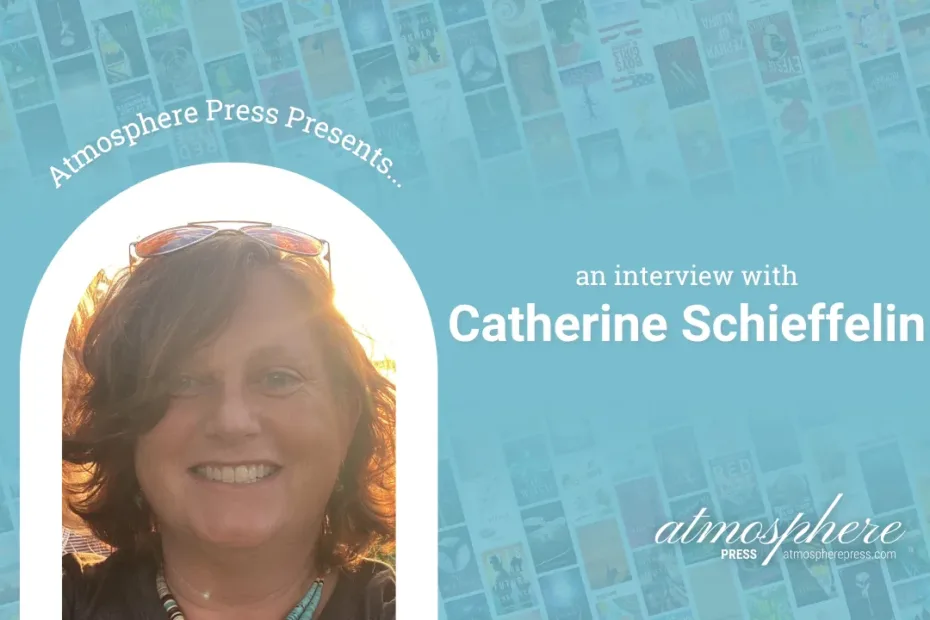
Cathy Schieffelin is an avid reader and writer. Years of adventure and travel contribute to her daily writing life. She is a regular attendee of writing workshops and participates in writing contests whenever possible. Her short stories and essays have been published in Adanna Literary Journal, Halfway Down the Stairs online literary journal, Renewed: A New Orleans Public Library Anthology, and the Frontier Nursing Service quarterly newsletter. Her first novel, The Call, came out in December 2024 and was awarded an International Impact Award for Mystery/Thriller genre. Snakeroot and Cohosh is her second novel, published with Atmosphere Press in March 2026. Her website and blog is www.wildflowerspress, where she explores the writing craft and features more of her writing. She lives in New Orleans with her husband, three children, and pack of mongrels.
Tell us the story of your book’s title. Was it easy to find, or did it take forever?
Snakeroot and cohosh are native plants from the Appalachian mountains. These are important plants in the healing and midwifery business of the region. It came to me as I was researching the kinds of plants a local midwife might use when attending to her patients in the 1950s. I loved the image of these plants and the power of plants in healing people – which is a direct correlation to this story.
How did it feel when you first saw your book cover? Or when you first held your book in your hands?
I loved it. I gave Ronaldo Alves (Atmosphere Press Art Director) a photo I’d taken of a gorgeous snake shed and barred owl feather I’d found on our property in northern Louisiana. I’d created a story around the image and included it in the story – so it feels so apt that it’s on the cover. It ties many loose threads of storytelling together into a quilt of my character’s life histories.
Who/what made you want to write? Was there a particular person, or particular writers/works/art forms that influenced you?
I began writing after a terrifying breast cancer diagnosis. It became a salve and a way to process my fears and uncertainties. And then I dove into trying fiction stories. I got hooked right away with the power to create my own characters, their motivations, incorporating the natural world as its own character. I love to read and I love character-driven stories. Some of my favorite authors are David Joy, Ron Rash, Barbara Kingsolver, and Kristin Hannah. Another tremendous influence was the year I spent living in eastern Kentucky working with the Frontier Nursing Service. I was a literacy tutor and eventually was hired as an assistant editor to their quarterly bulletin. I spent my time interviewing coal miners, quilters, and midwives. This story has been in my mind for years and I continue to find inspiration in those misty mountain reaches where resilience and hard work are ingrained into the people of the region.
What other professions have you worked in? What’s something about you that your readers wouldn’t know?
I’ve worked as a wildlife educator and I started my own wildlife education business (Wild Times Education Programs), bringing wildlife talks to local schools around the city. I’ve also worked in public health and am a former Peace Corps volunteer. I met my husband in the Comoros Islands where we served as volunteers. This was the location where I set my first novel, The Call.
What was the most rewarding/meaningful part of publishing your book?
I’ve been thrilled when people tell me that they couldn’t put my book down. A few friends, who aren’t big readers, told me they read it in one or two sittings. This means that it’s compelling, and they also wanted to talk about the characters and the things that happened. That’s the greatest compliment a writer can find – that someone thinks enough of your story to want to talk about it. That’s been the most meaningful thing – it means all my hard work and labor over word choices and voice may have worked.
If your book had a soundtrack, what are some songs that would be on it?
Oh, this book definitely has a soundtrack. Just look in the back of the book. Anything by Cole Chaney (Back to Kentucky, The Flood, and Coalshooter), Charles Wesley Godwin (Lonely Mountain Town, Seneca Creek, Hammer Down, and Another Leaf), Billy Strings (Shady Grove, Taking Water, and In the Morning Light), Joe Stamm (Cricket Song), Zach Bryan (Something in the Orange, and Crooked Teeth), Dolly Parton (Farther Along), Amythyst Kiah (Dark Holler, Hitchin’ a Ride), Tyler Childers, or Chris Stapleton.
What is one thing you hope readers take away from reading your book? How do you envision your perfect reader?
I hope readers can find peace in the way the story unfolds. There are tense and terrifying moments in this story, and I hope they’re able to read through those sections to understand the impacts of those scenes. I want my readers to reach out to me with questions. I want to be challenged about why I wrote Luther the way I did. I want readers who get engaged with the characters and want to learn more. My perfect reader is curious and unafraid to reach out with questions. I welcome them.
What creative projects are you currently working on?
I’m working on three new projects. One is a nearly completed novel set in Kentucky again, about a park ranger who meets a woman one rainy evening. Their meeting leads to a reckoning for both of them. I’m also working on a new novel set in the 1920s in the remote Atchafalaya Basin of central Louisiana. It’s a bit murder mystery/historical fiction/environment treatise. And my third project is set in northern Montana in an unknown time – about a young woman raised by Salish elders who’s not of the tribe. And I’m always working on short story or flash fiction writing contest pieces.
How was working with Atmosphere Press? What would you tell other writers who want to publish?
Atmosphere Press was great. I loved my developmental editor, Asata Radcliffe. She was so supportive of my efforts but taught me the importance of narrative structure and a clear plot line. She was phenomenal. I’m not sure I’d want to keep doing all this work if it weren’t for her. If you want to publish, you’ve got to be willing to listen to constructive criticism. That’s the most important thing, in my opinion. Anyone can publish just about anything. But if you want to create something well-written and well-conceived, there’s a lot of work to it. But the reward at the end of the day is a novel that people tell you they can’t put down.
Are you a writer, too? Submit your manuscript to Atmosphere Press.
Atmosphere Press is a selective hybrid publisher founded in 2015 on the principles of Honesty, Transparency, Professionalism, Kindness, and Making Your Book Awesome. Our books have won dozens of awards and sold tens of thousands of copies. If you’re interested in learning more, or seeking publication for your own work, please explore the links below.