
An Interview with Davina Silkwing
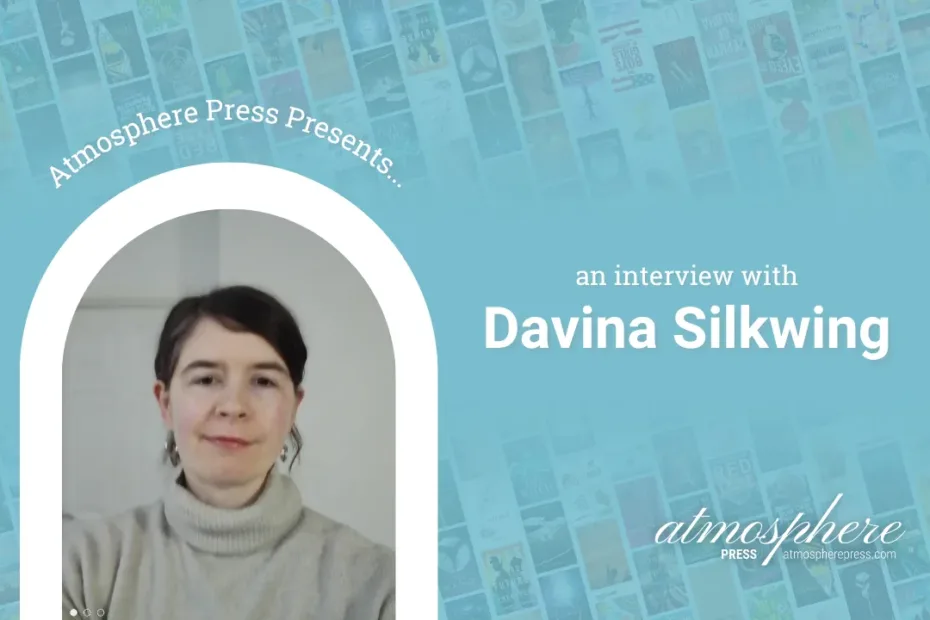
Davina Silkwing lives in the North of England and is a cleaner and freelance editor working in the gig economy. She is the author of two young adult novels, Fish Food and Nagel, and Streaks is her debut novel for an adult audience.
What inspired you to start writing this book?
I wanted to write a book drawing on my experience of long-term illness and resulting precarity in the gig economy as well as to comment on the political situation in the UK. I’ve begun to notice a disturbing trend in the way gig economy workers are being exploited. I wanted to write something satirical, drawing on the impossible situations people find themselves in when work just doesn’t work. I was also inspired by the dark trend in Japan of gig economy workers being recruited into illegal work.
Tell us the story of your book’s current title. Was it easy to find, or did it take forever?
Streaks came to me pretty easily, as my central character, Nita, is a cleaner and gig-economy editor. She pays great attention to detail, so she nearly loses it when she’s forced to leave streaks on a mirror she’s cleaning. Also, Streaks is intended to mirror the losing streak she has found herself on in life and also the blood streaks from her victims when she’s recruited to work as a hitwoman.
Describe your dream book cover.
I’m quite pleased with my present book cover to be honest. I think it reflects the story pretty well.
If your book had a soundtrack, what are some songs that would be on it?
Definitely something dark and electronic and maybe some nu-metal tunes.
What books are you reading (for research or comfort) as you continue the writing process?
I’m reading The War Zone by Alexander Stuart right now. It’s not my usual subject matter, but I think the detail in which the protagonist observes the other characters is amazing.
What other professions have you worked in? What’s something about you that your readers wouldn’t know?
I worked as a pub waitress for a long time. You meet some amazing characters!
Who/what made you want to write? Was there a particular person, or particular writers/works/art forms that influenced you?
I’ve written since I was young. I was a quiet child, so I liked to express myself in writing. I’m motivated to write working-class characters because I’ve always felt ordinary people are underrepresented in fiction. Also, I like to channel my experiences into my work. If life mistreats me, I like to think it can never win, because I can always turn my experiences into fiction. There’s a political edge to my writing nowadays as well, as life seems to be getting harder for ordinary people, and I can sense those with more power and influence taking advantage of that desperation for their own gain.
Where is your favorite place to write?
My bedroom, but there aren’t really a lot of other choices. I still like writing there though.
What advice would you give your past self at the start of your writing journey?
I’d probably tell myself to think more strategically and maybe get a job in the publishing industry. I think being part of the industry would have helped a lot. That being said, my illness might have put up some barriers.
What’s one thing you hope sticks with readers after they finish your book?
Hopefully they realise their strength lies in each other, and that the narrative spun by the richest and most powerful in this world is just that: a narrative. Ordinary people can take back the narrative and write their own story.
Are you a writer, too? Submit your manuscript to Atmosphere Press.

Atmosphere Press is a selective hybrid publisher founded in 2015 on the principles of Honesty, Transparency, Professionalism, Kindness, and Making Your Book Awesome. Our books have won dozens of awards and sold tens of thousands of copies. If you’re interested in learning more, or seeking publication for your own work, please explore the links below.