An Interview with Eliezer Sobel
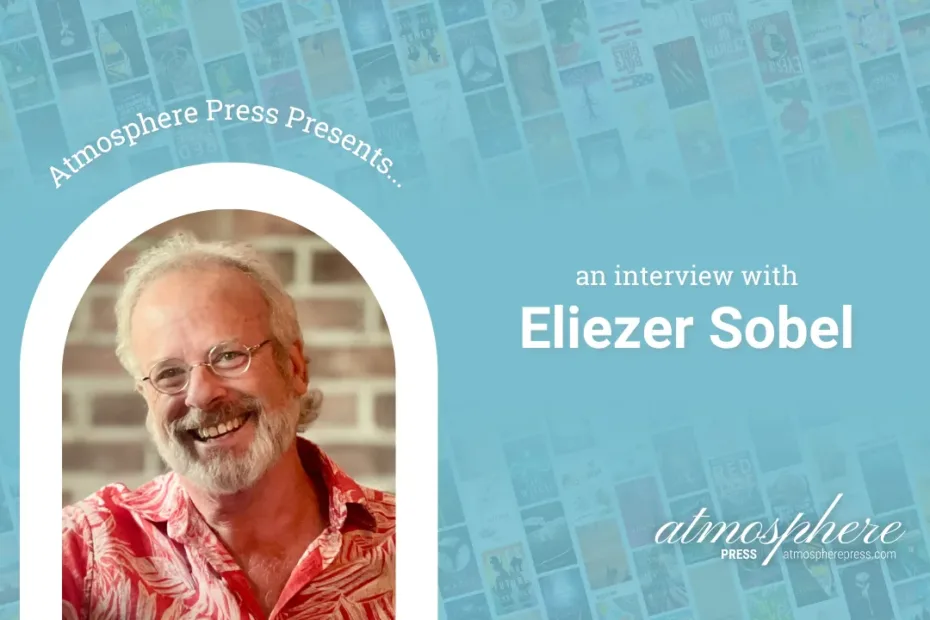
Eliezer Sobel, 73, is the author of The Silver Lining of Alzheimer’s: One Son’s Journey Into The Mystery, a joyful memoir of caring for his mother, Manya, whose ordeal with Alzheimer’s lasted twenty years, until she finally passed away at 95. His story shines an unusual light on what has become an epidemic of dementia around the world, which most accounts largely tend to depict as purely tragic. Instead, Eliezer discovered that as his mother’s memories as a Holocaust survivor began to vanish, what emerged was the innocent, radiant, and loving young girl she had once been.
Without sugarcoating the many horrific elements of the disease that tears most families apart, he also saw that more and more, his mom was actually bringing great joy, laughter, and healing into the household. Most of all, he discovered the central theme of his book: that regardless of whether she remembered his name or even that he was her son, the single most important element underlying their relationship was a primordial sense of connection, something he had been longing for his whole life, and which progressed to deeper and deeper levels as her disease unfolded. See elemipress.com.
Sobel has also published two adult picture books for people with Alzheimer’s disease and other forms of dementia: Blue Sky, White Clouds: A Book for Memory-Challenged Adults, and L’Chaim! Pictures to Evoke Memories of Jewish Life. These books require no memory to enjoy, as each page stands alone, depicting a beautiful and realistic photo of familiar scenes and objects, with a three to five-word caption in large print. His intention was to provide a resource for his mom’s aides to use with her apart from merely parking her in front of the television and playing the Dean Martin Comedy Hour DVD set for the hundredth time.
He also has five other books which can be seen at eliezersobel.com, including Minyan: Ten Jewish Men in a World That is Heartbroken, selected by National Book Award winner John Casey as the first prize winner among four hundred entries in a literary contest. His novella, Mordecai’s Book, won New Millennium Writings First Prize for Short Fiction. Among his other books are a spiritual memoir, The 99th Monkey: A Spiritual Journalist’s Misadventures with Gurus, Messiahs, Sex, Psychedelics and Other Consciousness-Raising Experiments, and a self-guided creativity workshop, Wild Heart Dancing: A One-Day Personal Quest to Liberate the Artist and Lover Within. Sobel’s blogs for PsychologyToday.com have received over 1.2 million views to date. See psychologytoday.com.
Prior to his sudden and unexpected life as a caregiver, Sobel led creativity workshops and silent meditation retreats around the U.S. He is a certified teacher of Gabrielle Roth’s 5Rhythms® movement practice. He served as a hospital chaplain at the University of Virginia Medical Center. He was the publisher and editor-in-chief of two magazines, The New Sun and the Wild Heart Journal, the music director for three children’s theater companies on both coasts, and taught music in two alternative high schools. Also an amateur painter, he and his wife Shari Cordon reside in Red Bank, New Jersey with their two cats, Shlomo and Nudnick.
What inspired you to start writing this book?
I cared for my mother for the final six years of her twenty-year ordeal with Alzheimer’s. While exhausting, overwhelming, difficult, and at times nightmarish – the way it is for many or most dementia caregivers – I unexpectedly came to see that there was a ‘glass half-full’ version of the story. My mother’s illness actually brought a lot of joy, laughter, and healing to our relationship and family. I recognized early on that although she no longer knew my name, or that I was her son, what remained beyond the vanished memories and disappearance of language and ordinary communication, was a fundamental and deep sense of loving connection that was far more meaningful and important to me than our mere lost history. At one point, I actually found myself feeling grateful to Alzheimer’s for restoring my mother to me, while most people only experience it as complete and utter loss, colored by despair and tears of frustration. That was not my experience, and thus I felt compelled to share my story.
If your book had a soundtrack, what are some songs that would be on it?
Well, there was a lot of singing in the household. Often my father, the aides, and I would sing You Are My Sunshine to my mother. And my father liked to get up on his walker and do a little dance while singing Show Me The Way To Go Home.
What books are you reading (for research or comfort) as you continue the writing process?
Since this is a memoir, it required no research apart from plumbing the depths of my own mind. For comfort, I gravitate toward fiction. Lately, Barbara Kingsolver’s Unsheltered, John Irving’s latest, Queen Esther, and I am currently awaiting the arrival of Ian McEwan’s current book, What We Can Know. I have a huge library with floor-to-ceiling shelves containing decades worth of books, and now, at seventy-three, as my own memory is not what it used to be, it occurred to me I could or should stop buying new books and just pick ones from my own shelves to re-read; for the most part they will be like new to me. I’m currently re-reading a non-fiction book I first discovered about thirty years ago, The Cosmic Trigger by Robert Anton Wilson.
What other professions have you worked in? What’s something about you that your readers wouldn’t know?
I’ve been a lay hospital chaplain, a music teacher for middle school and high school kids, a music director of three children’s theater companies, an actor in community theatre, as well as a core member of an off-beat NYC theater troupe, Gabrielle Roth’s Mirrors, whose work, the 5Rhythms™ conscious movement practice, I was certified to teach and did. I’ve also led intensive creativity workshops around the country as well as co-led seven-day silent Jewish-Buddhist meditation retreats. In high school, I was fired from being a pizza delivery guy when it often took me over an hour to find a location that was ten minutes away. I was once a leader of high-ropes courses for executive, inner city kids, college groups etc. I was fired from that one when I decided to practice one day when the course was empty and I somehow wound up helplessly dangling from a log fifty feet up. I also served as publisher/editor of two magazines, a late seventies ‘new age’ publication, The New Sun, and in the late nineties, a periodical exploring the cross-section of creativity, spirituality, and the arts, called the Wild Heart Journal. In college I worked behind the counter at Colonel Mustard’s Last Stand, serving hotdogs, and I was trained with the three key words to ask each customer: ‘What’s on it?’ They had a choice of ketchup, mustard, relish, pickles, onions etc. I lasted exactly one day working for Time-Life books, making cold calls on the phone, trying to sell people a set of books they didn’t need or want. Everything was scripted on a big cardboard display in front of my desk, and I knew I wasn’t cut out for it when one woman told me she wasn’t able to talk because her husband had recently died. Rather than offer her my condolences and hang up, we had been instructed to search the cardboard display for the heading ‘Death and Bereavement’ and recite the script: “Yes, I know in times of sorrow it can be very hard, and often there is nothing more comforting than to curl up with a good book…” and so forth. I was a mediocre piano player in a restaurant in NY for a short stint, and my girlfriend and I once performed nightly at Chuck’s All You Can Eat Steakhouse in Ellsworth, Maine.
Who/what made you want to write? Was there a particular person, or particular writers/works/art forms that influenced you?
In my twenties I devoured everything I could find by Jack Kerouac. He, along with Henry Miller, inspired me to trust my own, spontaneous voice, and I filled many, many notebooks modeled somewhat on their style of free, unedited expression. I eventually burned those notebooks, as they weren’t really useful for others to read, but they helped me loosen my pen in those pre-laptop days, and I even created my own independent study B.A. program at NYU that required a thesis. Mine was titled The Zen of Writing, based on the principle that since the ‘way to enlightenment’ in Zen meditation is to simply sit and be with one’s mind without trying to quiet it down or accomplish anything whatsoever, but rather, only observing the automatic, machine-line nature of thought. I believed the same result could be achieved through writing every thought as it appeared in the mind, without editorial oversight. The way Allen Ginsberg once put it, “First thought, best thought.” I was inspired by Isadora Duncan’s autobiography in which she said, “If anyone wrote the real truth of their lives, they will have written a masterpiece.” (I experienced envy, jealousy, and upset when Natalie Goldberg’s popular book, Writing Down the Bones, suggested an identical process years after I had discovered it for myself.)
Later on, I became a big fan of Stanley Elkin, Kurt Vonnegut, Philip Roth, and John Irving. And Herman Hesse. In the present day, I am friends with and a huge fan of Richard Powers, the recent Pulitzer Prize winner for The Overstory, and I helped edit his following book, Bewilderment. His most recent, Playground, is also a beautiful gem (although he confessed that he stole the title from my first, never-published book.)
What advice would you give your past self at the start of your writing journey?
The most powerful advice I ever got was from the title of an article I happened upon once: Your Book Will Not Change Your Life. Most people, including me, before they get published, believe, consciously or un-, that once their book is accepted and put out by ‘a real publisher,’ everything will change. I learned the hard way that that just isn’t true, except for possibly a very few lucky ones who hit the Oprah jackpot. My first ‘real’ book, a self-guided, at-home creativity workshop called Wild Heart Dancing, was in a competitive auction between Simon and Schuster, Bantam, and St. Martin’s Press. Simon and Schuster won and gave me a $26,000 advance, which was unheard of then (and now) for an unknown, unpublished author. They invited me to their offices in NYC, about thirty floors up a skyscraper, and the editor who had championed Wild Heart Dancing in the auction regaled me with all the marketing and PR ideas they planned for me. They showed me an oversized cardboard cut-out of the book’s cover, that they said would appear on the front counter of every Barnes and Noble in the country. Then that editor quit, and soon after her assistant also left the company, and I knew absolutely nobody else in the Simon and Schuster bureaucracy. All the marketing promises vanished instantly, and they assigned my book to a new editor who had no interest in it, and it was published merely to fulfill their contractual obligation. I never made another cent on it. Another dashed hope was when I finished my first and only novel, Richard Powers read and loved it and sent it to his agent, who called me and announced, in a thick German accent, “I love zis book; ve vill find a publisher for it.” Then he died. Fortunately, I got lucky, and it was selected by National Book Award winner John Casey as the first prize winner among four hundred entries for The Peter Taylor Prize for the Novel. Even so, that enormous victory, which I had been dreaming of forever – to publish a literary novel and be accepted and acknowledged by the ‘real’ community of writers and publishers of literary fiction – still didn’t change my life or open any significant doors. Offers didn’t come flying my way, and after my fifteen minutes of fame, doing a bunch of readings etc., I was still fundamentally back to just being myself. But telling an unpublished young author that ‘Your book won’t change your life,’ is like trying to tell a homeless person that a house won’t make them happy.
What’s one thing you hope sticks with readers after they finish your book?
Presumably the readers of this one will be people enmeshed in the tangled upside-down web of caregiving a loved one with Alzheimer’s or another form of dementia. I’m fairly certain reading The Silver Lining of Alzheimer’s will help lighten their load and open their minds and hearts to some new possibilities, conveying the message that all is not as hopeless and tragic as it often appears.
Are you a writer, too? Submit your manuscript to Atmosphere Press.

Atmosphere Press is a selective hybrid publisher founded in 2015 on the principles of Honesty, Transparency, Professionalism, Kindness, and Making Your Book Awesome. Our books have won dozens of awards and sold tens of thousands of copies. If you’re interested in learning more, or seeking publication for your own work, please explore the links below.