
An Interview with Fredricka Maister
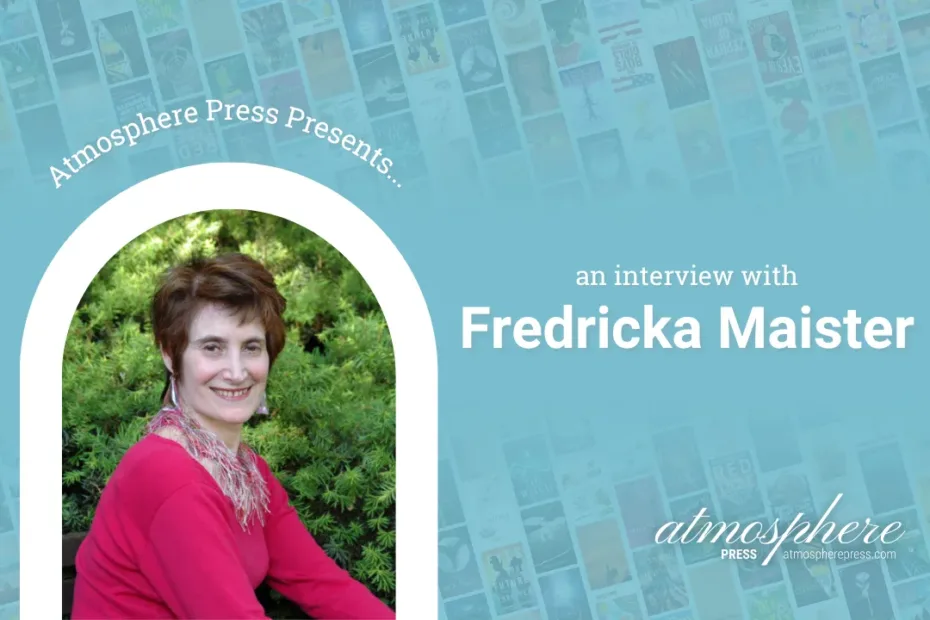
Fredricka ‘Ricki’ Maister calls herself a ‘lifelong mourner.’ At age twelve, she experienced the untimely death of her father. Twenty-five years later, she was forced to cope with the intense, overwhelming emotions unleashed by the brutal murder of her longtime partner. Then came the slow decline of her mother, whose final years were spent in a nursing home.
Three major losses … three kinds of grief at three different stages of her life … a lifetime of mourning.
In her collection of essays, released in March 2026 by Atmosphere Press, Three Times a Mourner: Personal Essays on Grief and Healing, Maister shares her reflections and insights on her three grief journeys that have taught, transformed, and strengthened her.
Originally a Jersey girl who lived most of her adult life in New York City, she is now based in Philadelphia, the city of Brotherly Love and Sisterly Affection. Her personal essays and articles have appeared in The Baltimore Sun, Philadelphia Inquirer, Chicago Tribune, New York Jewish Week/The Times of Israel, Jewish Exponent, HuffPost, Broad Street Review, The Writer, Brevity Blog, and The Manifest Station, among others.
Three Times a Mourner is her first book.
Tell us the story of your book’s title. Was it easy to find, or did it take forever?
I was overjoyed when the title of my book, Three Times a Mourner, finally popped into my head in an ‘aha moment.’ As a writer, titles have always been problematic for me and I am known to spend an excessive amount of time obsessing and agonizing over them until ‘the right one’ clicks. Three Times a Mourner instantly clicked after many earlier lackluster titles fell by the wayside. It certainly beat The Cars Drove Away, Leaving Me Alone (a reference to some scenes in the book’s narrative).
I thought Three Times a Mourner had a catchy ring and rhythm to it that would make an impression on readers. I did, however, have one reservation: it reminded me of Lionel Richie’s song, Three Times a Lady, which I would inevitably start to hum. Would that association undermine the grief-related gravitas of my book’s subject? I had a friend who joked that she too heard Three Times a Lady when she first saw my book’s title. “But that’s how I’ll remember the title of your book,” she told me. For me, that was proof positive that I was on the right track with my book’s title.
How did it feel when you first saw your book cover? Or when you first held your book in your hands?
The first revelation of my book’s cover by the design team and the moment I first held the physical book of Three Times a Mourner in my hands were without a doubt the highlights of my publishing experience.
I initially submitted my own ideas of what my cover should look like. To my surprise and delight, I fell in love with the cover design Atmosphere created as an alternative. With its falling leaves motif and Three Times a Mourner in bold white letters superimposed over a black background, the cover popped just enough to ensure that my book would stand out on a shelf of the more usually subdued books on grief. Furthermore, holding an actual book—rather than a pile of loose manuscript pages or an electronic version with its endless scrolling—was nothing short of an awesome, never-to-be-forgotten experience.
Even now, months after publication, just the sight of my book, which I have stationed throughout my house for all to see, always fills me with a sense of pride and accomplishment—feelings that lift my spirit, especially on those bad days when I ask myself, “Why did I ever decide to write a book?”
What inspired you to start writing this book?
“You really should publish a book of your essays. Time to take your work to the next level,” friends and relatives would tell me. I had always stood in awe of writers who successfully created essay collections about a particular topic for which they had professional credentials or years of writing experience. While I had a respectable portfolio of published stand-alone essays, I didn’t specialize in any one area.
I often lamented the fact that I could not join my former teacher’s book-writing class because I didn’t have a book-in-progress. I had a trove of essays in my writing stash and a plethora of ideas for new essays, but no central idea to bind them together into a book until I encountered a frustrating time in my writing career when I found myself bombarded by a slew of essay rejections. The critic inside my head screamed, “You are not a writer. No one wants to publish your work. You are nothing but a fraud, an imposter.” Fortunately, another voice screamed back, “I am too a writer. I have lots of clips to show for it! Go look at them!”
I immediately pulled out copies of all my published writings. As I reread my assortment of essays, I became acutely aware that my father’s untimely death and my partner Richard’s murder featured prominently in my work. They sometimes served as the main subject in essays I had long forgotten or somehow made their way into the content of others. A collection of essays about my grieving process in mourning the deaths of my father and Richard began to percolate in my mind. I eventually joined the book-writing class and would later add, Part III: Mom’s Prolonged Death.
What other professions have you worked in? What’s something about you that your readers wouldn’t know?
A freelance writer for decades, I have written screenplays, poetry, short stories, non-fiction articles, and personal essays. I started my work career in publishing at W.W. Norton and Company and Harper & Row, that is, before I went rogue and switched to part-time employment to give me the time and space to devote to my writing. One part-time gig was at The New York Times, where I spent twenty years in the classified advertising department, helping the public write real estate, help wanted, merchandise offerings, and business opportunity ads, as well as obituaries for their loved ones. I later worked for twelve years in the Guggenheim Museum of Art Retail Store, where I interacted with art lovers from all over the globe and finally put my art history degree (from Rutgers University) to use.
A lesser-known fact about me is that, unlike many writers who consider social media a necessary evil to promote their work, I love having a presence on Facebook, Instagram and Threads (@fredrickamaister). These social platforms are where I find my people—a community of writers and non-writers, new acquaintances and old friends with whom I can regularly engage.
Social media is my escape from the craziness in the world, although I have to admit it can sometimes get pretty crazy online.
What was the most rewarding/meaningful part of publishing your book?
Writing the acknowledgments section at the end of my book proved to be unexpectedly emotional for me. While writing Three Times a Mourner, I often felt isolated, bereft of any human contact, having to soldier on through the trials and tribulations of birthing it alone. In the objectivity of retrospection, I am now aware that it took a village, as they say, to shepherd my book to publication. In acknowledging my friends, relatives, teachers, classmates, editors, therapists, spiritual gurus, and healers et al. from childhood to the present, I came to realize that I was never alone, that these ‘villagers’ were with me or ‘behind the scenes’ on my seemingly endless publishing journey, believing in my creative talents and rooting for me to succeed as an author. When I finished typing my acknowledgments page, I remember sitting at my computer on the brink of tears, feeling a deep sense of gratitude for their help and support that made Three Times a Mourner a reality.
If your book had a soundtrack, what are some songs that would be on it?
Here’s my playlist for Three Times a Mourner:
PART I: Dad’s Untimely Death – Any song from Just In Time, the smash musical about Bobby Darin’s life currently trending on Broadway. Both my dad and I were huge Bobby Darin fans.
PART II: Richard’s Murder – That’s What Friends Are For sung by Dionne Warwick was a massive hit in 1986, the year Richard was murdered.
PART III: Mom’s Prolonged Death – God Bless America. When I’d visit my mother at her nursing home, we often attended a concert for the residents, many of whom seemed ‘out of it’ until the concert’s end when they were asked to sing God Bless America. They would suddenly perk up, their love of this country on full display as they sang at the top of their lungs.
What is one thing you hope readers take away from reading your book? How do you envision your perfect reader?
Writing Three Times a Mourner has given me a unique opportunity to reflect on, learn from, embrace, and honor the grief journeys that have defined my life and who I am today. My fervent hope is that by sharing the lessons I’ve learned, the revelations uncovered, and the insights gained, my book can bring solace, companionship, and validation to other mourners, past and present, as they travel on their own grief journeys.
Are you a writer, too? Submit your manuscript to Atmosphere Press.

Atmosphere Press is a selective hybrid publisher founded in 2015 on the principles of Honesty, Transparency, Professionalism, Kindness, and Making Your Book Awesome. Our books have won dozens of awards and sold tens of thousands of copies. If you’re interested in learning more, or seeking publication for your own work, please explore the links below.