An Interview with Garland Dunlap
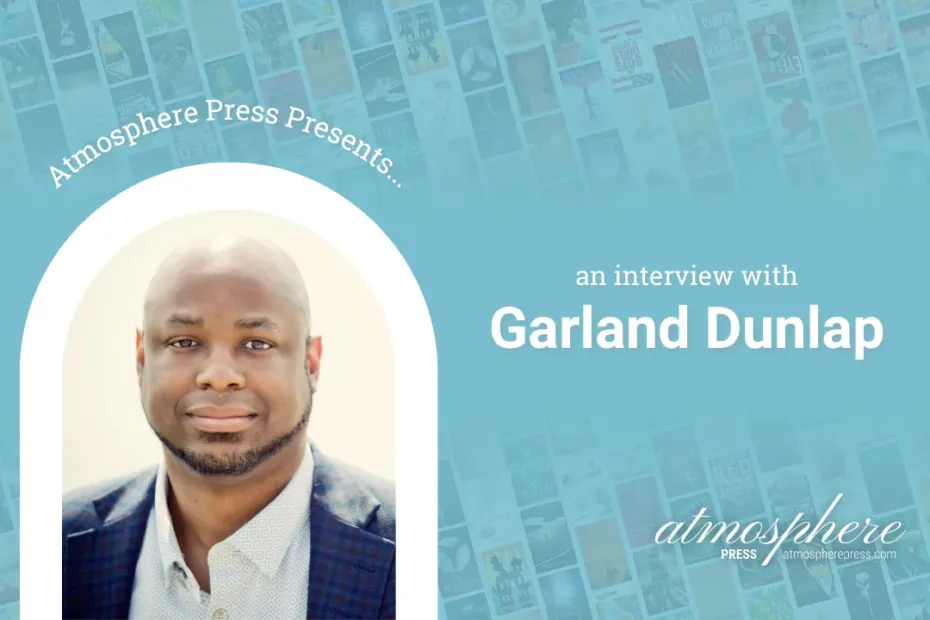
I’m an educator, strategist, and theological thinker. My work focuses on how people learn, lead, and live with integrity across systems, cultures, and roles. Whether I’m designing leadership frameworks, coaching neurodivergent leaders, exploring fictional worlds, or writing about beauty in learning, I’m committed to one thing: helping people grow without pretending. Read more of my writing at faithamuses.substack.com.
What inspired you to start writing this book?
It started while I was preparing to teach a course on race and ethnic relations. As I worked through the material, a question kept nagging at me: What if racism wasn’t just a social system or a set of beliefs? What if it was an actual curse? A real, magical force woven into the fabric of society.
Once I started exploring that idea, a second question followed: Who benefits from a curse like that? Every curse serves someone. Every system has people who profit from it.
As I pulled on that thread, the world of the story began to take shape. And somewhere in the middle of all that research and imagination, Locke appeared. He became the lens through which I could explore those questions. He’s curious, sceptical, and always looking beneath the surface of things. In many ways, the story grew out of his search to understand what everyone else had learned to accept.
Tell us the story of your book’s current title. Was it easy to find, or did it take forever?
Honestly, it didn’t appear until I was about halfway through writing the book.
For a long time, I was working with concepts and themes, but none of the titles felt right. They described pieces of the story, but they didn’t capture what the story was actually about.
Then, somewhere in the middle of writing, I realized that memory sat at the center of everything. The land remembers. The people remember. History remembers, even when societies try to bury it. The past never fully disappears; it leaves traces, echoes, and consequences that continue shaping the present.
Once the phrase The Earth Remembers came to me, I knew I had found the title. It captured both the literal and metaphorical dimensions of the story. It speaks to the magical elements of the novel, but it also points to the larger question underneath it: What happens when the things we try to forget refuse to stay buried?
Some titles arrive before the story. This one waited until the story knew what it wanted to say.
If your book had a soundtrack, what are some songs that would be on it?
Because The Earth Remembers is an Afrofuturist story, its soundtrack would have to draw from artists who blend imagination, history, liberation, and the possibility of other worlds.
The obvious choices for me would be Sun Ra, Janelle Monáe, and Parliament-Funkadelic. Sun Ra brought cosmic mythology and Black liberation together in a way that helped define Afrofuturism. Janelle Monáe explores identity, power, and resistance through futuristic storytelling. Parliament-Funkadelic reminds us that freedom can be joyful, strange, and creative. I would probably add artists like Flying Lotus, Shabazz Palaces, Outkast, Erykah Badu, and even some of Kendrick Lamar’s more experimental work.
If I had to choose one song that captures the spirit of the book, it might be Many Moons by Janelle Monáe. It holds together questions of identity, power, performance, and liberation in a way that feels very close to the heart of the story. The soundtrack would move between jazz, funk, hip-hop, soul, and electronic music.
What books are you reading (for research or comfort) as you continue the writing process?
Right now, a lot of my research reading focuses on space exploration and Mars colonization. Without giving away too much, the world of The Earth Remembers eventually expands beyond Earth, so I’ve spent time reading about the practical, political, and human challenges of building a future on another planet.
For personal reading, I keep returning to the writers who helped shape my imagination in the first place. I’m currently revisiting the work of Octavia Butler and Rivers Solomon. Both writers ask difficult questions about power, identity, memory, and survival, but they do so through stories that never lose sight of the people living inside those questions.
I think that’s part of what draws me back to them. They remind me that speculative fiction is never really about the future. It’s about helping us see the present more clearly.
What other professions have you worked in? What’s something about you that your readers wouldn’t know?
Before becoming an author, I worked as a public school teacher, a pastor, and in higher education, where I spent years helping students navigate internships, careers, and vocational decisions.
In a lot of ways, those experiences shaped how I write. Whether I was teaching, preaching, advising, or coaching, I found myself drawn to the same question: How do people make sense of their lives?
That’s probably something readers might not know about me. In addition to writing, I coach individuals who feel stuck between where they are and where they sense they need to go. My work focuses on helping people find clarity, make decisions, and move forward with greater confidence and purpose.
When I think about it, my fiction and my coaching aren’t all that different. Both begin with people trying to understand themselves. Both ask what stories we inherit, which ones we choose to believe, and what becomes possible when we imagine a different future.
Who/what made you want to write? Was there a particular person, or particular writers/works/art forms that influenced you?
Honestly, I don’t remember a time when I wasn’t writing.
Stories have fascinated me for as long as I can remember. As a child, I was constantly creating worlds, characters, and adventures. Long before I understood writing as a craft, I understood it as a place.
Looking back, I think storytelling gave me something I needed. During some of the darker seasons of my life, imagination created room for joy, wonder, and possibility. Stories allowed me to explore questions that felt too large for everyday life and to imagine worlds that worked differently from the one around me.
As for influences, my reading tastes have evolved over the years, but writers like Octavia Butler, Rivers Solomon, and other speculative fiction authors have had a significant impact on me. What I admire about their work is that they don’t use imagined worlds to escape reality. They use them to reveal something about it.
In many ways, that’s what I hope to do with my own writing. The world of The Earth Remembers may be fictional, but the questions underneath it are very real.
Where is your favorite place to write?
I don’t really have a favorite place to write so much as a favorite set of conditions.
I like to be comfortable, with just enough noise in the background to keep my mind engaged. Too much silence can be distracting, but too much activity pulls me out of the work. Somewhere in the middle seems to be the sweet spot.
I also love soft textures: a comfortable chair, a blanket, a hoodie, something that helps me settle into the space. As someone with ADHD and autism, I’ve learned that my environment matters more than I once realized. When the sensory balance feels right, I can disappear into a story for hours.
So, whether I’m writing at home, in a coffee shop, or somewhere else entirely, I’m usually trying to create the same thing: a space that feels comfortable enough to focus and stimulating enough to keep my imagination moving.
What advice would you give your past self at the start of your writing journey?
I would tell my younger self that writing is exposure.
For a long time, I thought writing was primarily about ideas. I wanted the right argument, the right story, the right world, the right words. Those things matter, but eventually I learned that every piece of writing reveals something about the person who wrote it.
The stories you choose to tell. The questions that keep returning. The characters you create. The things that make you angry, hopeful, curious, or afraid. They all find their way onto the page.
So, my advice would be simple: Get comfortable revealing yourself.
Readers need to encounter a real person behind the words. People often connect with the craft of writing, but they remember the humanity behind it. The sooner I understood that, the more honest my writing became.
What’s one thing you hope sticks with readers after they finish your book?
Possibility.
More than anything else, I hope readers finish the book with a renewed sense that the world does not have to remain exactly as it is.
The Earth Remembers wrestles with difficult realities, but it is ultimately a story about imagination. It asks what becomes possible when people learn to see the systems around them clearly and recognize that those systems were made by human beings. If something was made, it can be remade.
I don’t expect readers to agree with every idea in the book. I do hope they walk away asking new questions about the world they inhabit and the future they want to build. Possibility begins with the willingness to imagine that another way forward exists.
Are you a writer, too? Submit your manuscript to Atmosphere Press.
Atmosphere Press is a selective hybrid publisher founded in 2015 on the principles of Honesty, Transparency, Professionalism, Kindness, and Making Your Book Awesome. Our books have won dozens of awards and sold tens of thousands of copies. If you’re interested in learning more, or seeking publication for your own work, please explore the links below.