An Interview with Jennifer Nelson
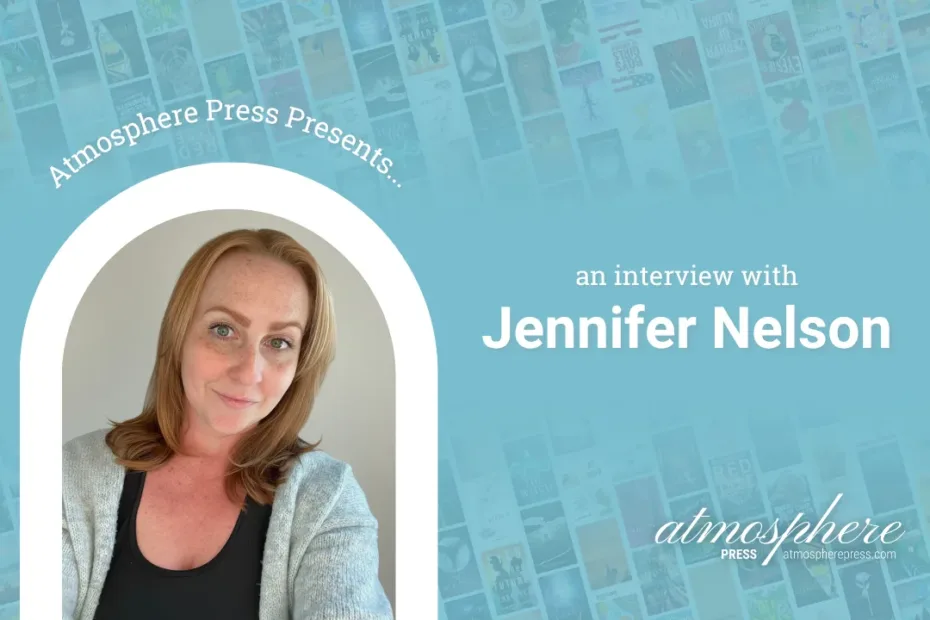
Jennifer Nelson is a New Mexico–based trauma therapist and private practice owner with a degree in social work, specializing in PTSD, dissociative identity disorder (DID), and abuse recovery. A mother of two sons, she has long been drawn to the emotional terrain of survival, identity, and the ways trauma shapes the inner lives of individuals. Her clinical work informs her fiction, offering a nuanced understanding of fear, resilience, and the fragile architecture of trust.
Jennifer has been writing since middle school, when storytelling first became a way to explore the unspoken tensions beneath everyday life. She began developing the foundation of her debut novel as a freshman in high school, returning to the manuscript years later after raising her children and establishing her career as a therapist. With the perspective gained through both professional practice and lived experience, she crafts literary psychological narratives that examine the intersections of vulnerability, control, and the search for meaning after harm.
Her work is characterized by an unflinching yet compassionate lens on the complexities of the human mind, illuminating the quiet battles fought beneath the surface of ordinary lives.
What inspired you to start writing this book?
I started writing this book in ninth grade because I didn’t know where else to put what was happening inside my home—or inside me. I didn’t have words for it out loud, and even if I did, I didn’t feel like I was allowed to say them. Writing was the only place I could tell the truth without being interrupted or questioned.
At home, there was a lot of pain I didn’t know how to name. My sister was in and out of psychiatric hospitals, and the instability of that shaped everything around us. I was also told directly that I was not the child my mother wanted. That stayed with me in a way I didn’t fully understand at the time, but I understand now how deeply it shaped my sense of worth.
I grew up knowing there had been another child before me—my brother, who died at birth—and that after him, my mother had her tubes tied. So, I wasn’t framed as a ‘miracle after loss’ or anything like that. I was framed more like an ending point. Like something that shouldn’t have needed to happen. Like a burden that was already decided before I had a chance to be anything else.
For a long time, I lived inside that story. And then I started writing my own. Not because I had it figured out, but because I didn’t want to stay only what I had been labeled. I worked, quietly and relentlessly, to become something different than what I was told I would be.
This book is what came out of that need to survive myself and rewrite what survival even meant.
Although I stopped writing this book when I started having my own children, I picked it back up when they were both grown and on their own. With the knowledge I now have as a trauma therapist, I was able to take something a ninth grader started and finish it as a professional, a mother, a fiancé, and an adult human being.
This book is what came out of that long arc—of surviving, growing, and returning to something I once created just to stay alive inside my own life.
Tell us the story of your book’s current title. Was it easy to find, or did it take forever?
The title came to me while I was writing a scene about a bouquet of flowers in the book. I didn’t want to use something cliché like roses or lilies—I wanted something that felt quieter, more overlooked, but still meaningful. I chose daisies instead.
In that moment, the phrase ‘daisies’ carried something for me that I couldn’t fully explain at first, but it felt right immediately. It stood out in a way that wasn’t loud or obvious, but it stayed with me. It was simple, unexpected, and it felt like it could hold the emotional weight of the story without announcing itself too loudly.
That’s where the title came from. It just arrived, fully formed, and I knew I had it.
If your book had a soundtrack, what are some songs that would be on it?
If my book had a soundtrack, it would be a mix of haunting, emotional, and chaotic songs—music that feels beautiful one moment and unsettling the next. I think the soundtrack would reflect the emotional instability of the story: grief, fear, anger, survival, and the thin line between reality and what’s happening inside someone’s mind.
Some songs that would absolutely be on it are:
I Did Something Bad by Taylor Swift—for the rage, defiance, and unapologetic darkness that can come from being pushed too far.
Control by Halsey—for the feeling of losing control of your own mind.
bury a friend by Billie Eilish—for the unsettling psychological tension throughout the story.
The Sound of Silence by Disturbed—for the heaviness of grief and emotional isolation.
My Immortal by Evanescence—for the lingering ache that trauma leaves behind.
Overall, it would be the kind of soundtrack that makes you feel slightly uneasy while still emotionally connected to the characters—something intense, raw, and hard to forget.
What books are you reading (for research or comfort) as you continue the writing process?
I’m in the middle of reading so many books. I switch between Missing You by Harlan Coban, and I’m also reading The Walking Dead Psychology by Travis Langley. I have an obsession with The Walking Dead as well as psychology books.
What other professions have you worked in? What’s something about you that your readers wouldn’t know?
In my professional life, I am a trauma therapist. I work with people diagnosed with trauma- PTSD, dissociative identity disorder, depression, and anxiety. I have my degree in social work, and I honestly fell into therapy as a career—and then fell madly in love with it.
Who/what made you want to write? Was there a particular person, or particular writers/works/art forms that influenced you?
I had a teacher in seventh or eighth grade who gave us an assignment to describe a sunrise or sunset in as much detail as possible. I remember slowing down in a way I hadn’t before, trying to find the right words not just to ‘complete’ the task, but to actually capture what I was seeing in my mind.
Up until that point, writing had mostly been something I did because it was required. That assignment shifted something. I realized I didn’t just like words—I liked what they could do. They could build atmosphere, hold emotion, and turn something ordinary into something felt.
That was the first time I experienced writing as creation rather than obligation, and I’ve been drawn to it in that way ever since.
Where is your favorite place to write?
There’s a spot in my yard surrounded by trees that’s my favorite place to write. It’s quiet in a way that feels alive—birds singing, my dog chasing lizards or rabbits through the grass—and it gives me the space to fully slip into my own world.
When I’m there, I can let go of everything else and just go into the story, into my head, without interruption or expectation. It’s the kind of space where my thoughts can unfold without being shaped by anything outside of them.
My fiancé is also a big part of that creative environment. He gives me the freedom to write when I need to, and he’s often the first person I bounce ideas off to make sure what’s in my head translates clearly to someone else.
What advice would you give your past self at the start of your writing journey?
I would tell my past self: Don’t give up, and don’t let the noise get to you. There will always be critics and negativity, but the key is learning how to separate what is useful from what is not. Let critique teach you what it needs to and release the rest.
Not everyone will like your writing, and not everyone will connect with your genre—and that’s okay. You can’t and won’t please everyone. But you can stay true to yourself and your work.
If you allow yourself to focus on the process instead of the approval, you’ll find that the writing itself becomes the reward.
What’s one thing you hope sticks with readers after they finish your book?
One of the biggest things I hope readers take away from my book is the understanding that everyone processes trauma differently. Two people can experience the exact same event and walk away carrying it in completely different ways. There is no universal ‘right’ way to survive, heal, grieve, or cope. I also hope readers walk away with a little more empathy—not just for others, but for themselves. So many people judge their reactions, emotions, or healing process because it doesn’t look like someone else’s. I wanted to explore the reality that trauma is deeply personal, messy, and complicated, and that those differences don’t make someone weak or wrong. They make them human.
Are you a writer, too? Submit your manuscript to Atmosphere Press.

Atmosphere Press is a selective hybrid publisher founded in 2015 on the principles of Honesty, Transparency, Professionalism, Kindness, and Making Your Book Awesome. Our books have won dozens of awards and sold tens of thousands of copies. If you’re interested in learning more, or seeking publication for your own work, please explore the links below.