An Interview with Jenny Porter
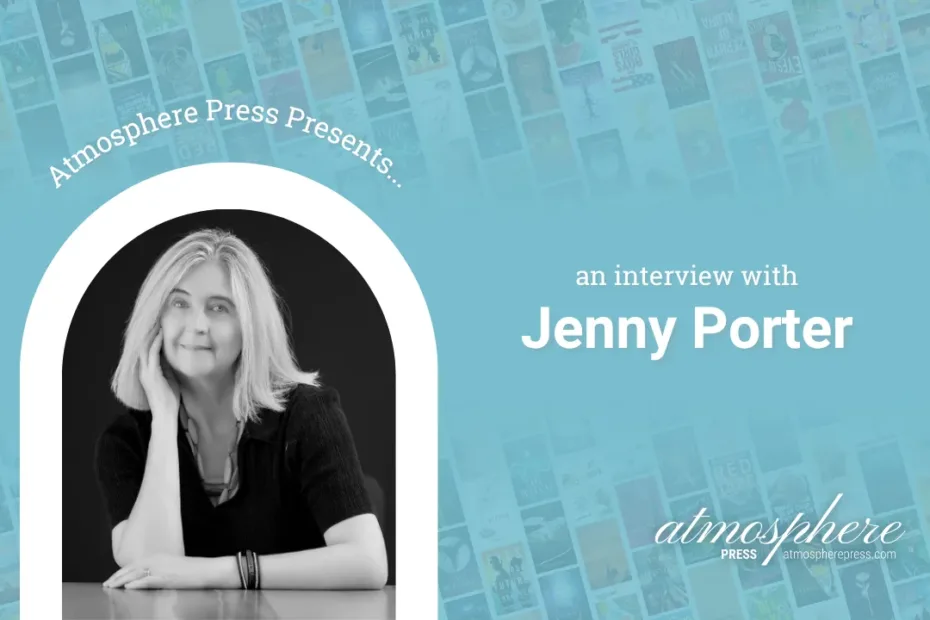
Jenny is the eldest of six children, raised in a rural community in a western district town of Victoria, Australia. Her formative years in Catholic primary and secondary school shaped her values of compassion and service. From an early age, Jenny was exposed to the principles of social justice and self-actualisation with strong role models in parents who were deeply committed to the local community. As a speech therapist working in disability services, Jenny believes that communication is a fundamental human right, and every individual has the right to express themselves fully and participate meaningfully in their communities.
Tell us the story of your book’s title. Was it easy to find, or did it take forever?
The title The Space Between arrived not as a flash of inspiration, but as a slow recognition – the sense that what the story was really about lived not in the dramatic moments, but in the gaps. Between who Alex is and who the world expects them to be. Between rural Queensland and the polished corridors of a Brisbane boarding school. Between the faith they were raised in and the self quietly emerging beneath it. Between the person they were performing and the one they were becoming. That in-between place – liminal, uncomfortable, and ultimately necessary – felt like where all the true work of growing up happens. Not the arrival, but the crossing.
How did it feel when you first saw your book cover? Or when you first held your book in your hands?
There is nothing quite like the moment a book you have carried inside you – through years of doubt, revision, and quiet determination – becomes a physical object you can hold in your hands. When I first saw The Space Between as a real book, with its cover and its spine and its weight, something shifted in me that I hadn’t anticipated. It wasn’t triumph exactly, more like recognition. Like meeting someone you’d always known was real but had never been able to prove.
Who/what made you want to write? Was there a particular person, or particular writers/works/art forms that influenced you?
Adults carry a sacred responsibility to use language with intention and care, to reach across whatever distance exists between them and a young person and say, without flinching, ‘You matter.’ Fiction felt like the widest possible vessel for that message – a way to speak it not just to one child in one room, but to anyone who might need to hear it.
What other professions have you worked in? What’s something about you that your readers wouldn’t know?
Before becoming a novelist, my working life took more than a few unexpected turns. I began as a speech pathologist, drawn early to the power of communication and what it means when words don’t come easily – a thread that has run quietly through everything since. From there, my career expanded into project management and the disability sector, where I spent years navigating systems, advocating for people who deserved better, and learning that meaningful change is almost always slower and harder than it looks from the outside. Those experiences – clinical, operational, deeply human – shaped the way I see people and, ultimately, the way I write them. And if you ever need a fun fact: I can swim faster than I can run, which feels like an apt metaphor for a life spent finding out where I move best.
What was the most rewarding/meaningful part of publishing your book?
The most meaningful part of writing a book was also, paradoxically, the most terrifying – the moment I stop protecting it and let it go. The Space Between lived safely inside me, where no one could tell me it wasn’t good enough or that the story I believed in so deeply didn’t deserve to exist. Sending it to publishers was an act of sheer terror – not just the practical fear of rejection, but something more exposing than that. It was the fear of not being understood. Of having poured myself onto the page, all that accumulated belief about words and worth and what young people deserve to hear, and having someone look back at me with indifference. Submitting the manuscript was a leap into the open air with nothing beneath but hope and the quiet, stubborn conviction that the story mattered.
If your book had a soundtrack, what are some songs that would be on it?
Chris Stapleton – Broken Halos
Cyndi Lauper – True Colours
Joni Mitchell – Both Sides Now
Van Morrison – Into the Mystic
What is one thing you hope readers take away from reading your book? How do you envision your perfect reader?
More than anything, I hope a reader finishes The Space Between and feels, somewhere in their chest, that they matter. Not conditionally. Not once they’ve figured themselves out or conformed or chosen the right path or made the people around them comfortable. Just as they are, in all their uncertainty and complexity and becoming. If one teenager picks it up at the exact moment they need it most, if they find something of themselves in Alex’s searching and walk away feeling slightly less alone, slightly more seen, then every moment of doubt and revision and terror was worth it. ‘You matter’ is not a complicated message. But it may be the most important one I know how to give.
What creative projects are you currently working on?
I am currently deep in the world of the trilogy’s next two books, and honestly, I’m not sure I’ve ever felt more alive. The Space We Hold, the second in the series, is in the editing stage – in the extraordinarily capable hands of Ian Nash, whose lifetime as an Australian playwright is extraordinary. Meanwhile, the first draft of The Space We Share is nearly complete, and it feels like arriving somewhere I’ve been walking toward all along – Alex falls in love with Sophie, they build a life, they have a baby, and the trilogy completes its arc from a young person afraid to take up space to someone who has learned, fully and finally, to share it. The three titles together tell you everything about the journey: the distance between, the courage to hold, the grace of sharing. I didn’t plan that arc consciously. But the truest things rarely announce themselves – they simply emerge, and you recognise them when they do.
How was working with Atmosphere Press? What would you tell other writers who want to publish?
Working with Atmosphere Press was, for a debut author stepping into completely unknown territory, a genuinely affirming experience. What struck me most was that they treated the book – and me – with respect. There was no sense of being processed, no feeling that The Space Between was simply another title moving through a pipeline. They understood what the story was trying to do and supported it with care. For other writers considering the path to publication, my honest advice is this: Do your research, understand the model you’re entering, and ask questions until you’re satisfied — but don’t let the pursuit of the perfect traditional deal cause you to dismiss publishers who operate differently. What matters most is finding a home for your book where the people involved actually believe in it. The road to publication is long and humbling, and you will need people in your corner who see what you see. When you find them, trust that. The book deserves to exist. So do you.
Are you a writer, too? Submit your manuscript to Atmosphere Press.
Atmosphere Press is a selective hybrid publisher founded in 2015 on the principles of Honesty, Transparency, Professionalism, Kindness, and Making Your Book Awesome. Our books have won dozens of awards and sold tens of thousands of copies. If you’re interested in learning more, or seeking publication for your own work, please explore the links below.