An Interview with Jessica Jade
I wrote my first full book when I was eleven. My mum had been to parents’ night, and after six months of being in his class, my year six teacher didn’t know who I was. Realising being shy made me invisible in the system, I filled eighty-four pages of A4 while sitting at the back of the class. Then I wrote a script of the same book while imagining it on TV. Since then, writing has always been my escape and a way to indirectly explore topics that are on my mind. When I was assaulted as a teenager, I turned to writing about a girl communicating through art and sign language, focusing on something different was the best medicine for me. I then wrote a story about a boy who died and ended up in a library on a star on which he could find a new life and form to return to Earth in. I think that was how I dealt with losing my grandparents. Now as a single mum, when too much is on my mind, I just write to clear it. In the real world, we meet so many different people in different situations and often we want to help them, but life isn’t so simple. In fiction, you can put a person in any situation and create the right people and worlds for them to heal. Hopefully when people read my work, the characters seem real and help people to feel seen. I have had a few full reads but never been traditionally published. I also love painting in my free time. I have two children, two cats, and two guinea pigs.
What inspired you to start writing this book?
I grew up in the nineties, looking up to different popstars and thinking they had ideal lives. Nowadays, through different biographies and documentaries, it has become clear how controlling the managers of these groups were and how much pressure the young people in these bands were under. I used to want to be like Rachel Stevens and Hannah Spearritt from S Club 7, then seeing how Hannah was treated by the media around Paul Cattermole’s death was upsetting. She was made to do interviews and shows while visibly traumatised. Then when she moved to Costa Rica to put her family and slow living first, it was framed to look like she had lost the plot. To me it was clear that she was doing the best thing she could: stepping out of a system that was trying to break her. After leaving a coercive controlling marriage along with my two children, I admire women who choose freedom and don’t shame taking time to heal. That’s why I wrote a book about a girl surviving an extremely controlling pop group and learning to find her voice and choose herself over being erased to fit into something.
Tell us the story of your book’s current title. Was it easy to find, or did it take forever?
The title came to me quickly this time. I have written books before where I have changed it several times. This time I just thought of the term ‘bubblegum pop,’ which describes a cheerful outer bubble, then what’s underneath, which sounds grimmer, like peeling a piece from a grey pavement.
Describe your dream book cover.
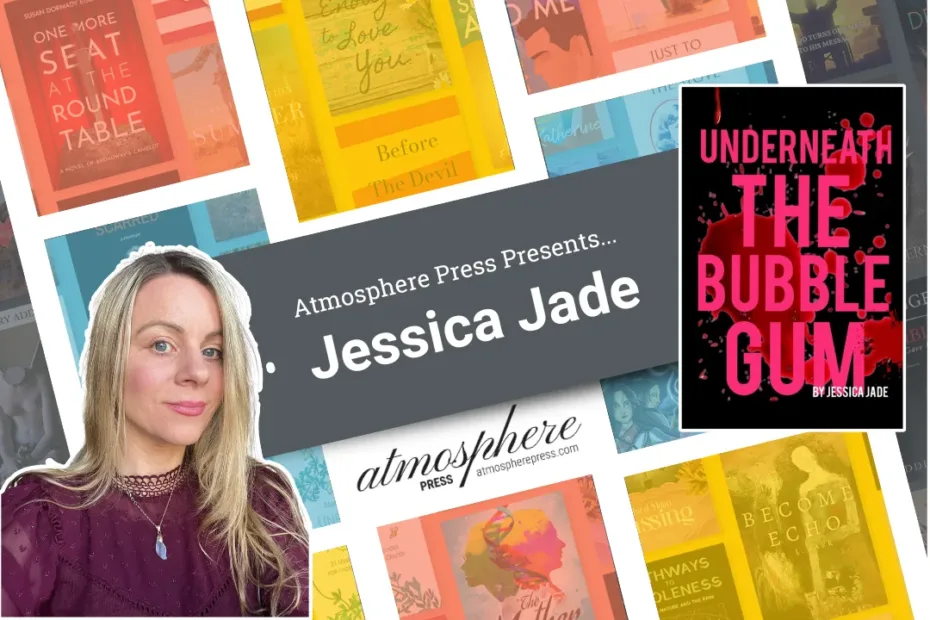
My daughter designed the cover. She’s only eleven but I was impressed with the black background and bubblegum pink writing dripping with blood. I can imagine seeing someone read it on the tube.
If your book had a soundtrack, what are some songs that would be on it?
Heaven is a Place on Earth – Belinda Carlisle, Mr Vain – Culture Club, Everybody Wants to Rule the World – Tears for Fears, Believe – Cher, The Graduation Song – Vitamin C. I always create a soundtrack when I write a book and imagine it on screen.
What books are you reading (for research or comfort) as you continue the writing process?
I’m currently reading The Clan of the Cave Bear series by Jean M. Auel. I’m on the second book, The Valley of The Horses. It’s making me think a lot about how people survived and how women have been treated as inferior for such a long time. I have also been reading Sexy and Psycho by Dr Jessica Taylor, which is heavy but very interesting as it uncovers how psychiatry has been used to pathologize and discredit women and their natural trauma responses to their environments and life events.
What other professions have you worked in? What’s something about you that your readers wouldn’t know?
I have worked with lots of different people from different cultures and walks of life. My first job was at a holiday club for underprivileged children. I then worked at a summer camp in America, a day centre for adults with learning disabilities, hospital bank, including the psychiatric ward, a children’s respite centre, and for EF showing foreign language students around the Isle of Wight.
Who/what made you want to write? Was there a particular person, or particular writers/works/art forms that influenced you?
I had a lovely eccentric teacher at primary school (who absolutely knew who I was). She used to say old fashioned things like, “I’ll have your guts for garters, Sonny Jim,” or “That’s just hard cheese.” This didn’t make her popular, but I liked her because she encouraged writing stories, baking, and growing gardens, all things I loved. When I was nine, I wrote a little story with the words, “She tried to do it, but couldn’t” and the teacher crossed it out and changed it to: “She tried, but to no avail.” It sounds weird, but I think having someone to believe in my work and enhance my vocabulary, without speaking down to me, encouraged me to love writing.
Where is your favorite place to write?
At home on the cuddle sofa with my two cats and a soft blanket.
What advice would you give your past self at the start of your writing journey?
Don’t hold back. I think for a long time I tried so hard to make the characters likeable that they were almost too perfect. You need to let them have flaws, make mistakes, and say the wrong thing sometimes because that’s what makes them human and relatable.
Are you a writer, too? Submit your manuscript to Atmosphere Press.
Atmosphere Press is a selective hybrid publisher founded in 2015 on the principles of Honesty, Transparency, Professionalism, Kindness, and Making Your Book Awesome. Our books have won dozens of awards and sold tens of thousands of copies. If you’re interested in learning more, or seeking publication for your own work, please explore the links below.