An Interview with Jonathan Hopkins
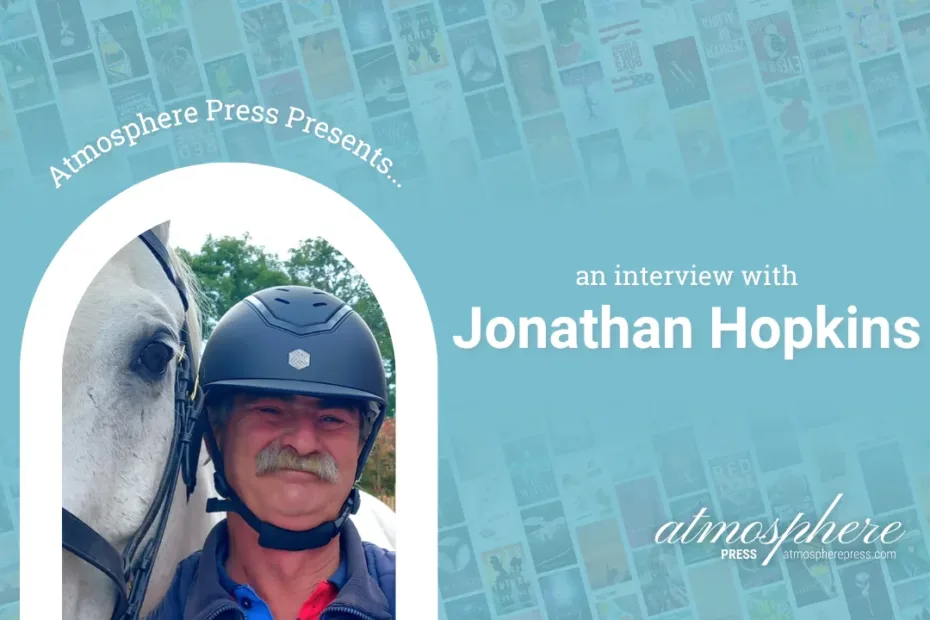
To those who say, ‘Now I’m retired, I have no spare time,’ it’s absolutely true! I bought my first horse at fourteen after saving hard during a couple of years of delivering groceries after school and on Saturday mornings, and I still own one more than fifty years later…more fool me. But I never thought I’d write about them, in any of their uses by mankind down the centuries, and I’ve spent my spare time over the last two decades doing just that.
What inspired you to start writing this book?
This is the fourth book in a series which follows the lives of two British cavalrymen fighting Napoleon’s French armies in Portugal and Spain. I’d roughly planned this novel a few years ago, particularly looked forward to the writing because it features the Battle of Talavera in 1809, including the infamous charge by the 23rd Light Dragoons, generally described by modern historians as the second ‘disastrous’ action by Sir Arthur Wellesley’s horsemen during the Peninsular War.
Tell us the story of your book’s current title. Was it easy to find, or did it take forever?
Titles are hard! Oddly enough, this one wasn’t. I try to jot down title ideas as they come to me while writing. Hopefully, by the time I reach the end I have a list of half a dozen or so to choose from. Hand of the Baptist was the first idea I thought up, and in this case it stuck.
Describe your dream book cover.
I’d love a cover showing a panorama of charging Napoleonic cavalry across it, a bit like a section of the huge painting in the battlefield museum at Waterloo which shows Marshal Ney leading French cavalry on the fateful afternoon. But I tend to prefer photographic realism, so that’s never going to happen. Shame, really.
If your book had a soundtrack, what are some songs that would be on it?
When writing the first book in the series, I often had Mark Knopfler’s soundtrack album to the film Local Hero in the laptop. My current machine has no CD drive, so I tend not to bother with music. I tend to listen to a fairly narrow range of artists but a mix of styles, so modern folk (Kate Rusby, Ralph McTell, James Taylor), rock (Genesis, Eagles, Coldplay) and pop (Ed Sheeran, The Beatles, Elton John). Some of their stuff might work on a soundtrack, with a little judicious lyric editing, but apart from the overused traditional Over the Hills and Far Away or Fields of Waterloo, I can only think of Dire Straits’ Brothers in Arms or maybe James Taylor’s short Soldiers.
I suppose I should run a loop of yet another Knopfler tune, Done with Bonaparte, while I write, but I’m not quite finished with the French Emperor and his men just yet.
What books are you reading (for research or comfort) as you continue the writing process?
Reference books are the bane of my life. I hated history at school—all those dates and Acts of Parliament, yuk!—so when I started to write about Georgian times, there was a lot of catching up to do. Currently, I probably have close to 150 period cavalry and war-related non-fictions, so I have to keep adding bookshelves to the house because I rarely get rid of any books, even novels. I’ve still got most of the Natural History titles I collected in childhood.
What other professions have you worked in? What’s something about you that your readers wouldn’t know?
Most of my working life has been spent as a fitted kitchen designer. Exciting, eh? My wife and I did run a saddlery business for ten years, but the last major banking crisis put paid to that. The worst job I ever had, in my late teens, was loading bulk PVC powder tankers from a platform in the roof of a warehouse…in the middle of summer. I’d recommend it only if you need to sweat off a few gallons of fluid per hour while wearing a helmet and forced-air mask to avoid lungfuls of plastic dust.
I bet most readers don’t know I play the guitar (pretty badly) and regularly wrote comic songs to perform at my long-term employer’s Christmas parties. These always poked fun at members of staff, generally the management, and usually included a verse about the company chairman, who got some stick almost every year. Luckily, I’d known him a long time and he had a great sense of humour (especially after a couple of drinks), so I always managed to hang onto my job!
Who/what made you want to write? Was there a particular person, or particular writers/works/art forms that influenced you?
Ah. Long story, but to be brief, I was upset with the bad press British cavalry who fought Napoleon have received from historians in the intervening years. I’m a big fan of Bernard Cornwell, so although I realised I didn’t have the knowledge to write a cavalry non-fiction, I thought I could write a novel just as well as Mr C. (a really decent fellow, by the way) had written his Sharpe books. It couldn’t be that difficult, could it?
What a fool I was!
Where is your favorite place to write?
I write in an armchair, at a desk, or in bed, so just about anywhere, really. If you push me, sitting out on the deck of a cruise ship headed for the Mediterranean or Caribbean with coffee or beer next to the mouse mat is probably my favourite, though having to squint to see the laptop screen in the sunshine is a pain.
What advice would you give your past self at the start of your writing journey?
“Don’t do it, Mr Mainwaring!”
“Stupid boy.”
(Conversation affectionately plagiarised from the old but still brilliant BBC TV comedy series, Dad’s Army.)
What’s one thing you hope sticks with readers after they finish your book?
The series is a story of friendship in the face of adversity, so I hope readers get to like the main characters as much as I do and want to know what happens to them, during the rest of the war and on to the Battle of Waterloo, where most Napoleonic stories end, so I plan mine will, too.
And maybe they’ll learn something of the realities of warfare during those times. Towards the end of his six-volume History of the War in the Peninsula and in the South of France, William Napier wrote “Thus the war terminated, and with it all remembrance of the veterans’ services.” Alongside the many casualties of more recent conflicts, we should never forget the sacrifice of these men, either.
Are you a writer, too? Submit your manuscript to Atmosphere Press.
Atmosphere Press is a selective hybrid publisher founded in 2015 on the principles of Honesty, Transparency, Professionalism, Kindness, and Making Your Book Awesome. Our books have won dozens of awards and sold tens of thousands of copies. If you’re interested in learning more, or seeking publication for your own work, please explore the links below.