An Interview with Margaret Bryden
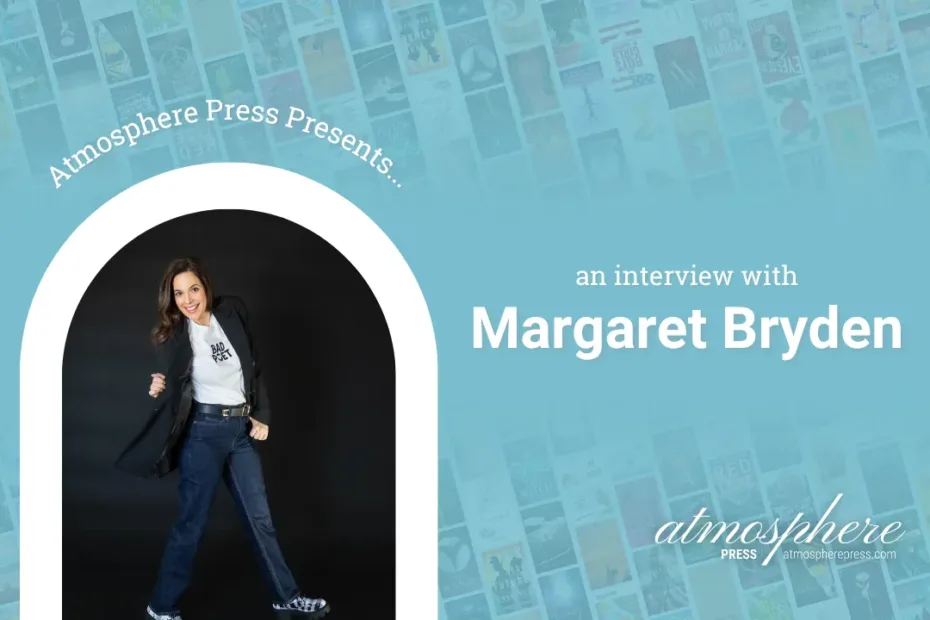
Margaret Bryden, MBA, CMHC, is a therapist, author, and speaker who is passionate about making mental health more accessible. With degrees from the University of California, Berkeley, San Jose State University, and Westminster University, Margaret brings together expertise in psychology, business, and communication to make mental health concepts engaging and practical. She works in both private practice and psychiatric hospital settings, specializing in helping individuals and couples through trauma, addiction recovery, and life transitions. Her debut book, How I Understand It: A Bad Poet’s Guide to Mental Health & Resilience, introduces the concept of “bad poetry”—a therapeutic tool to quiet the inner critic, deepen emotional awareness, and foster meaningful connection.
Tell us the story of your book’s title. Was it easy to find, or did it take forever?
The book’s title was its title from the beginning: “How I Understand It.” Poetry has helped me understand my world so much better AND the book aims to showcase how I (the author) understand things, through poetry. The subtitle, “A Bad Poet’s Guide to Mental Health & Resilience,” emerged the more I worked on the poems and deepened my understanding of how poetry is a tool for mental health. I wanted the book to make poetry more accessible and silence the inner critic that tells us we cannot write well; that critic that blocks our natural curiosity to want to express ourselves. In the end, I think the title and subtitle work well together to capture the essence of the book: My musings, in poetic form, with a generous dash of rebellion.
How did it feel when you first saw your book cover? Or when you first held your book in your hands?
It felt like joy was jumping out of my heart and materializing in the real world, in my hands.
Who/what made you want to write? Was there a particular person, or particular writers/works/art forms that influenced you?
I never thought I would write a book like this one. But life surprised me and I became a therapist and a mother. When my daughter was very little, I became concerned with one question: What if one day she needs me and I’m not there? How can I make sure she always has my voice? And the idea of writing this book was born. I wanted to write something that she would be able to refer to in the future, in many different phases of her life. I wanted to leave her something more than advice. I wanted to leave her perspective, my perspective. I wanted to give her the things I had learned the hard way—as a person and as a therapist—in a form she might actually choose to read. The book started there and then grew and grew.
What other professions have you worked in? What’s something about you that your readers wouldn’t know?
I have a confession to make: I didn’t even like poetry growing up. It was intimidating and felt overly indulgent, and I didn’t quite get it. It wasn’t practical to me, and so I didn’t pay it much attention. It was only much later that I came around to it, when l began using it with therapy clients and writing some myself—that I finally understood why poetry has survived for thousands of years. From Homer to Rumi, poetry endures because it helps people make meaning out of difficult experiences and provides an outlet for self-expression. I’m a little embarrassed it took me so long to recognize the power of poetry.
What was the most rewarding/meaningful part of publishing your book?
Being able to give it to my daughter! But, aside from that, so far, a few people have read my book and given me feedback that it was very moving. That has been a very experience for me.
If your book had a soundtrack, what are some songs that would be on it?
Uff … I have no idea. Any music that you find elicits creativity and introspection. I tend to favor music without lyrics for this kind of endeavor.
What is one thing you hope readers take away from reading your book? How do you envision your perfect reader?
One thing? That is a tough one! There are over a hundred poems in my book, each one infused with helpful mental health concepts. There are well over a hundred reflection and poetry prompts designed to elicit introspection and self-awareness. My ideal reader would engage with the material to come away with thought-provoking ideas, increased self-awareness and resilience, along with piqued curiosity and compassion.
What creative projects are you currently working on?
I’m working on refining how I use “bad poetry” in group therapy. It’s really fun!
How was working with Atmosphere Press? What would you tell other writers who want to publish?
I loved my editor, Trista. She was so fun and encouraging and smart.
Are you a writer, too? Submit your manuscript to Atmosphere Press.
Atmosphere Press is a selective hybrid publisher founded in 2015 on the principles of Honesty, Transparency, Professionalism, Kindness, and Making Your Book Awesome. Our books have won dozens of awards and sold tens of thousands of copies. If you’re interested in learning more, or seeking publication for your own work, please explore the links below.