
An Interview with Marie Lisette Rimer
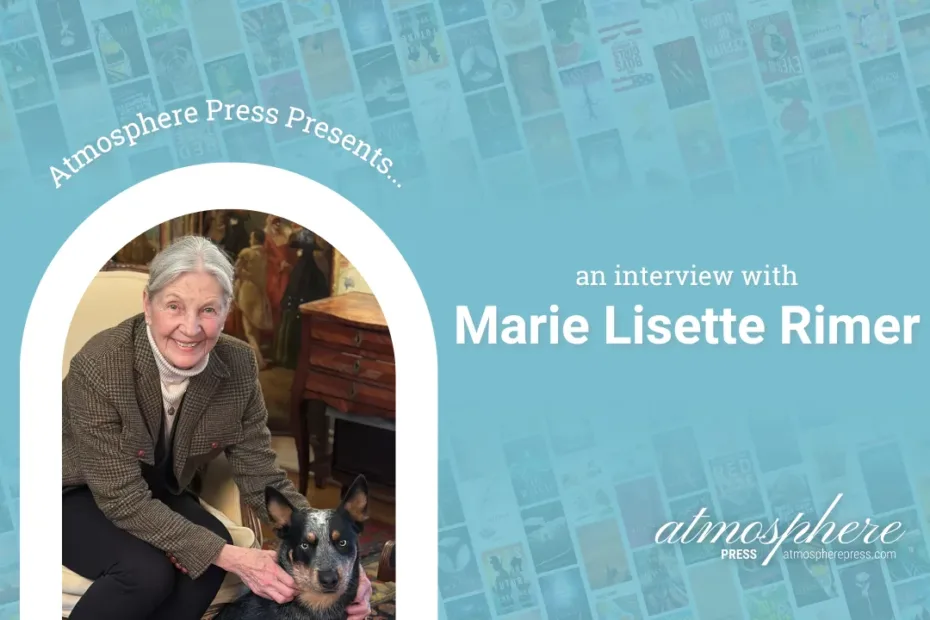
Marie Lisette Rimer earned an MA in Secondary Education and a BA in Sociology from the University of Connecticut. She was a publicist for the Connecticut legislature and an award-winning English teacher at Rectory School in Pomfret, Connecticut. Life was shattered by the suicide of her youngest son, Patrick Wood, in 2006. She wrote Back from Suicide: Before and After the Essential Patrick to reveal his suicidal mind, misery of depression, and difficulty coming out.
Rimer received the Storytrade Nonfiction Prodigy Award, the Book of the Year First Nonfiction and Nonfiction LGBTQ+ awards, the overall Book of the Year award (second place), the PenCraft Nonfiction Memoir award, and the Firebird Book Awards for LGBTQ Nonfiction and Death and Dying. She has presented Patrick’s story throughout Northeastern Connecticut and been published in the Hartford Courant and the Stanford Daily.
Who/what made you want to write? Was there a particular person, or particular writers/works/art forms that influenced you?
Tragedy was the culprit. I never wanted to write a book. I hated writing much of my life. But I changed my attitude when I became an English teacher. Middle-school homework assignments taught me the only thing worse than writing is reading bad writing in four classes. Out of necessity, writing became my focus in the classroom. I coached my middle-schoolers on the basics—strong leads, strong verbs, clarity, concision, specifics, and, yes, grammar. Classroom writing improved, and so did mine. Then my son died, and those lessons were useless. I couldn’t follow my own teaching. I splattered thoughts everywhere—Patrick’s apartment in Berlin, meeting his friends, a memorial at Stanford, his favorite gay club, being born with his twin sister, returning to class, my mother’s suicide, getting sidetracked with family history. That last one was a time-eating detour. I spent years researching my grandfather’s WWII administration at West Point and my great-great-grandfather’s theft of $4 million. Beta readers tried to warn me. I should write more about Patrick. I ignored them. My family history was too good. The beta readers piled on. A former student humbled me with her comment: “Why should I care about these people?” She made me realize I was avoiding the question: Why would a brilliant, beautiful son, who had every opportunity, kill himself less than a year after graduating from Stanford? She made me realize I was avoiding my ignorance about suicide. I threw out 150 pages of family history and tackled the answer.
The basics I taught eighth graders for seventeen years took me inside my son’s apartment as he was preparing to die. They made me see the suicide book he was reading, hear the Beethoven symphony playing, read the Stanford University transcript with mostly A’s, and picture the charcoal he would burn. They made me learn the misery of depression and the lure of suicide, and that meant revealing my ignorance about both. They made my son come alive in a prize-winning book that resonates with those suffering from suicide loss. Nearly 50,000 kill themselves in the US every year—twice as many as homicides. Millions more are affected by suicide loss. Back from Suicide puts a face on those statistics. It shows why depression is a disease. Patrick is proof. There was no substance abuse, no family abuse. There was no other explanation for why an otherwise healthy person would kill himself.
Tell us the story of your book’s title. Was it easy to find, or did it take forever?
The title took forever because I went in the wrong direction for years. I thought I could persuade readers that “Parade Rest,” about a West Point family’s history, was a convincing response to suicide loss. Thankfully, readers knew that was not the way to go.
What part of publishing your book made it feel real for the first time?
The book felt real after encouragement from suicide experts. I had no confidence as a writer. Suicide took care of that. I felt like I didn’t know Patrick anymore, and I didn’t know how to write about him. Dr. Peter Kramer, author and psychiatrist, helped me know him better. He taught me that depressed people do not recover as easily from disappointment. He took me inside Patrick’s suffering, whether from math homework, coming out, or relationships. When I sent Kramer a few chapters, he said I did a good job with a difficult subject. He helped me breathe easier before the book came out.
Dr. Christine Moutier, Chief Medical Officer of the American Foundation for Suicide Prevention, helped me breathe easier after the book came out. She said that the way I interwove Patrick’s stories with science and key information was “masterful.” She made the book so real that I celebrated by walking on air around my yard and drinking a tequila smoothie. Five-star reviews on Amazon also helped, but they’re never enough. Twenty years after Patrick’s death, suicide still corrodes the ego.
If your book had a soundtrack, what are some songs that would be on it?
Patrick was a classical pianist. The soundtrack would include his chamber music from Tanglewood—the Mendelssohn “Piano Trio in C minor” and the Brahms “Piano Trio in B Major.” They’re available on Patrick David Wood: Piano Solo and Trio.
What’s one thing you hope sticks with readers after they finish your book?
I hope readers will come away with the point that suicide is biological. Yes, Patrick left a suicide note to the boy who rejected him. But rejection wasn’t the whole reason. The real reason was beneath the surface. It was internal—a medical issue that required therapy and medication. Patrick was not receiving enough of either one when he died in his Berlin apartment. He was working as a programmer for Siemens. He told me he didn’t want to see a therapist even though he spoke fluent German.
Suicide is not logical. It is biological. Suicidal ideation compromises the brain. The amygdala is smaller in people who attempt suicide. The hippocampus and parts of the prefrontal cortex are smaller in suicide victims. Writing the book taught me that I did not take Patrick’s depression seriously. I thought his perfect SATs, valedictorian graduation, and Stanford degree were signs of health. I had to learn that brilliance was no protection against mental illness. Depression can be lethal if it’s not treated.
What was the most rewarding/meaningful part of publishing your book?
During the years I was writing in the wrong direction and fumbling through edits, I would come downstairs, bleary-eyed, and my husband would ask, “Where’ve you been all day?” It was hard to explain that I was rewriting a book he thought I had already written, and I knew nothing about what I was rewriting. In the end, the book became a message from both of us—a cry for Patrick and the many who suffer from depression. My husband supported my disappearances when the book came out: “So beautiful. So loving. A masterpiece. What a gift to Pat! … Now, forgive yourself.” I thank goodness for his acceptance every day. He died of prostate cancer six months later.
What creative projects are you currently working on?
I might get stubborn and finish my family history for Patrick’s brother and twin sister, Colin and Libby. Who doesn’t want to know about an ancestor who stole $4 million, escaped to Canada, and never served a day in jail? I might not have enough years left in me. I’m seventy-eight. But thankfully, Patrick’s story will live on.
Are you a writer, too? Submit your manuscript to Atmosphere Press.

Atmosphere Press is a selective hybrid publisher founded in 2015 on the principles of Honesty, Transparency, Professionalism, Kindness, and Making Your Book Awesome. Our books have won dozens of awards and sold tens of thousands of copies. If you’re interested in learning more, or seeking publication for your own work, please explore the links below.