
Who/what made you want to write? Was there a particular person, or particular writers/works/art forms that influenced you?
As a child, books seemed like sacred pathways that writers had laid out for readers. Creating and sharing those pathways was a magical almost-impossible thing that I wondered if I could ever do myself.
What inspired you to start writing this book?
My immediate inspiration came from observing my dog, Serio, an inquisitive and expressive miniature Pinscher. He called my attention to things in his world that were urgent for him, which made me want to find out why they were, if I could.
Tell us the story of your book’s title. Was it easy to find, or did it take forever?
It took a while, probably two or three years after I started writing. My protagonist Maurice comes to realize that he is still “recovering” from things long past, a point it took me a while to understand myself. But the narrative permits the reader to participate in “recovering” Maurice, in learning who he is, like an archeologist or a historian.
If your book had a soundtrack, what are some songs that would be on it?
Music features prominently in the book. A particularly important piece is the song “We Can Make It Alright” by The Gap Band. There are others not referenced in the book which evoke a strong sense of the book’s emotions, including “Live With Me” by Massive Attack, “I’ll Be Good” by Rene and Angela, “I’ve Dreamed of You” by Ann Hampton Callaway, “A Song For You” by Ray Charles, and so many others.
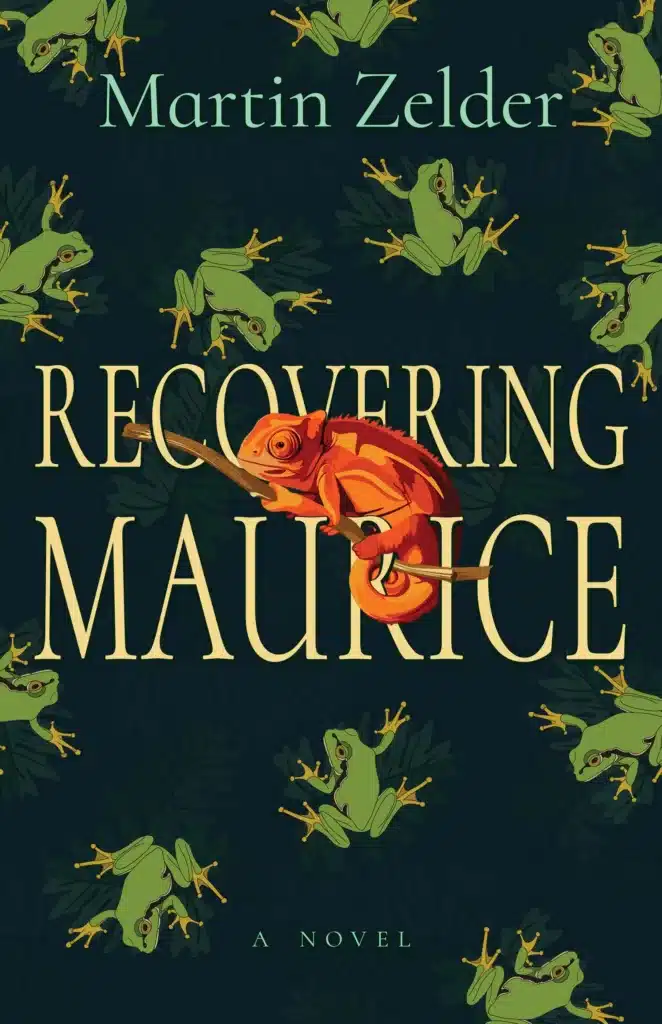
Describe your dream book cover.
I imagine something abstract and colorful amidst which you could perhaps detect a shakily drawn profile of Maurice.
What other professions have you worked in? What’s something about you that your readers wouldn’t know?
As a teenager, I was extraordinarily persistent in selling pre-ordered citrus fruit boxes to raise money for my local youth orchestra. As an adult, I currently sing at local bars under the name DJ Blind Squirrel.
What books did you read (for research or comfort) throughout your writing process?
I re-read Moby Dick and also John Gardner’s The Sunlight Dialogues to remind myself of what remarkable things were possible, even as I knew they were far, far more remarkable than what I could ever do. Another book, more research in a sense, was Trauma and Recovery by Judith Herman.
What is one thing you hope readers take away from reading your book? How do you envision your perfect reader?
I want them to know that they are not alone, that their struggles are shared with many others. My perfect reader is someone who is willing to believe in recovery.
Are you a writer, too? Submit your manuscript to Atmosphere Press.
 An Interview with Cindy Kate Wills
 An Interview with Kimberly Heiman
 An Interview with Sehaj Kasture
 An Interview with Mike Michalak