
An Interview with Nick Clement
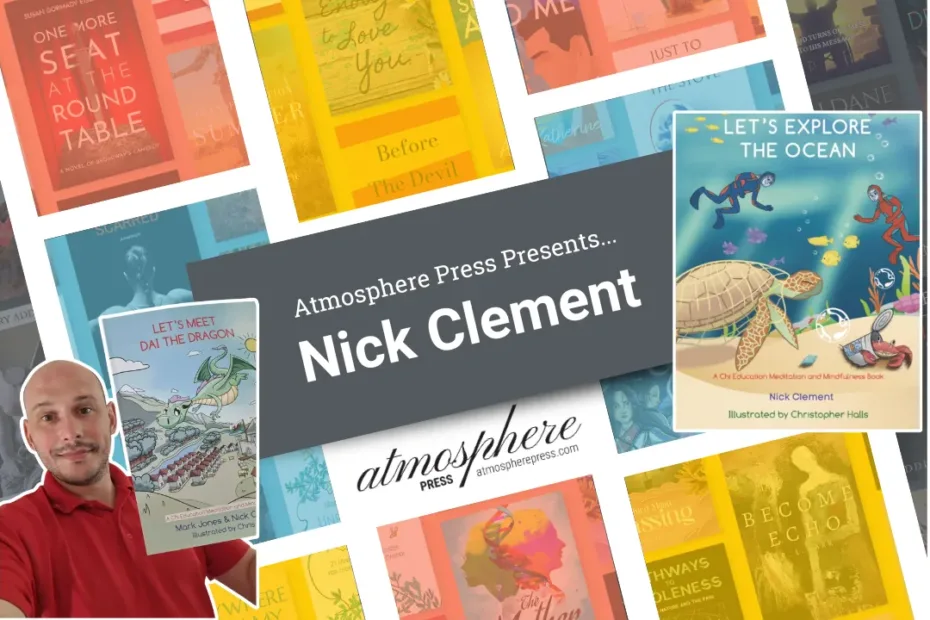
Nick Clement is an educator, children’s author and founder of Chi Education and Confident Healthy Active Me CIC. A former primary school teacher, he now creates movement-rich, mindful stories that help children build confidence, emotional wellbeing, and a love of active learning. Drawing on his background in sport, coaching, and child development, Nick’s books are designed to get young children moving, imagining, and feeling good about themselves. His mission is simple: To help every child feel confident, healthy and active through joyful, accessible storytelling.
What inspired you to start writing this book?
Let’s Explore the Ocean was inspired by my desire to create a gentle, playful way for children to experience mindfulness during those moments when they need a reset – before bed, after break time in school, or simply when they need a calming ‘time out’ from a busy day. I wanted a book that naturally slows everything down, helping children breathe, notice, imagine, and settle – without ever feeling like they’re being ‘taught’ mindfulness.
The ocean felt like the perfect setting for this. It has a naturally calming quality – peaceful, rhythmic, full of movement and wonder. By inviting children to imagine floating like jellyfish, moving with the waves, or diving beneath the surface, the story builds mindfulness into the adventure itself. It becomes something they feel, not something they’re instructed to do.
Another part of the inspiration came from wanting to raise awareness about the ocean and the challenges it faces. Plastics and pollution are growing concerns, and introducing these ideas gently through story helps children develop empathy and curiosity about the natural world.
A small amount from every paperback and e-book sale is donated to the SEA LIFE Trust, whose work in marine conservation, animal rescue, and ocean protection is incredibly important. Their mission aligns perfectly with what I hoped this book could achieve – supporting children’s wellbeing while also encouraging them to care about the planet.
With the Mindfulness Adventures series, my aim is always to help children feel calmer, more confident, and more connected. Let’s Explore the Ocean brings those ideas together in a story they can return to whenever they need a moment of calm.
Tell us the story of your book’s current title. Was it easy to find, or did it take forever?
The title Let’s Explore the Ocean came quite naturally because it follows the pattern of the whole Mindfulness Adventures series. Each book begins with ‘Let’s…’ – Let’s Meet Dai the Dragon, Let’s Look Through the Window – and this structure is really important to me. It sets the tone for the experience: it’s an invitation, not an instruction. It feels warm, playful, and inclusive, as if the story is saying, “Come with me – we’re going on an adventure together.”
When it came to this book, the phrase Let’s Explore the Ocean almost named itself. The story was always going to be a journey through the sea, discovering creatures, moving with the waves, and finding calm beneath the surface. The word ‘explore’ captured the curiosity and movement I wanted children to feel, and ‘ocean’ instantly signals a sense of wonder, calm, and environmental connection.
So for this one, the title didn’t take long at all. It simply fit – both with the heart of the story and with the identity of the Mindfulness Adventures series as a whole.
Describe your dream book cover.
My dream cover for Let’s Explore the Ocean would capture that feeling of calm, curiosity, and gentle adventure that runs through the whole story. I imagine a soft, inviting ocean scene – not too busy, not too bright – with deeper blues and turquoise tones that instantly make children feel settled before they’ve even turned the first page.
At the centre, I’d love to show the child characters beginning their underwater journey, perhaps peering over the side of the Deep Explorer or floating just beneath the surface. Not in a dramatic way, but in a peaceful, magical way that sparks imagination.
Around them, a few friendly sea creatures – a slow-moving turtle, playful dolphins, maybe a shimmering jellyfish – but illustrated in a calm, dreamy style rather than a cartoonish one. The cover should feel like an invitation to breathe slower, to wonder, to explore.
And of course, keeping the ‘Let’s…’ identity clear is important for the Mindfulness Adventures series. I like the idea that when a child sees the cover, they immediately understand: “This isn’t just a story – it’s an adventure that will make me feel calm.”
Overall, the dream cover is one children want to reach for at bedtime, teachers want on their calm-down shelf, and parents feel reassured by – a visual promise of a gentle, mindful journey beneath the waves.
If your book had a soundtrack, what are some songs that would be on it?
If Let’s Explore the Ocean had its own soundtrack, it would be built around beautiful, calming ocean sounds – the kind that instantly slow your breathing and make the world feel a little quieter. I imagine gentle waves washing over the shore, soft bubbling currents, and the low, echoing hum you hear when you’re beneath the surface. Those natural sea sounds would form the foundation of the soundtrack.
But I’d also want subtle elements of surprise woven in, because the story isn’t just peaceful – it has moments of excitement and purpose, especially when the children discover the two animals who need their help. So you’d hear slight shifts in tone: a ripple that grows louder, a sudden splash, or a change in melody that sparks curiosity without breaking the calm.
Overall, the soundtrack would be soothing and immersive, inviting children to breathe slower and feel part of the ocean world, while still capturing the small moments of adventure and empathy that run through the book.
What books are you reading (for research or comfort) as you continue the writing process?
I read so many different children’s books every day to my two boys, who are six and four, and honestly, that’s where most of my inspiration comes from. Watching how they respond – what makes them laugh, what sparks their imagination, what helps them settle after a busy day – is the best research I could ask for.
One of the books that particularly inspired Let’s Explore the Ocean is the bestselling interactive book Press Here by Hervé Tullet. I’ve always loved the way it invites children to join in, using simple prompts that feel playful but deeply engaging. That idea – that a book can become an experience rather than just something to sit and listen to – really shaped how I approached the Mindfulness Adventures series.
I wanted to create stories that children actively take part in, where their movements, breaths, and imagination guide the journey. So, while I dip in and out of lots of early years and wellbeing books, it’s really the combination of reading with my boys and seeing the magic of books like Press Here that keeps shaping my writing process.
What other professions have you worked in? What’s something about you that your readers wouldn’t know?
Before becoming a children’s author, I spent over a decade working as a primary school teacher in South Wales, and I’ve always had a strong background in sport and coaching – football, gymnastics, rugby, cricket, tennis. That combination of education and physical activity eventually shaped the work I do now through Chi Education and Confident Healthy Active Me CIC.
A big part of my current work involves getting children active through initiatives like Active Assemblies, where whole schools start the day with movement to boost confidence, focus, and wellbeing. I’m also working closely with Wales Rugby League to bring rugby league into primary schools across Wales, opening the sport up to younger children and building physical literacy, teamwork, and resilience through play.
Something readers might not know is that our long-term vision with Wales Rugby League is to create a complete player pathway starting from the age of two.
Through movement stories, early-years activities, and playful skill development, we want to introduce children to the foundations of rugby league in a way that’s fully age-appropriate and focused on confidence, joy, and active play. The idea is simple: build a love of movement early, nurture it through primary school, and open doors to long-term participation as they grow.
Who/what made you want to write? Was there a particular person, or particular writers/works/art forms that influenced you?
I never actually planned to be an author. Writing books wasn’t something I set out to do – but I did want to create stories with purpose, not just stories with a theme. I wanted books that genuinely supported children’s wellbeing, confidence, and imagination, rather than something that simply filled a shelf.
A major moment in that journey was meeting Mark Jones, an established children’s writer who has created books across multiple genres, including Doctor Who. When I shared the early idea behind what would become the Mindfulness Adventures series, he immediately saw something in it. His enthusiasm and belief in the concept gave me the confidence to move forward, and he played a huge part in helping me shape the first drafts. His child-centred approach to storytelling showed me how mindfulness could be woven into a narrative in a warm, natural, and playful way.
I’m also influenced daily by the children I work with and by reading to my own boys. Watching how they respond to interactive stories – like Hervé Tullet’s Press Here – helped me understand that books can be experiences, not just words on a page.
But in terms of what made me want to write, it was a combination of wanting to create something meaningful for children and meeting someone like Mark who helped turn that purpose into an actual book.
Where is your favorite place to write?
My favourite place to write isn’t really a place at all – it’s anywhere outdoors, especially in nature. I get most of my ideas when I’m walking through woodlands or spending time outside. There’s something about being surrounded by trees and fresh air that helps ideas land far more easily than when I’m sitting at a desk.
In reality, though, I write at all different times of the day and in all sorts of places. My wife has a whole collection of bizarre, half-formed sentences in her WhatsApp because that’s where I quickly send ideas before I forget them. Most of my best ideas arrive at the most inconvenient moments – driving, in the shower, or when it’s absolutely pouring with rain and I’ve got no chance of writing anything down properly.
So while the woodland is my ideal creative space, the truth is that the Mindfulness Adventures series has been shaped by ideas caught on the move, in the chaos of everyday life, wherever and whenever they decide to show up.
What advice would you give your past self at the start of your writing journey?
Looking back, the biggest advice I’d give myself is simply: Don’t rush. When we first started developing the Mindfulness Adventures series, we moved very quickly because an opportunity had come up, and we wanted to make the most of it. In doing that, we didn’t always take the time to refine things as carefully as we could have – especially when it came to selecting the right mindfulness activities and structuring the story so it was as child-friendly and accessible as possible.
There were lots of small lessons along the way: understanding pacing, making sure each prompt was purposeful, ensuring the illustrations supported the calm feeling of the text, and thinking deeply about how children naturally interact with stories. Those lessons were incredibly valuable, but they were learned through trial and error.
What’s one thing you hope sticks with readers after they finish your book?
What I hope more than anything is that children come away from Let’s Explore the Ocean with a genuine sense of calm – the kind that stays with them even after the story ends. I want them to feel that it’s okay to talk about their feelings, whether they’re happy, sad, excited, or overwhelmed. If the book helps even one child open up a little more about what’s going on inside them, then it’s done something meaningful.
I also hope that both children and parents take some of the simple strategies from the story – the breathing, the grounding moments, the gentle movement – and begin using them in everyday life. These techniques are intentionally easy, playful, and accessible so that families can use them during bedtime, after a busy day, or whenever emotions feel a bit bigger than usual. If the book leaves readers with the understanding that they have tools to calm themselves, connect with each other and express how they feel, then that’s the impact I want it to have.
Are you a writer, too? Submit your manuscript to Atmosphere Press.

Atmosphere Press is a selective hybrid publisher founded in 2015 on the principles of Honesty, Transparency, Professionalism, Kindness, and Making Your Book Awesome. Our books have won dozens of awards and sold tens of thousands of copies. If you’re interested in learning more, or seeking publication for your own work, please explore the links below.