
An Interview with Roger Fischer
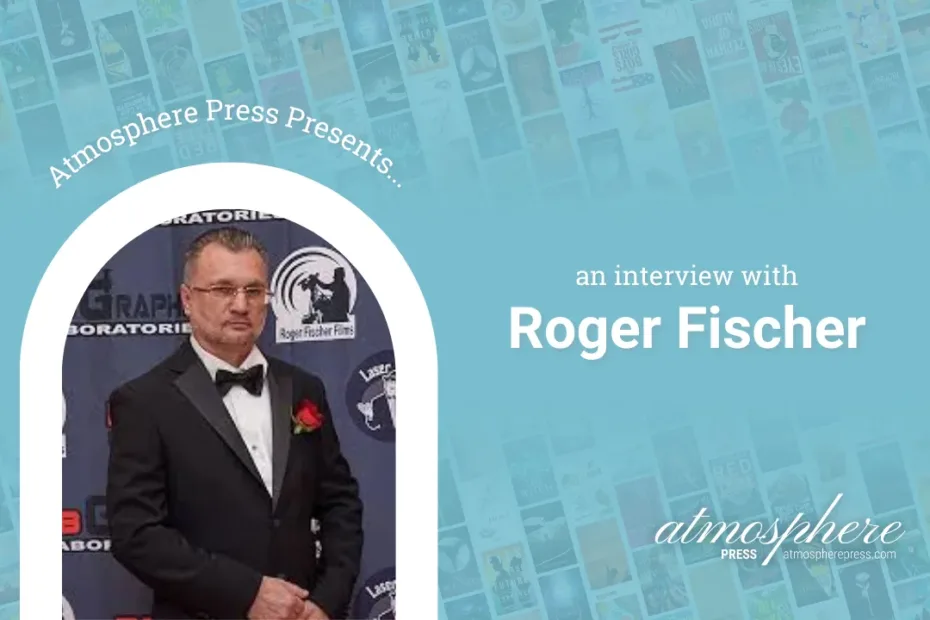
Roger Fischer is a multifaceted director, producer, and entrepreneur whose career spans high-fashion e-commerce, international film production, and the literary world. After successfully building and selling a tech-driven apparel company, Roger pivoted to entertainment, founding Regulate Entertainment and spearheading major global film ventures.
His current work and ventures include:
Publishing and literature: Following a dispute with a major publisher over deceptive practices, Roger took back his rights and founded Capon Knight Publishing to protect creative integrity. He is the author of Cartel Heat (co-written with NYT bestseller Debbie Viguie) and has three books in development, including an upcoming romance novel set for release in mid-summer 2026.
Film and TV development: Roger is currently in development on the TV series pilot for Cartel Heat. His production portfolio also includes international co-productions with the Thai government via Pegasus Entertainment and a partnership with the late David Winters at World Entertainment Holdings.
Media leadership: Under a three-year contract with Bongiovi Global Media, Roger is directing a documentary on his mentor, David Winters, while continuing his work as a talented motion picture director.
A serial entrepreneur, Roger’s background ranges from Brooklyn coal-oven pizzerias to Miami restaurants and chemical distribution. He splits his time between New York City and Orlando with his wife, Maria.
Who/what made you want to write? Was there a particular person, or particular writers/works/art forms that influenced you?
My transition into scriptwriting wasn’t just about storytelling; it was about innovation. I started writing film scripts because I began seeing my own ideas play out in my head and realized they offered something missing from modern cinema. My drive comes from a desire to put what I always felt was ‘missing’ onto the screen. While my ideas are my own, my foundation was built by those who mastered the craft before me, Debbie Viguié. As a New York Times bestselling author, Debbie is the primary reason I took the leap into writing novels. Her influence provided the roadmap for my professional aspirations. I have studied Steven King’s work as well and I use all these guys’ writing styles with mine. I have read over a thousand novels; I’ve essentially completed a masterclass in narrative structure by Dan Brown and Walter Mosley. I’ve absorbed a vast array of styles, plot devices, and tonal shifts, allowing me to draw from a deep well of literary history.
My creative process is deeply grounded in reality. I don’t wait for a ‘bolt of lightning;’ instead, I look at real-life experiences using the raw material of actual events to ground my stories. Seeing the world as it is and changing things around it to explore the ‘what ifs.’
I didn’t just want to read stories anymore; I wanted to fix the ones that felt incomplete and create the ones that didn’t exist yet.
What other professions have you worked in? What’s something about you that your readers wouldn’t know?
I have been an entrepreneur building companies from scratch and selling them. I have been in the restaurant business in New York, New Jersey, and Miami, Florida. My career in film started 2010.
Tell us the story of your book’s title. Was it easy to find, or did it take forever?
The title actually came to me almost instantly, though the journey to the finished book took a decade. I originally penned the story as a film script back in 2013, and the name Cartel Heat just stuck – it captured that specific, high-stakes pressure cooker of the underworld that I wanted to explore. In the book, the name ‘Cartel Heat’ is what the government named the investigation of the Cartel and Mafia in Miami: Operation Cartel Heat.
While the title was easy to find, transitioning the story into a novel in 2023 allowed me to dive much deeper into the ‘why’ behind the action. Writing a book gave me the real estate to use my personal history to build a world that feels lived-in and authentic. My writing is informed by decades of firsthand experience and connections; I’ve known members from the families in New York, New Jersey, Ohio, New England, Chicago, Philly, and out in California. The cartels: my perspective is shaped by personal acquaintances with El Chapo’s family and meetings with members of Pablo Escobar’s former crew.
When I write about the cartel and the Mafia clashing in present-day Miami, I’m not just pulling from movies or imagination. I’m pulling from the conversations, the personalities, and the gritty realities of people I’ve actually known. That’s why the title had to be punchy and direct – because the world I’m describing doesn’t mince words.
What part of publishing your book made it feel real for the first time?
For me, it wasn’t the day I finished the manuscript or even the day I signed the contract with a New York Times bestselling author. It was the moment I saw the finished cover art with the title Cartel Heat sitting right below my name. Coming from a background where I’ve known members of the Mafia across the country – from New York to Chicago to California – and having sat with people connected to the biggest cartel names in history, my life has always been about unspoken stories. These are worlds that usually stay in the shadows or get ‘Hollywood-ized’ by people who haven’t been there. Seeing those experiences transformed into a physical object changed the game. When I held the first proof copy, it felt like I had successfully bridged the gap between the most dangerous, raw, and gritty reality of the people I know.
If your book had a soundtrack, what are some songs that would be on it?
I have produced the music for the film already. There is a song called Cartel Heat the singer Manee Valintine wrote and produced. The book is like Scarface meets The Soprano’s in present day. It’s like the real world of the cartel and Mafia.
What’s one thing you hope sticks with readers after they finish your book?
The one thing I hope sticks with readers is the weight of the reality. Moving beyond the ‘Hollywood’ version. Most people know the Mafia and the cartels through movies and TV shows that romanticize or exaggerate the lifestyle. But because I personally know the players – from the families in New York, Chicago, and Philly to the inner circles of El Chapo and Escobar – I didn’t have to guess what that world feels like. I’ve seen the toll it takes and the way these people actually move. I want readers to feel the tension of present-day Miami, where these two powerful entities collide. I want them to walk away feeling like they’ve just had an insider’s look at a world that is usually closed to the public.
What was the most rewarding/meaningful part of publishing your book?
The one thing I want to stick with readers is the realization that while the Mafia and cartel worlds look glamorous from the outside, it is a deadly business with very real, very permanent consequences. Most authors write about the Mafia or the cartels as if they are caricatures. I’m writing from a different place and realness.
What creative projects are you currently working on?
Beyond the release of Cartel Heat – Deadly Business, I have several major projects across the literary and cinematic landscape that I am currently spearheading.
I am expanding my reach into new genres this year. I am currently putting the finishing touches on a romance novel slated for a mid-summer release, followed by a horror novel that will debut just in time for Halloween.
The world of Cartel Heat is moving to the screen. We are currently in development for the TV series pilot, with production centered in the hub that defines the story: Miami. To fuel the initial stages of this development, I am launching a Crowdfundr campaign to give fans a chance to be part of the show’s journey from the ground up and keep creative control.
Additionally, I am currently in development with an A-list actor and producer in LA for a feature film I have written. I am also deeply committed to preserving the legacies of two cultural icons through my work as a producer:
The David Winters documentary: David was a British-American powerhouse – an actor and dancer in West Side Story and a legendary choreographer for stars like Elvis Presley in Viva Las Vegas. More importantly, he was my very good friend and mentor. This project is a tribute to his immense influence on Hollywood.
Yomo Toro: The King of the Cuatro: I am serving as executive producer for the upcoming documentary on Yomo Toro. He was a revolutionary force in Latin music and a key member of the Fania All-Stars. His work with icons like Willie Colón and Héctor Lavoe defined the 1970s New York salsa sound, and this film will honor his virtuosity.
Are you a writer, too? Submit your manuscript to Atmosphere Press.

Atmosphere Press is a selective hybrid publisher founded in 2015 on the principles of Honesty, Transparency, Professionalism, Kindness, and Making Your Book Awesome. Our books have won dozens of awards and sold tens of thousands of copies. If you’re interested in learning more, or seeking publication for your own work, please explore the links below.