An Interview with Ruth M. Stacey
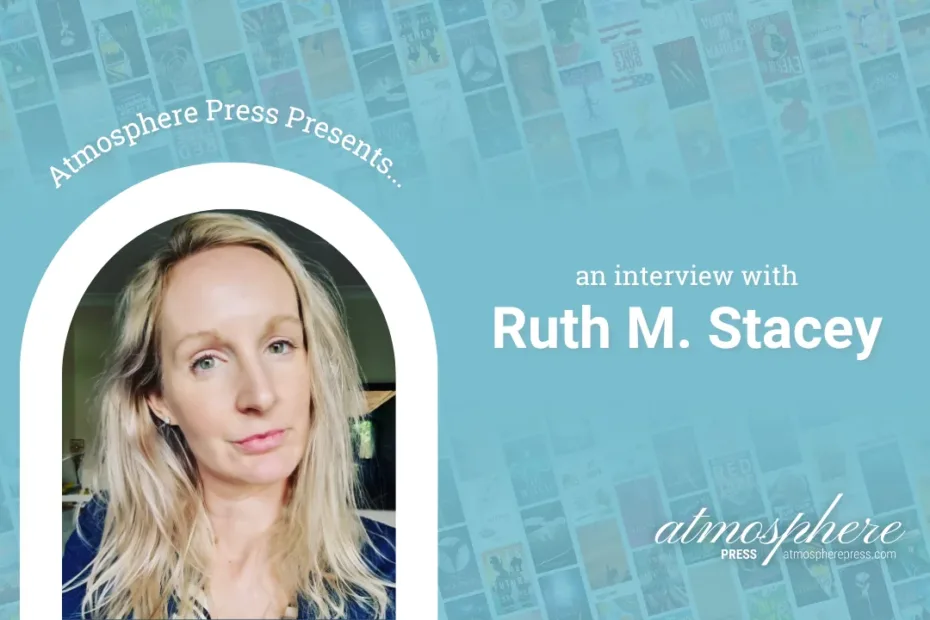
Ruth is a middle school teacher and poet living in the Somerset town of Frome with her husband and her son, Eddie.
Follow her on Instagram: @dichotomyofmepoetry.
What inspired you to start writing this book?
I have always wanted to write a book on my struggles and journey with my mental health and did start some writing after a hospital admission in 2007, but it all got forgotten and packed away with my recovery. So when I was ill in 2019 with postpartum psychosis after the birth of my son, I refused to forget my experience; I refused to silence the ‘mad’ version of myself because although she was delusional, that version of my life existed too. I returned to work when my son was one and I tried so hard to focus at work but my brain was overflowing with memories, both good and bad, and experiences that I didn’t want to forget. My book started as a lonely, bright-green post it note, but once I started, I could not stop. It poured from me and I remember after that first two weeks being covered in a plethora of day-glow notes! I did not want to forget my experience—didn’t want it lost, didn’t want to silence any part of myself, well or ill. By writing things down, I experienced such relief that I could keep it safe. When your mind has ‘failed you,’ it’s easy to imagine it happening again. With pen on paper—I created something tangible and something I could reflect on, share with others, perhaps even my son one day.
When I realised that these notes could become a book, the realisation that I could use my story to help other mums who had suffered postpartum psychosis was brought to life and this compelled me to write more—the whole story, the epic highs and crashing lows—so others would know they were not alone and could recover, just like I did.
Writing the book also gave me permission to reflect; it also allowed me to order my very disorganized thoughts on the experience and towards the end of the writing process, it even spurred me on to speak to my family and close friends about what it was like for them—something I was previously incapable of doing. My memoir now shows a true and balanced reflection of my experience recovering from postpartum psychosis in a mother baby unit. I also used photographs, WhatsApp messages, and my ‘mad notes’ written at the time, as well as my past tense narrative. It also features ‘what helped’ sections, especially about my recovery, and some medical notes too.
Tell us the story of your book’s current title. Was it easy to find, or did it take forever?
Ha! It definitely wasn’t the first one that came to mind. I was mindful of the book title because it always grates on me when you read a book and can’t relate the title. Similarly, I find it pleasing when you come across the exact part of the book that references it! Maybe that’s just me. I had thought about using the word ‘mad’ but decided against it as it’s a niche-enough subject and felt it may put people off (gosh, we still have a way to go to reduce the stigma of mental illness). The title, Everyone is Here to Help is directly taken from a note on my phone that picks up on some of the inadequacies that I felt there, and I ended it saying that I knew everyone was there to help. The second part of the title was really important to me as I didn’t want it to put off other mothers who were suffering postpartum psychosis, but it was also crucial that people understood it as a healing account rather than a mental health rant. I remember at my book launch mentioning that I wished I’d chosen a catchier title, as it doesn’t really roll off the tongue, and it is firmly embedded in my predictive text; all I need to write is ‘everyone’ and the rest just pops up, I’ve typed it so much! I had had a fair few people ask if the title was ironic, too, which, consciously, it was not, but in hindsight, as there were teething problems with the newly opened unit, perhaps I may have thought this in reality and maybe, just maybe, it was subconsciously on some level. Who can tell?
Describe your dream book cover.
So, my cover is an artistic, modern take on a photograph I took at a really poignant time in my recovery. It was taken at a beautiful lake near my home on the day I got discharged from the mother baby unit. Although I had actually left a week prior, the actual act of being discharged, albeit over the telephone, meant more than actually leaving, and the weight of it was huge—that the medics agreed with me that I was well enough to stay out of the unit (as I always had the ‘threat’ held over me that if I became ill again and had to return, I would have to stay longer under the Mental Health Act 1983). This photo reminds me of the unbelievable, desperate peace that I had been craving and eventually got. Funnily enough, we initially used the original photo but decided it looked very dated. Paper Rhino created the cover with the patience of a saint, and I think when I said that I wanted the quotes on the front to match a favourite shade of nail varnish(!) when I was trying to describe a colour over the phone, I think they may have had to stifle their reaction! I do love it, though—the way the title pops out of the relative darkness. Ooh, that sounds deliberately metaphorical! The shade of green has always been a fave, so it continues on the spine and wraps onto the back cover. Another thing that makes me laugh is my reply when people ask why I included the ‘M’ in my name, and I could say to distinguish from other authors (I also write poetry) but in reality, it was because I honestly struggle to say my own name without meaning to, finding the alliteration clumsy and slippery. Yes, now you can all try and say ‘Ruth Stacey’ out loud and then compare it to ‘Ruth M. Stacey’—better, right? Ha! The best thing about the cover is honestly the quote from the CEO of the charity my memoir raises money for (Action on Postpartum Psychosis). Dr. Jess Heron called it a “compelling and powerful personal account of postpartum psychosis” and when I found this out, my goodness, I cried a shed load of happy tears. How wonderful a thing to hear but my goodness, to hear it from someone so pertinent to my cause was indeed reason for celebration!
If your book had a soundtrack, what are some songs that would be on it?
Dream It Possible by Delacey will always have me in tears—in fact, I am currently now listening and trying for the tears to not fall on my phone. I honestly don’t think I had listened to the words properly until we referenced it in my book; they really are stunning and incredibly apt for a story of recovery and hope. You really must give it a listen. “When your dreams come alive, you’re unstoppable … It’s not until you fall that you fly.” We all need to hear that, right?
On a much lighter note, Dance Monkey by Tones and I can transport me back to the MBU with utter immediacy and even though it bugged me at the time, as the other mothers played it on repeat, it now kind of makes me chuckle fondly and remember the kindness of them and the lasting bonds we made.
The last one isn’t a song (but poetry is pretty much music without sound, right?) but the Buddhist Dedication Prayer is well worth a read, especially for those feeling lost, who need powerful words of hope and guidance. I certainly did. And I’m going to have to add two more examples of quotes that felt so crucial to me, I had to include them. John Milton’s quote from his poem Paradise Lost: “The mind is its own place, and in itself can make a heaven of hell, a hell of heaven.” Wow. I am getting a bit emotional realising all this significant content that I haven’t reflected on for a while. While I count myself extremely lucky to have been in an MBU with my son (rather than separated and in an adult psych ward), there were still desperate, hellish times, both because of where my mind was and also because of the nature of the unit itself—recently opened and short-staffed. My memoir ends with a Mary Oliver quote, “Tell me, what is it you plan to do with your one wild and precious life?” I enjoy quotes/words/lyrics that stop you and make you think; you reassess.
What books are you reading (for research or comfort) as you continue the writing process?
I made a conscious decision not to read any other memoirs of postpartum psychosis against advice because I wanted my ideas of the format to be mine and be fresh and I didn’t want to skew my writing style to anything other than my own. However, since publishing, I have bought several books: Inferno by Catherine Cho and, more recently, Completely Normal and Totally Fine by Rosie Viva. There aren’t a huge number of memoirs on postpartum psychosis out there, but I do also read books about people’s experiences of bipolar, too, having a diagnosis of it.
I tend to read modern fiction—I love books and like to scour charity shops as well as go to beautiful, bright independent bookshops. I am currently a little driven (read ‘obsessed’) with buying and reading anything related to the Booker Prize, Pulitzer Prize, and the Women’s Prize for Fiction—I am yet to be let down.
What other professions have you worked in? What’s something about you that your readers wouldn’t know?
I have been a teacher for twenty-three years and now work as a teaching assistant in a school for children with autism.
I came to writing, like lots of people, in lockdown, finding peace and a sense of catharsis from the writing itself and often feeling compelled to write, which always sounds cheesy but it’s true. When I get an idea, I have to stop to write it down, and the poems I write are all written in my phone directly and are unedited (unlike the relentless editing of my memoir—I lost count after the ninth round of the process). My first poem was written in a graveyard while eating pizza on a bench with my NCT friends and is called It will be wonderful again.
I’m a market trader, too. I absolutely love scouring car boots and charity shops for ‘treasure’ and selling at markets—mainly ceramics and glassware, kitchenalia, and eclectic items. I love finding something that I don’t know what it is, researching it to find out then seeing that exact puzzlement in others’ faces when they come to my stall. I have been trading for thirteen years now and I think my first inspiration was from my paternal grandfather, who had a large house stuffed full of antiques. My mum likes to tell me that I said I wanted my eighth birthday at our local tip! One (wo)man’s trash is another (wo)man’s treasure!
Who/what made you want to write? Was there a particular person, or particular writers/works/art forms that influenced you?
I have always written when I’m manic—the brain works ludicrously fast in mania, but I have always had that curtailed. When I was in a psych ward in 2008, I actually had my pen and paper confiscated as they felt it was exacerbating my mood levels! In the MBU, it was wildly more positive—they saw it as a therapy, in a way, and probably a very good tool to see what was going on it our heads, although that’s a tad cynical. There was another mum in there, though, who really encouraged my writing. We would stay up into the early hours, writing and reading what each other had written, even hiding from staff at the 10 p.m. meds round, so they would move onto other patients before us. The benefits of this were two-fold: Firstly, they physically couldn’t find us to give us our meds so we could stay up later, but also, and more importantly, the meds couldn’t suppress our creativity. I was on an arsenal of medications when I first was admitted, and writing from the heart is pretty much impossible when your personality is completely quashed.
Where is your favorite place to write?
Physically, I type directly into my phone and I’m of an age where I type fervently with one finger! My memoir was mostly written on my phone and eventually my husband persuaded me to get a tablet. The reason I always have used my phone is that I used to write when my son napped and, considering that was literally on me, I didn’t actually have a choice to write at a table or even in a notebook. I wrote in the most awkward way, with my phone lifted and in front of my sleeping baby! It worked, though. My notes section in my phone is incredibly precious to me and I would be devastated if it got lost. It’s my second brain! In regard to an actual place, I often write in cafes/coffee shops as it always feels less like work. For me, writing never feels like a chore, it makes me feel connected with the real me. Having said that, someone once said to me that writers never really finish a book, they just give up! That certainly felt true at the end of the final edit.
What advice would you give your past self at the start of your writing journey?
Tell it just from your perspective—don’t get obsessed with thinking about how it was for anyone else. Don’t hold that guilt. You are writing this for you, to free your mind; if anyone else’s life is lifted by your book, your heart will soar—it’ll all be worth it. Try and enjoy the process; set it down if it becomes arduous, because this is something you love and want to do. Don’t worry that it doesn’t ‘fit’ or ‘look like’ other books—do what you want to do. My book has mad notes and photos and poems and illustrations and medical notes—there’s nothing else like it out there. Why would there be? It is the product of my brain dump that has been extensively cultivated!
What’s one thing you hope sticks with readers after they finish your book?
That if you have suffered postpartum psychosis, you are not alone. That postpartum psychosis is not a life sentence, and you will recover, with the right help. I always say that postpartum psychosis has shaped not scarred me and I truly believe that. I have gone from feeling like I had the words stamped on my forehead to feeling that my bond with my son has not been altered—to be honest, I feel it may have even brought us closer, and MBU possibly made me a better mum than I might have been. I even share my MBU photo book with my now six-year-old.
So, to those mums suffering postpartum psychosis, you are so strong but do seek professional help. Please don’t sensor what you say, please be honest (I was terrified if I told the truth, I’d have my baby taken away—a common thought, I now understand). Action on Postpartum Psychosis do some unbelievably beautiful and brilliant work supporting mothers and their families and loved ones. I hope that my book gets into the right hands and that there is more understanding and awareness generally in the NHS about postpartum psychosis and how to understand the signs as it is a treatable, medical emergency.
I hope that expectant mothers and their partners know the early warning signs and that experiences are not brushed off as ‘baby blues’ as too many are, and I really hope that my experience and memoir can help generally to demystify and reduce the stigma that is sadly still attached to it. It is a wildly misunderstood and misrepresented illness that doesn’t even have its distinct standalone diagnosis in the DSM-V. It occurs in around one to two in 1000 mothers and the onset can happen even without any history of mental illness. There are far too few beds in MBUs and I hope this changes for the better. Wales only recently got one and Northern Ireland has finally been approved but it may take years to materialise. But to summarise, I want it to provide hope to others in whichever way that looks like to them. On the cover, it reads: “A relatable story of hope, strength and recovery.” We all have our demons to bare and our personal Everests to climb; borrow my strength while you climb yours.
Are you a writer, too? Submit your manuscript to Atmosphere Press.
Atmosphere Press is a selective hybrid publisher founded in 2015 on the principles of Honesty, Transparency, Professionalism, Kindness, and Making Your Book Awesome. Our books have won dozens of awards and sold tens of thousands of copies. If you’re interested in learning more, or seeking publication for your own work, please explore the links below.