Tell us the story of your book’s title. Was it easy to find, or did it take forever?
Many of my book titles come from nuggets in poetry that relate to the story. On a Lark and Mourning of the Dove were a continuation of a bird theme in the series titles. These two titles came to me easily in how they related to the story.
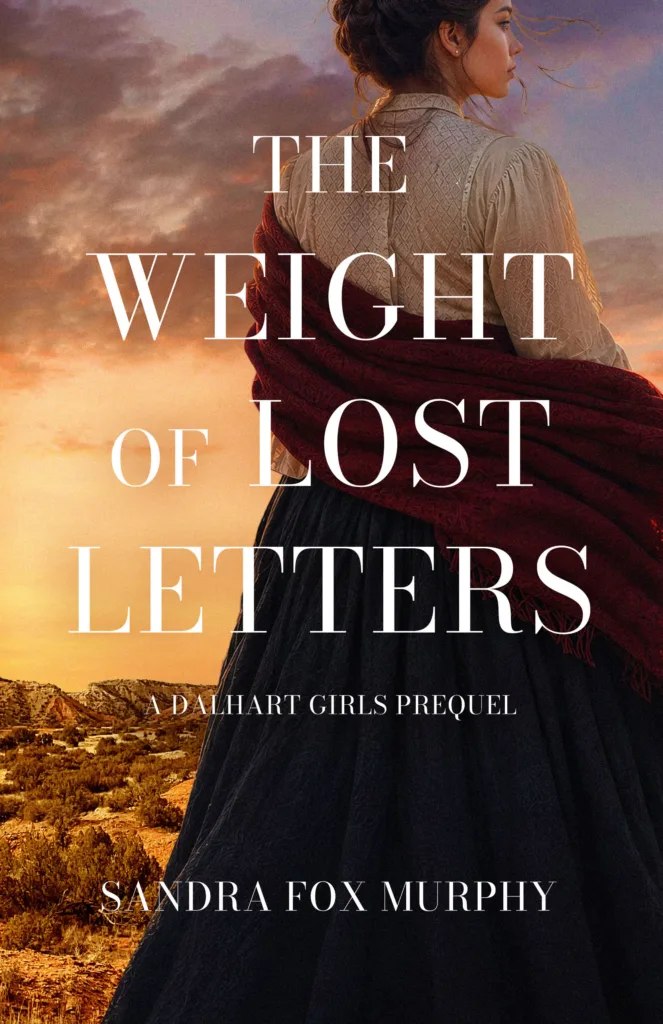
How did it feel when you first saw your book cover? Or when you first held your book in your hands?
It is a joyful feeling to hold one’s story in its final form—all the words come together with a title and cover that fit in your hand, holding all the author’s hard work.
Who/what made you want to write? Was there a particular person, or particular writers/works/art forms that influenced you?
I loved to read as a child, and while living in California, I attended Indian Valley College and studied the beatnik poets. Then I had to write. Over my years in a career and family, I became enthralled with the works of the late anthropologist/essayist Loren Eiseley, and he’s influenced a lot of my writing, especially environmental poetry. I did not start writing seriously until in my sixties—because there are some tales I have to tell.
What other professions have you worked in? What’s something about you that your readers wouldn’t know?
I began in the 1960s as a secretary, but with education, worked in office space and design and then, in labor relations with NIH and the USGS, negotiating with unions. I’ve also been an ESOL teacher for adult evening classes in northern Virginia, a job rewarded by the eagerness of new immigrants to learn English.
What was the most rewarding/meaningful part of publishing your book?
For me, the most rewarding has been the invites to book clubs and spending an hour or two discussing the characters and stories, the research, and hearing how the stories have impacted readers. I have another one coming up in June and am looking forward to it!
If your book had a soundtrack, what are some songs that would be on it?
Well, my books are different…but let’s go with the trilogy set in 1800s Texas. My favorite soundtrack to write to which would be reflective of my series as well is All the Pretty Horses. Music so evocative. Let’s add the soundtrack from Lonesome Dove, my favorite novel of all time. And absolutely the shanty song Shenandoah, because in Let the Little Birds Sing, Edmund Francois Chouteau, a fur trapper, sings some of the old lyrics (oh, be still, my heart, I do love the scenes with Edmund…).
What is one thing you hope readers take away from reading your book? How do you envision your perfect reader?
I want readers to see the struggle of our early pioneers, the sacrifices made in spite of all the mistakes, bravado, and struggle. What drew me to this girl’s story was the incredible losses of her family—how could a young child endure it all? I want my readers to see the mettle that made these people. I want the reader to love them as much as I did in creating them.
What new writing projects are you currently working on? Or, other projects that are not writing?
I am working on a novel set in 1952 in the Texas Panhandle about three women who start a secret group to study mysticism. One of the women is the pastor’s wife, and this little church will suffer its share of disappointments and an abundance of judgment. I’m excited by all the story weaving in this book.
How was working with Atmosphere Press? What would you tell other writers who want to publish?
It started with working with Nick Courtright, the founder of Atmosphere Press. He gave me—an “old dog” learning new tricks and a newcomer to publishing—the very best advice and guidance. And encouragement! My last novel was with the larger company, and I had a couple staffers who were so helpful to me, including my editor BE Allatt and Erin Larson-Burnett, bringing the end of my series to fruition. Getting it done.
 An Interview with Cindy Kate Wills
 An Interview with Kimberly Heiman
 An Interview with Sehaj Kasture
 An Interview with Mike Michalak