An Interview with Sarah Veall
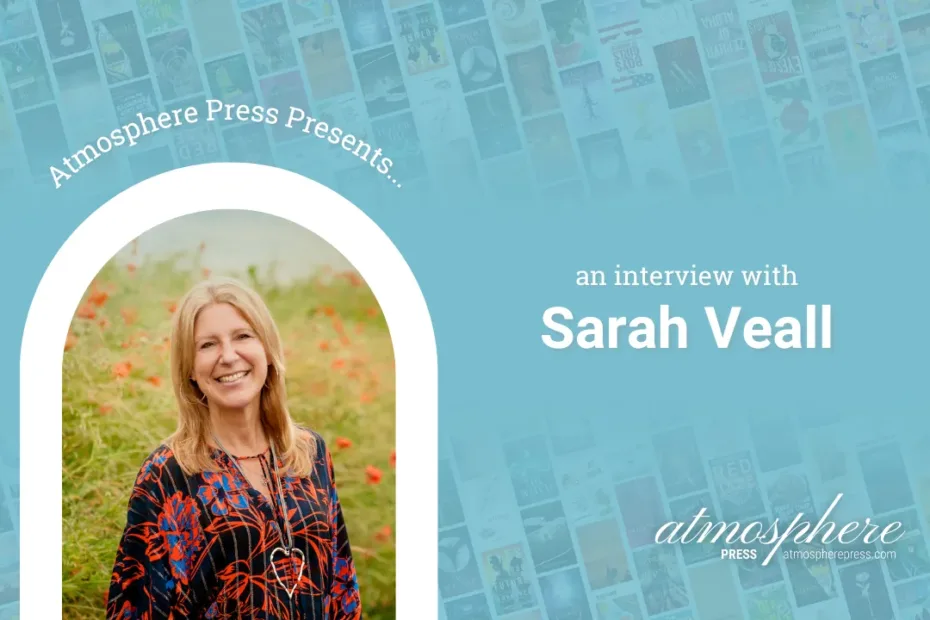
Sarah Veall is an author, transformational coach, inner-child practitioner, and Reiki practitioner. Her work explores healing, self-trust, and the connection between emotional awareness and physical wellbeing.
After being diagnosed with incurable cancer in 2020, she was brought into a profound process of transformation that shifted her from survival mode into a deeper exploration of consciousness, emotional healing, and self-understanding. What began as a personal journey of navigating fear and uncertainty evolved into a long-term process of rebuilding trust in herself, her body, and life itself.
Through writing, she began to make sense of her experience—recognising the interplay between thoughts, emotions, and the nervous system, and how unprocessed trauma can shape both inner experience and outward reality. Her work draws on lived experience as well as metaphysical and mind-body perspectives, exploring how awareness and emotional integration can support healing on every level.
She is the author of Trust, a book that invites readers to move from fear and survival into self-awareness, emotional presence, and a more grounded relationship with life. Her writing blends personal storytelling with reflective insight, offering a compassionate lens on what it means to navigate illness, fear, and awakening.
Alongside her writing, she works with clients to support emotional regulation, self-awareness, and embodied healing, helping people reconnect with themselves beyond fear-based patterns and conditioning.
She continues to explore what it means to live in alignment with inner truth and to trust the unfolding of life, even in uncertainty.
What inspired you to start writing this book?
Trust was born from one of the most confronting and transformative experiences of my life.
In 2020, I was diagnosed with incurable cancer—a moment that stopped everything and forced me to face a reality I had never fully allowed myself to sit with before. At first, I was consumed by fear, uncertainty, and a deep sense of powerlessness. I was in survival mode, reacting to everything happening around me, disconnected from myself and from any sense of control.
But within that experience, something began to shift.
I started to question the way I had been living—the patterns, the beliefs, the ways I had been hiding from myself and the world. I realised how much of my life had been driven by fear, by conditioning, and by a lack of trust in myself.
Writing became the space where I could process it all. It allowed me to slow down, to listen, and to begin making sense of what I was experiencing—not just physically, but mentally, emotionally, and spiritually.
Through that process, I began to rebuild a relationship with myself. I learned how to sit with my emotions rather than avoid them, how to observe my thoughts instead of being controlled by them, and how to recognise the ways I had been unconsciously shaping my reality.
Trust emerged from that journey.
It’s not just a reflection on illness, but on awakening—on learning to trust your body, your intuition, your emotions, and life itself, even in the face of uncertainty. It’s about moving from fear to awareness, from control to surrender, and from surviving to truly living.
Ultimately, I wrote Trust to share what I discovered along the way—in the hope that it helps others reconnect with themselves and realise that even in life’s most difficult moments, there is the potential for deep healing, growth, and transformation.
Tell us the story of your book’s current title. Was it easy to find, or did it take forever?
The purpose of writing Trust was initially to process my experience from a therapeutic perspective. I wanted to remind myself but also remind others that we always have choices; choices about what we think, how we feel and how we behave. My book was initially called Choose Life. But over time, I became aware my book wasn’t about healing from cancer holistically, it was about connecting with my truth and my intuition—it was about trusting what my heart and soul had always known to be my truth, before I learnt to doubt myself and my own inner knowing.
What books are you reading (for research or comfort) as you continue the writing process?
While Trust is deeply rooted in my lived experience, I was also drawn to explore metaphysical perspectives that helped me make sense of what I was going through—particularly the connection between the mind, emotions, and the physical body.
Through this exploration, I came to understand a recurring theme: that unprocessed trauma and suppressed emotion don’t simply disappear, they are held within the body.
From a metaphysical perspective, the body isn’t separate from our thoughts and emotions; it reflects them. When emotions like fear, grief, anger, or resentment aren’t fully felt, expressed, or released, they can become ‘stuck’ in the system. Over time, this internal tension can create imbalance, not just emotionally or mentally, but physically.
This is where the idea of ‘dis-ease’ begins to make sense.
Rather than viewing illness as purely random or purely physical, this perspective suggests that the body can manifest symptoms as a way of signalling deeper misalignment. It’s not about blame, but about awareness—recognising that the body may be communicating something that hasn’t yet been acknowledged or processed on an emotional level.
In my research, I explored how chronic stress and unresolved trauma can keep the nervous system in a heightened state of alert. When the body remains in survival mode for prolonged periods, it impacts everything—from immune function to hormonal balance to the body’s natural ability to repair and regulate itself.
What resonated most deeply for me was the idea that healing isn’t just about addressing physical symptoms, but about creating space to safely feel and process what has been held beneath the surface.
This includes:
Becoming aware of emotional patterns rather than suppressing them;
Allowing feelings to move through the body instead of resisting them;
Recognising how past experiences may still be influencing present responses; and
Reconnecting with the body as a source of insight, rather than something separate.
Through both research and personal experience, I began to see the body not as something that had ‘betrayed’ me, but as something that was constantly communicating with me.
A guide, rather than an enemy.
This perspective doesn’t dismiss medical treatment or scientific understanding—instead, it complements it by bringing attention to the emotional and energetic layers of healing that are often overlooked.
Ultimately, this exploration became a key part of Trust.
It shaped my understanding that healing is not about fixing something broken, but about listening more deeply—to the body, to the emotions, and to the parts of ourselves that are asking to be seen, felt, and integrated.
What advice would you give your past self at the start of your writing journey?
You don’t need to have it all figured out before you begin. In fact, you won’t. The clarity comes through the writing, not before it.
You’re not writing from a place of distance—you’re writing from within the experience. That means it might feel raw, uncertain, even disorienting at times. Let it be that way. Don’t rush to make it neat before it’s honest.
You will sometimes confuse ‘feeling uncomfortable’ with ‘doing it wrong.’ They are not the same thing.
There will be moments where you want to intellectualise your experience, to step back and analyse it instead of feeling it. Notice that. It’s protection. And you don’t always need to follow it.
The truth of this book lives in your body as much as your mind. If something feels heavy, tight, or avoided, that’s often where the writing needs to go—not away from it.
You don’t need to prove anything. Not your insight, not your healing, not your credibility. The work is not to convince anyone—it’s to tell the truth as cleanly as you can in the moment you’re in.
Some days, writing will feel expansive and clear. Other days, it will feel like you’re circling the same emotional ground again. That repetition isn’t failure—it’s integration happening slowly, layer by layer.
You are not behind. You are not missing something. You are unfolding.
And perhaps most importantly:
You are not writing about healing from a distance.
You are healing while you write.
So go gently. Stay close to what is real. And trust that even when it feels like you’re going in circles, you are actually spiralling closer to something true.
What’s one thing you hope sticks with readers after they finish your book?
That healing is not about becoming someone new, but about remembering who you already are beneath fear, conditioning, and survival patterns—and learning to trust that inner truth again.
I want readers to walk away with a felt understanding that their thoughts, emotions, and body are interconnected, not separate systems. What feels like ‘breakdown’ can actually be the beginning of deeper awareness. That they are not stuck with their current patterns, even if they feel deeply ingrained. Life is not just happening to them, but can be understood as something they are learning to participate in more consciously.
And that even in the most uncertain, painful, or disorienting experiences, there is still an underlying intelligence in them—and learning to trust that inner guidance is what ultimately transforms survival into something more whole, grounded, and alive.
If it were distilled into one line, it would be:
You were never broken—you were learning how to trust yourself again.
Are you a writer, too? Submit your manuscript to Atmosphere Press.
Atmosphere Press is a selective hybrid publisher founded in 2015 on the principles of Honesty, Transparency, Professionalism, Kindness, and Making Your Book Awesome. Our books have won dozens of awards and sold tens of thousands of copies. If you’re interested in learning more, or seeking publication for your own work, please explore the links below.