An Interview with Ti Mougne
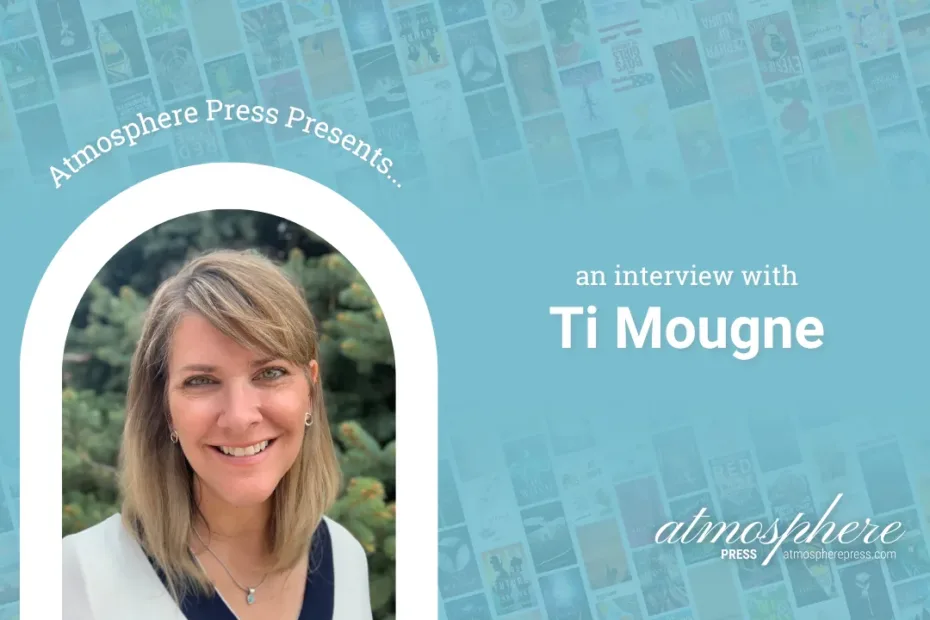
Ti Mougne is a writer, photographer, and ICF-certified professional coach whose work explores the complexities of being human—how we show up, love, lose, change, and make meaning of our lives. For more than fifteen years, she has coached leaders and teams through change, drawing on a lifelong curiosity about how people learn, grow, and see the world differently.
Her first memoir, Held in the Vanishing, grew from six years of journaling while caring for both of her parents as different forms of dementia slowly reshaped their lives—and hers.
She lives in Colorado with her family.
Tell us the story of your book’s title. Was it easy to find, or did it take forever?
My first working title was “It’s OK to Want Them to Die.” I had taken a free webinar on writing punchy book titles, and this was certainly punchy.
But it was more than that. Wanting it to end was one of the hardest truths of caregiving I needed to grapple with through my writing. It was an incredibly difficult sentiment to acknowledge, let alone say aloud. Writing it gave me permission to feel it without turning away from it.
As the story began to take shape, though, that title no longer seemed to hold the whole of what I had written. The book had become something softer and more expansive. Through the writing, I began to feel held by my own story—even as I was living through the slow vanishing of my parents.
And then, one day, Held in the Vanishing almost seemed to reveal itself to me.
Once it did, I knew that was the title.
How did it feel when you first saw your book cover? Or when you first held your book in your hands?
I absolutely love the cover of Held in the Vanishing. Seeing the final design for the first time was incredibly moving because it felt like the story had somehow become visible.
The cover was a true collaboration with my professional design team at Atmosphere. After several rounds of designs that were strong, but just not quite right, I pulled together two of my own photographs. One was of my parents walking down a path in Pagosa Springs, Colorado, where we once had a vacation home. The other was of the prairie and foothills at Chatfield State Park, close to where I live now.
The design team brought the two landscapes together beautifully and added the silhouetted shadow of me in the foreground. To me, the image symbolizes what the book became: me holding my parents as they slowly vanished into the horizon of the beautiful landscape we called home.
But there’s another layer in it for me, too. As much as I am holding them, I am also being held—by the landscape, by home, by the story, by all of it. I may be the only one who finds that meaning in the cover, but it’s present for me.
The first time I saw the finished cover, I knew this was my book.
Who/what made you want to write? Was there a particular person, or particular writers/works/art forms that influenced you?
I started journaling when I was a teenager. It has always been both a creative and contemplative practice for me—a place to work through my own thoughts and make sense of my life.
I’ve also always loved books, especially poetry and nonfiction. Growing up, I remember reading Robert Frost aloud to my parents on long road trips. I think some of that influence found its way into my own writing. The short vignette style of Held in the Vanishing reflects my journaling habits, but it’s also my attempt to give the story a poetic shape. I don’t claim it as poetry, but the line spacing and breaks create room for breath. I hope they slow the reader down enough to dwell in the imagery and in what’s happening beneath the words.
In late 2019, my dad’s heart attack and the early signs of dementia brought me back to journaling more intentionally. Stepping into the role of primary caregiver has been one of the hardest things I’ve ever done, and my journal became a safe place to process what I was experiencing and feeling.
I also have a practice of returning to old journal entries and reflecting on where I was mentally and emotionally, and how I was making sense of my life at the time. I find that fascinating because I don’t just encounter my past self on those pages. I encounter my present self, too. I bring everything I’ve lived and learned since then to the person who wrote those words.
In many ways, that’s precisely why I decided to publish my story. I hope readers can encounter themselves in it, too—not because their story is the same as mine, but because something in mine helps them recognize something in their own.
What other professions have you worked in? What’s something about you that your readers wouldn’t know?
I’ve had a surprisingly varied career. I started in the nonprofit world, developing and teaching energy efficiency, renewable energy, environmental, and even art education programs. From there, I moved into the electric utility industry, where I led energy education and renewable energy programs for schools, and later into research and consulting, writing about energy efficiency programs for electric and gas utilities.
Then my career took a fairly dramatic turn into technology and organizational transformation. Over the years, I’ve worked as a scrum master, agile and product transformation coach, consultant, product leader, manager of product managers, and product coach. Today, I work as an agile methodology lead, coaching leaders and teams through complex change.
Along the way, I’ve also owned and operated a successful vacation rental home and done freelance product discovery and customer research—including research for a large multi-day music festival. That experience surprises even me. The opportunity to work in the field—quite literally—of such a large entertainment production was incredibly fun. But even more energizing was talking with so many people about their experiences and then bringing their stories together to form a deeper understanding of what mattered to them. It remains one of my favorite jobs to date.
On paper, it can look like a rather eclectic collection of work. But I see a thread running through all of it: curiosity about people, how we learn, what we value, and how we make sense of our experiences. Whether I’m designing curriculum, interviewing customers, coaching a team, taking a photograph, or writing in my journal, I’m drawn to observing closely and discovering something I hadn’t noticed before.
I suppose that’s something readers might not know about me: I’ve never followed a particularly straight professional path. Curiosity has usually had more to do with where I’ve gone next than any carefully constructed career plan.
What was the most rewarding/meaningful part of publishing your book?
The most meaningful part has been discovering that this is a shared story.
It began as a story shared between my parents and me—our experience of loving one another through dementia and all the ways it changed us. But once I published it, the story became shared in another way. Other caregivers began finding themselves in my words and sharing their own stories with me.
There’s something profoundly comforting about that. I don’t feel as alone in my experience anymore, and I hope the people who read Held in the Vanishing feel a little less alone in theirs.
Maybe that’s what has been most meaningful: something I wrote to help myself live through an incredibly difficult experience has become a place where we can find one another.
If your book had a soundtrack, what are some songs that would be on it?
I don’t think I’d want other songs to be the soundtrack to Held in the Vanishing. I actually think many of the chapters could become songs of their own.
Before the book was published, I shared one of the chapters on Facebook. A few days later, a stranger responded with a version of it set to music. He had taken some light liberties with my words, but they were powerful. He told me that his own dad has dementia and that songwriting is one of the ways he copes with what he’s experiencing.
It was one of the most beautiful responses to my writing I’ve ever received. Something I had written to make sense of my own caregiving experience had moved through someone else’s experience and come back to me in an entirely different art form.
So rather than giving the book a soundtrack of existing songs, I’d love to hear what its own soundtrack might become.
And if there are any professional musicians out there who feel inspired to collaborate, I hope they’ll reach out.
What is one thing you hope readers take away from reading your book? How do you envision your perfect reader?
More than anything, I hope readers come away feeling less alone.
My perfect reader is someone carrying something that feels impossibly hard—caregiving, certainly, but also grief, loss, complicated love, or the slow changing of a relationship they once thought they understood. Someone who has had thoughts or feelings they’re ashamed to admit. Someone who wonders if anger, resentment, exhaustion, or even wishing it would all just end means they aren’t loving well enough.
I hope my story gives them permission to feel whatever they feel.
I didn’t write Held in the Vanishing to offer advice or tell anyone how to navigate caregiving. I wrote honestly about my own experience—the beautiful parts and the parts we’re often afraid to say aloud. If readers recognize something of themselves in that honesty, I hope they can extend a little more compassion toward themselves.
My perfect reader closes the book thinking, “Someone else has felt this, too. I’m not alone.”
What creative projects are you currently working on?
I’m continuing to write, mostly through journaling and short reflective pieces exploring what it means to be human. I’m also continuing to develop my photography, which has become another way for me to slow down, pay attention, and make meaning of what I encounter. I share both at TiMougne.com, where my writing and photography come together as different expressions of the way I experience the world.
And yes, I’m beginning to explore what might become my next book. It’s still very early, so I’m keeping the idea close for now. I will say that I’m excited about where it might lead and how it could build on some of the territory Held in the Vanishing opened for me.
For now, I’m enjoying not knowing exactly what comes next.
How was working with Atmosphere Press? What would you tell other writers who want to publish?
Publishing Held in the Vanishing with Atmosphere Press gave me the opportunity to work with a professional team to bring a story that had lived in my journals for years into the world as a finished book. I especially valued the collaborative aspects of the process. The evolution of the cover is a great example—we kept working with it until we arrived at something that felt deeply connected to the story I had written.
For other writers considering publishing, I would encourage them to spend time understanding the different paths available—traditional, hybrid, and self-publishing—and what each one asks of the author. Go into the process with clear expectations about the support you’ll receive compared with the support you want or expect, what you’ll be responsible for at each phase, what constraints might enable or restrict your vision, and what happens after publication. One of my biggest lessons has been that publishing a book and finding its readers are two very different things. Held in the Vanishing has only been out in the world for a few weeks, so I’m still very much in the early days of learning how to help it find the people it was written for. I’m incredibly proud that the book exists. Now I’m discovering what it means to be not only its author, but also its advocate.
Are you a writer, too? Submit your manuscript to Atmosphere Press.
Atmosphere Press is a selective hybrid publisher founded in 2015 on the principles of Honesty, Transparency, Professionalism, Kindness, and Making Your Book Awesome. Our books have won dozens of awards and sold tens of thousands of copies. If you’re interested in learning more, or seeking publication for your own work, please explore the links below.