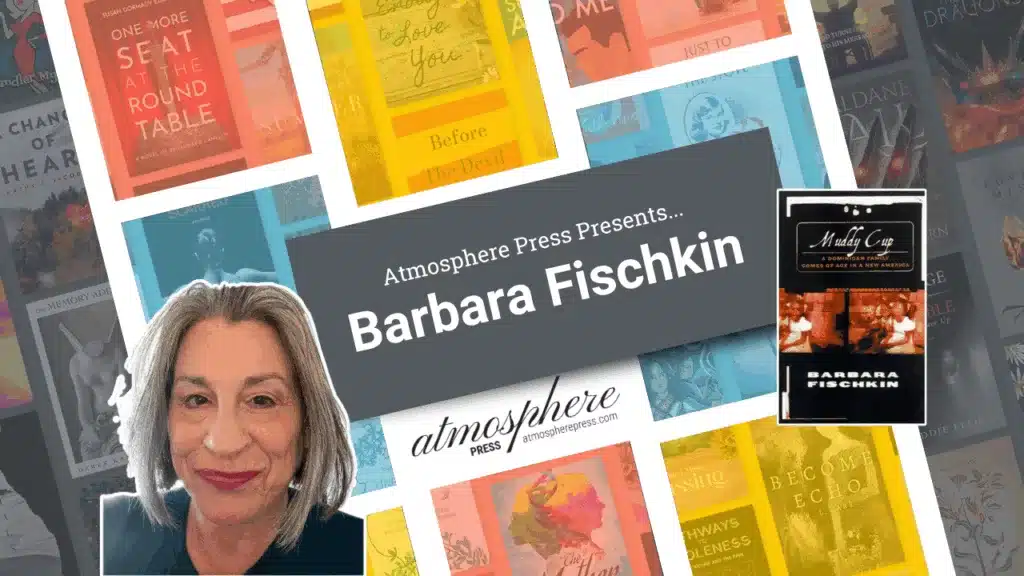
Who/what made you want to write? Was there a particular person, or particular writers/works/art forms that influenced you?
The first person who told me I was a writer was my father. Who listens to such advice from a parent? His view was confirmed when I was in college at New York’s public “The University at Albany.” William Kennedy, now a Pulitzer Prize-winning novelist (Ironweed), was my teacher in a class on what was then called the New Journalism (Tom Wolfe, Hunter Thompson, etc.). He read my first feature article out loud in class. I shook. It was a weird story about a former golf pro who had invented a profession for himself. He was a Truthologist. The world’s only Truthologist. He couldn’t really explain the profession. It had something to do with Isaac Newton. After reading my piece, Kennedy had many criticisms and I figured that as a writer I was a goner. After class he asked to speak to me. He said. “You are a writer.” That encouragement changed my life. Bill has mentored me many times throughout my career. My gratitude for this is boundless.
What other professions have you worked in? What’s something about you that your readers wouldn’t know?
I have never worked in a profession that did not involve writing. For many years I was a communications specialist, full- and part-time, for the City University of New York. (CUNY). I worked for three chancellors (who served at different times). Nevertheless, it was quite a balancing act and I am happy to speak about this. I have also taught journalism at three universities: New York University, Adelphi, and Hofstra.
Tell us the story of your book’s title. Was it easy to find, or did it take forever?
No. I knew right away what the title would be. “A Muddy Cup” is a poem by the late Irish poet laureate John Montague about his mother’s reluctance to be an immigrant in New York. (Line: “America was a Muddy Cup my mother refused to drink.”) One of the characters in Muddy Cup is a woman named Roselia Almonte who felt the same about leaving her homeland. But she did. Her own son, Mauricio Almonte, met John Montague and wrote his own series of poems about his mother. As a college student Mauricio won $300 for his poems-poems inspired by John Montague’s poems. Truly an international story.
What part of publishing your book made it feel real for the first time?
Mauricio’s sister, Elizabeth, read a verbal translation of the book to her parents, who did not speak English. For fact-checking. She told me: “It isn’t all nice but it is all true. Publish it!”
If your book had a soundtrack, what are some songs that would be on it?
Merengue. Merengue. Merengue. Any Merengue. Some Bachata too. Any Bachata.
What’s one thing you hope sticks with readers after they finish your book?
That all Americans—aside from Native Americans—can trace their roots to people who came from someplace else.
What was the most rewarding/meaningful part of publishing your book?
It is now. That people still read it for the first time and say it speaks to them about immigration.
Also: That many Dominicans still consider it a landmark work about their country.
What creative projects are you currently working on?
A historical novel and memoir. I am also pitching a television pilot about a kid with nonspeaking autism (I have a thirty-seven-year-old son with nonspeaking autism) and how he has the same adventures as any kid. I was a Cannes Film Festival table read semi-finalist in a competition sponsored by the International Screenwriters Association. Did not make it to Cannes this year. Maybe next year!
 An Interview with Cindy Kate Wills
 An Interview with Kimberly Heiman
 An Interview with Sehaj Kasture
 An Interview with Mike Michalak