An Interview with Rebecca Day
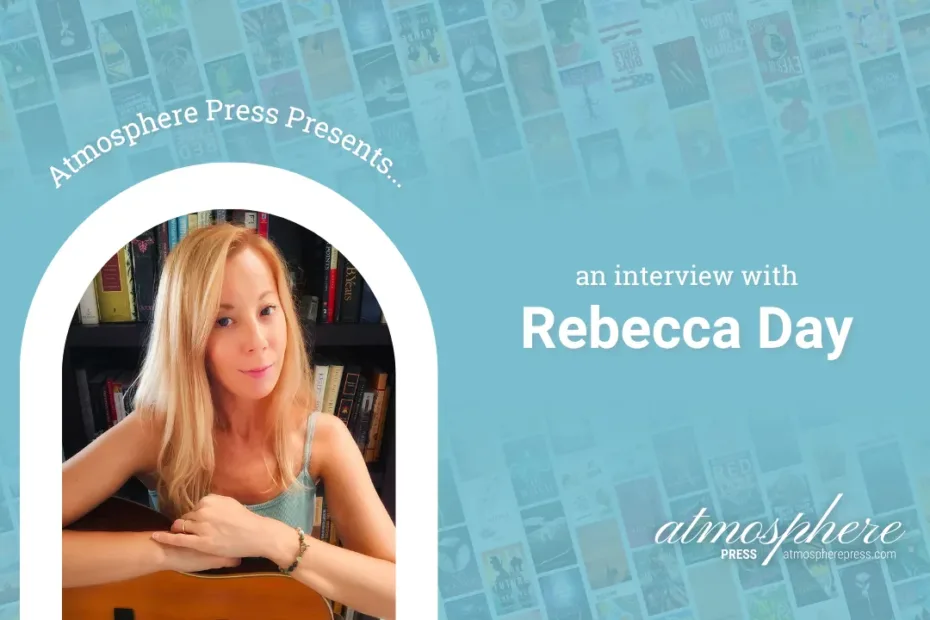
Rebecca Day is a writer and author specializing in music journalism, arts and culture stories, and songwriting. She is a regular contributor to publications such as The Epoch Times and The Objective Standard. In 2019, she released her debut novel, Derelict, a southern mystery, while pivoting to a writing-based career after a decade spent touring and performing as an independent musician. Her forthcoming release, Pruning Season, a book of poetry and poetic prose, is a meditative exploration of that time period of great change. Pruning Season is expected to debut in winter 2026. For more information, visit Rebecca’s arts and philosophy-focused Substack newsletter featuring regular updates, Classically Cultured.
What inspired you to start writing this book?
Fresh out of college, I dove headfirst into a music career. I spent the majority of my time performing and traveling, and I released a few independent records as well. But after about a decade of that, the wear and tear it put on my body became undeniable. And it was made worse by a chronic pain condition, temporomandibular joint disorder, which affects the jaw and creates cascading side effects. I had to make a really tough decision—continue to gut it out while performing for hours on end or find a way to create more of a balance in my career that allowed recovery time.
So, I dusted off my creative writing degree and dove, once again headfirst, into a journalism career. I have so enjoyed building my writing career, but at the same time, I was also mourning. I identified so deeply as a performing musician that it took me a bit to get my footing. Not only was I grieving the image of a career I’d had in my mind since I was a kid, I was also grieving the life I had before the pain got so intense. I was overwhelmed while trying to process all this and embark on a new chapter in my professional life, so I started writing about it when I wasn’t working on an assignment for a publication. Sometimes it came out as a song, but plenty of other times it came out as a poem or a lyrical essay. It really was years of working out, on the page, this very human experience where you’re losing so much at the time, but also gaining so much, too, which can feel so confusing and traumatic, but then there are also those comedic moments as well.
I notice I often turn to lyrical and creative writing during times of upheaval in my life because the words paired with rhythm, rhyme, and all those fun elements allow me to feel a sense of control. I equate it to a camera lens, and through the words and how I fit them together on the page, I’m refocusing my lens, allowing me to see things more clearly than I did before.
I wasn’t setting out to write a book when I began writing about this chapter in my life. But one day I realized, “Hey, I think I have enough here for a book.” And that was a cool moment.
Tell us the story of your book’s current title. Was it easy to find, or did it take forever?
The title is actually the name of one of the poems in the book, but it took me until the very end of writing it to realize it was what the title should be. A lot of weather-related themes run through my creative work, so for a while I played around with titles regarding the weather. But one of the last pieces I wrote for the book is called Pruning Season, and when I got into the editing process for the poem, I realized that the concept of a pruning season was exactly what had been happening to me over the years. So much had fallen away from my life, but in doing so, it made room for opportunities and a different type of life that has been fulfilling and satisfying. And when I thought of that phrase being the title, it felt right. The title really just fell into my lap by way of a poem. I love it when the creative process works out like that. It will give you clues as to where to go if you pay attention.
Describe your dream book cover.
That’s a good question. I’d love a book cover with a nature focus. Maybe a fall setting with golden hues—and fog. I have yet to meet a person who isn’t moved by fog. I think it speaks so deeply to us because we wish we could exist as lightly as it does while making such an impact. Success for humans so often has to feel like a rocket ship trying to break through Earth’s atmosphere. And I would definitely hire a professional artist to render it. I’d want it to look like a painting more than a book cover. There are books I come across with such beautiful covers I want to frame them. I find covers like that to be really inspiring.
If your book had a soundtrack, what are some songs that would be on it?
This is such a wonderful question because I get to incorporate my two great loves, music and writing. I’ve thought about this a good bit actually, because my writing tends to be melodic due to my background in music. The first two pieces that come to mind are Vivaldi’s “Four Seasons,” in particular, his “Spring” concerto, and Saint-Saëns’ “The Carnival of the Animals,” which features “The Swan” movement. Both really capture the flow of the book, which incorporates a lot of natural elements, from birds and trees to storms and the sun, and relates them to human experience. Those two pieces blend together the human and natural worlds, which is really what the book ends up doing.
So, Pruning Season has this kinetic, quietly triumphant side—but it also has a deeply human side that speaks to those private moments when we have to work out the hard stuff on our own. That’s where those really open, yearning chords come into play. John Fahey’s “Sunflower River Blues” could really stand as the anthem of the book. He’s one of my favorite guitarists, and the open C tuning paired with the bluesy melody is what my soul sounds like. The song is both sensitive and assertive, which I think is the artist’s tightrope walk.
I also have a few original singer-songwriter style songs I’ll be releasing in keeping with the themes in Pruning Season. So, who knows, maybe I’ll end up recording an original soundtrack for the book. It’s an idea I’ve toyed with before. With my debut novel, Derelict, I released an original song as its “theme song,” so to speak. It is an acoustic-based track I released with my band The Crazy Daysies called “Write it in Stone.” The moody vibe of the track fit the tone of the book’s story really well. It was fun putting the book’s video promo piece together with the song.
What books are you reading (for research or comfort) as you continue the writing process?
I’m currently making my way through Samuel Butler’s Victorian-style translation of The Odyssey. It’s a prose-style translation of the epic poem and I’m really enjoying it. I love the way he writes both Athena and Telemachus, and their dialogue and interaction. I’ll be on to Emily Wilson’s translation next, which will bring it back to its poetic form. I look forward to reading these two back-to-back because they’re so different, and I love seeing how two very different authors each tackle the same work.
My husband and I have our own little book club we started over last Christmas and we’re currently making our way through Shakespeare’s Macbeth. I’ve gotten such a kick out of revisiting it since high school because I get to take my time with it now. When I read Shakespeare in class, we had to rush through it, and it didn’t leave much time for discussion. So now my husband and I are doing that together and it’s really neat.
I’m also working through a book I found at a local library book sale. It’s a book rendering of Kenneth Clark’s Civilisation, which was a BBC special that aired in 1969. It offers such an illuminating view of history through works of art. By reading it, not only do you get to look at history’s most beautiful and important artworks, but you also get to learn about how art has always been at the center of Western civilization. It’s pretty cool to think that at the core of human progress lies so many artists. On the other hand, with that comes great responsibility on the artist’s part. If we have the ability to move the needle forward, that means we also have the ability to move the needle backward. With each piece, I focus on building or building up something or someone, within reason, and not tearing something or someone down.
Next up will be The Count of Monte Cristo. That’s a classic I haven’t read, so I’m really looking forward to diving into that story.
What other professions have you worked in? What’s something about you that your readers wouldn’t know?
I do a lot of writing while moving. If I sit down and stare at my computer screen, oftentimes I’ll draw a blank. But the second I step outside and start walking, the words flow. Walking is my top cure for writer’s block. If I come up with an extended passage that’s too long to remember, I’ll dictate to my phone’s voice recorder until I can get back inside and start typing. Writing is a mental as well as physical process for me.
Who/what made you want to write? Was there a particular person, or particular writers/works/art forms that influenced you?
My mother is a writer and so I was exposed to writing, and the arts in general, as a profession at a young age. For me, being a full-time artist was a possibility if I wanted it badly enough because I saw my mother do it all my life. Our house was full of books, music, and art. I remember she’d sing my sister and me Janis Joplin then recite us an Emily Dickinson poem while growing up. So, living in such an artistic environment—especially an environment where original artistry was encouraged—was huge. Even at four, five, and six years old, I’d have her critique my work. I remember one of the first poems I wrote, and I think I still have the paper I wrote it on, was a poem dedicated to my favorite place on the planet when I was little—the Dollar Tree store.
Then in high school, I discovered Ralph Waldo Emerson. We studied his essay, “Self-Reliance,” in class, and that made me go to the library in search of more of his works. I bought a book called The Spiritual Emerson that featured several of his landmark essays and speeches, including “The American Scholar.” Through Emerson, I realized that everything that made me different as a teen, that made it hard to fit in and really even feel like a teenager at all, were actually the things that were going to be vital for my career the second I graduated. I’m really glad Emerson taught me to live in the clear light of reality, not the cloudy opinions of others.
Even as a songwriter, poets always influenced me far more than songwriters. Mary Oliver has been not only an influence, but a guide through life. And who couldn’t be inspired by William E. Henley’s poem, “Invictus”? “Out of the night that covers me / Black as pit from pole to pole / I thank whatever gods may be / For my unconquerable soul.” If that doesn’t get the creative juices flowing, I don’t know what will.
What advice would you give your past self at the start of your writing journey?
Don’t wait to start until you feel ready, that feeling will never come by waiting. Action is the remedy. So do it and do it now, and through the work you’ll become more sure-footed. You never know what twists and turns life will bring, so if you’re serious about writing, decide that the craft of writing and the stories you have to tell are more important than the missteps along the way. People don’t talk about it enough in today’s world of social media highlight reels, but any success story comes with mistakes. Those aren’t the end of the world. But a writer not writing? That definitely feels like the end of the world. And if that’s how it feels for you when you’re not creating, then write, write, write. That’s my advice—simple, but effective.
What’s one thing you hope sticks with readers after they finish your book?
That they’re not alone. Pain that cannot be readily resolved can turn to suffering—grief takes many forms. And no matter what any internet guru says, suffering is real, it is not a figment of our imagination. And sometimes, we can’t think it away no matter hard we try. And this isn’t a failing but a fact of reality one can easily witness through a single study of history. This can feel isolating, which is a type of pain in and of itself. When I really made progress with the book—and by progress, I mean gathering enough guts to release it in the first place—was when I stopped looking at it as some magnum opus and started viewing it for what it really is—an offering to others who may find solace in my words and experiences. It’s an olive branch, and if it brings comfort to even one person, then I’ve done my job as an artist. It’s like the lines from the Dickinson poem: “If I can ease one life the aching … I shall not live in vain.”
Are you a writer, too? Submit your manuscript to Atmosphere Press.
Atmosphere Press is a selective hybrid publisher founded in 2015 on the principles of Honesty, Transparency, Professionalism, Kindness, and Making Your Book Awesome. Our books have won dozens of awards and sold tens of thousands of copies. If you’re interested in learning more, or seeking publication for your own work, please explore the links below.